THE ADVENTURE COLLECTIVE® · Independent discovery and booking for outdoor travel

Four hours of 4x4 tracks, petroglyph canyons, red sand dunes and easy scrambles — this half-day Jeep circuit in Wadi Rum packs geology, history and hands-on desert fun into an accessible outing. Sandboarding and mint tea make the trip as social as it is scenic.
Four hours of 4x4 tracks, petroglyph canyons, red sand dunes and easy scrambles — this half-day Jeep circuit in Wadi Rum packs geology, history and hands-on desert fun into an accessible outing. Sandboarding and mint tea make the trip as social as it is scenic.
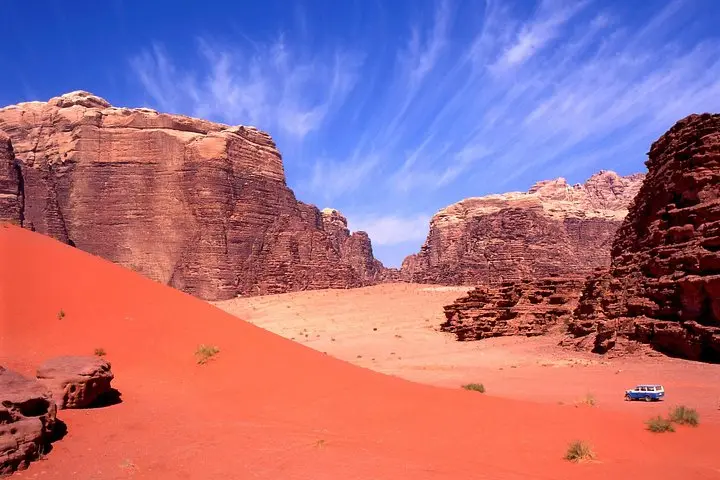
The engine drops to a low rumble as the 4x4 eases off the track and the desert opens up: vast planes of rust-orange sand punctuated by granite towers that look as if an ancient sculptor left them mid-carve. Wind shifts the light; shadows deepen in fissures, and the Jeep slides into a wash carved centuries ago. For four hours the landscape becomes both map and story — a place where petroglyphs, Nabataean ruins, and sweeping dunes meet the present in a single breath.
Verified experiences and guided adventures in the surrounding area.
Operated by Wadi Rum Bedouin Guide Tours · Wadi Rum Village, Ma'an Governorate
The engine drops to a low rumble as the 4x4 eases off the track and the desert opens up: vast planes of rust-orange sand punctuated by granite towers that look as if an ancient sculptor left them mid-carve. Wind shifts the light; shadows deepen in fissures, and the Jeep slides into a wash carved centuries ago. For four hours the landscape becomes both map and story — a place where petroglyphs, Nabataean ruins, and sweeping dunes meet the present in a single breath.
Wadi Rum is more than sand. Geologically, the valley is a playground of sandstone and granite shaped by wind and rare flash floods — cliffs etched with vertical fluting, mushrooms of eroded rock, and natural arches. Historically, it carries human marks from the Thamudic and Nabataean eras through to the stories of T.E. Lawrence during the Arab Revolt. Khazali Canyon contains panels of rock art and inscriptions; step close and the carved antelopes and foot motifs read like a ledger of travelers who passed this way long before modern roads.
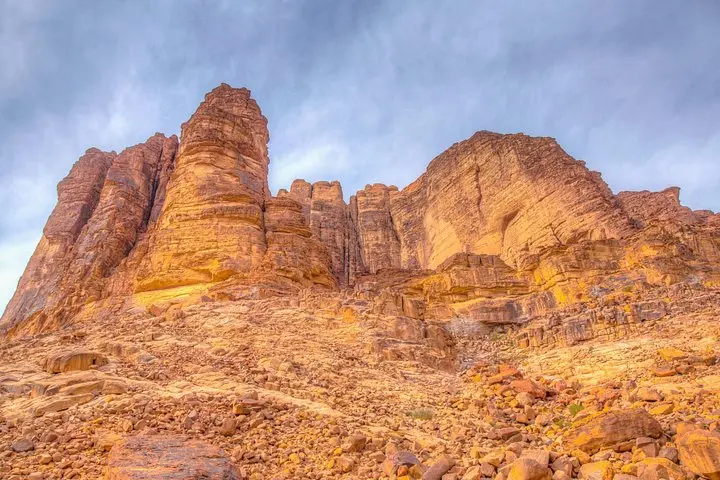
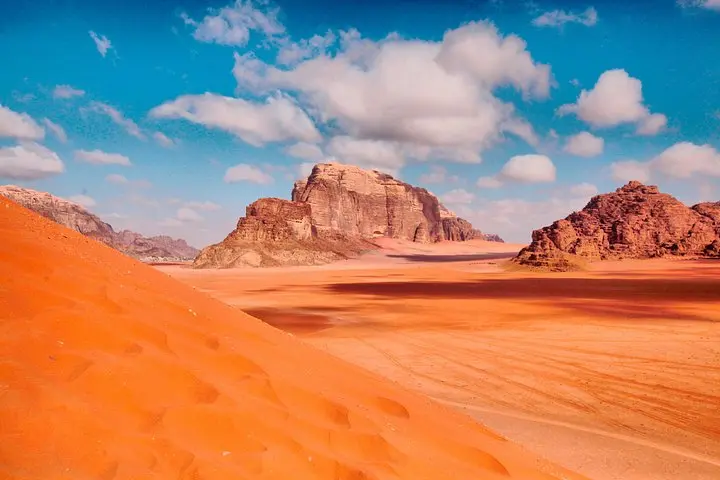
Culturally, the desert is alive. Bedouin families still run tea stations and guide visitors with practical warmth; a stop for mint tea feels like a small ceremony. The sand dune known as Al Hasany — its red iron-oxide grains fine and soft underfoot — dares you up a steep face and rewards you with a wind-swept panorama. Little Rock Bridge is an easy scramble with a pocket of vertigo and a broad view; for many, it’s the photograph that defines the trip.
Practicalities are straightforward. The tour starts at the Wadi Rum Rest House (Mosque Street, about two minutes on foot from the village entrance) and runs roughly four hours. Expect several short walks and light scrambles: the spring by the fig tree involves a brief climb, Khazali Canyon is narrow underfoot, and the rock bridges require 5–15 minutes of easy climbing depending on your comfort with exposure. Tea and bottled water are provided, and sandboarding is included free. Camel rides are available as an add-on (about 20 JD per person).
Timing matters: go early or late to avoid the strongest sun and to catch the desert when textures and colors are most dramatic. Bring sturdy closed-toe shoes for the rocky bits, sun protection for the dune crossings, and a light layer for wind that can feel surprisingly sharp in shade. The terrain is forgiving but sun and sand are relentless — hydrate, apply sunscreen, and keep electronics protected from grit.
For photographers and curious travelers alike, this half-day circuit delivers a concentrated portrait of Wadi Rum: ancient marks on living rock, dunes that push you to move, and viewpoints that make the desert feel like an incoming tide. It’s accessible, cinematic, and shaped by the rhythms of wind and history — a compact desert education with big, immediate rewards.
The meeting point is the Wadi Rum Rest House on Mosque Street, about two minutes’ walk from the village entrance; the tour returns there at the end.
Yes — sandboarding on the Red Sand Dune is included at no extra charge.
Yes — camel rides are available as an optional add-on for approximately 20 JD per person.
Yes — the tour is described as suitable for all fitness levels; some short scrambles may be required but alternatives are available for those who prefer to stay on flatter ground.
Closed-toe shoes, sun protection, and a light layer are recommended; avoid sandals for rocky sections.
Tea and bottled water are provided; full meals are not included but can be arranged at extra cost.
Wadi Rum Bedouin Guide Tours operates guided outdoor trips and adventures with an emphasis on safety, stewardship, and memorable experiences.
The engine drops to a low rumble as the 4x4 eases off the track and the desert opens up: vast planes of rust-orange sand punctuated by granite towers that look as if an ancient sculptor left them mid-carve. Wind shifts the light; shadows deepen in fissures, and the Jeep slides into a wash carved centuries ago. For four hours the landscape becomes both map and story — a place where petroglyphs, Nabataean ruins, and sweeping dunes meet the present in a single breath.
The engine drops to a low rumble as the 4x4 eases off the track and the desert opens up: vast planes of rust-orange sand punctuated by granite towers that look as if an ancient sculptor left them mid-carve. Wind shifts the light; shadows deepen in fissures, and the Jeep slides into a wash carved centuries ago. For four hours the landscape becomes both map and story — a place where petroglyphs, Nabataean ruins, and sweeping dunes meet the present in a single breath.
Wadi Rum is more than sand. Geologically, the valley is a playground of sandstone and granite shaped by wind and rare flash floods — cliffs etched with vertical fluting, mushrooms of eroded rock, and natural arches. Historically, it carries human marks from the Thamudic and Nabataean eras through to the stories of T.E. Lawrence during the Arab Revolt. Khazali Canyon contains panels of rock art and inscriptions; step close and the carved antelopes and foot motifs read like a ledger of travelers who passed this way long before modern roads.
Culturally, the desert is alive. Bedouin families still run tea stations and guide visitors with practical warmth; a stop for mint tea feels like a small ceremony. The sand dune known as Al Hasany — its red iron-oxide grains fine and soft underfoot — dares you up a steep face and rewards you with a wind-swept panorama. Little Rock Bridge is an easy scramble with a pocket of vertigo and a broad view; for many, it’s the photograph that defines the trip.
Practicalities are straightforward. The tour starts at the Wadi Rum Rest House (Mosque Street, about two minutes on foot from the village entrance) and runs roughly four hours. Expect several short walks and light scrambles: the spring by the fig tree involves a brief climb, Khazali Canyon is narrow underfoot, and the rock bridges require 5–15 minutes of easy climbing depending on your comfort with exposure. Tea and bottled water are provided, and sandboarding is included free. Camel rides are available as an add-on (about 20 JD per person).
Timing matters: go early or late to avoid the strongest sun and to catch the desert when textures and colors are most dramatic. Bring sturdy closed-toe shoes for the rocky bits, sun protection for the dune crossings, and a light layer for wind that can feel surprisingly sharp in shade. The terrain is forgiving but sun and sand are relentless — hydrate, apply sunscreen, and keep electronics protected from grit.
For photographers and curious travelers alike, this half-day circuit delivers a concentrated portrait of Wadi Rum: ancient marks on living rock, dunes that push you to move, and viewpoints that make the desert feel like an incoming tide. It’s accessible, cinematic, and shaped by the rhythms of wind and history — a compact desert education with big, immediate rewards.