THE ADVENTURE COLLECTIVE® · Independent discovery and booking for outdoor travel

Walk Kaleiçi’s cobbled lanes with a local guide and see Hadrian’s Gate, Yivli Minare, Kesik Minare and hidden Ottoman courtyards. This 3–5 hour small-group tour blends compact history, coastal geology and practical tips for making the most of Antalya’s old town.
Walk Kaleiçi’s cobbled lanes with a local guide and see Hadrian’s Gate, Yivli Minare, Kesik Minare and hidden Ottoman courtyards. This 3–5 hour small-group tour blends compact history, coastal geology and practical tips for making the most of Antalya’s old town.
You step off the modern promenade and into a maze of worn cobbles and low stone houses: the salty breath of the Mediterranean meets the cool shade of narrow alleys as gulls wheel above Hadrian’s Gate. The air holds the faint scent of citrus and roasting coffee while your guide leads you past carved reliefs and a minaret that rises like a weathered column from another era.
Verified experiences and guided adventures in the surrounding area.
Operated by Ramiz Culfa · Antalya, Antalya Province
You step off the modern promenade and into a maze of worn cobbles and low stone houses: the salty breath of the Mediterranean meets the cool shade of narrow alleys as gulls wheel above Hadrian’s Gate. The air holds the faint scent of citrus and roasting coffee while your guide leads you past carved reliefs and a minaret that rises like a weathered column from another era.
Kaleiçi sits where the Taurus Mountains slope toward the sea; its streets record Roman, Byzantine, Seljuk and Ottoman layers. Expect to see Hadrian’s Gate (130 AD), the fluted silhouette of Yivli Minare from the 13th century, Kesik Minare’s visible reworkings, the 13th-century Karatay medrese, and the 18th-century Tekeli Mehmet Pasha Mosque — each site revealing shifts in faith, power, and urban form more than a millennium old. The geology — limestone cliffs and alluvial terraces — shaped the harbor and the city’s compact footprint.
Practically: this is a 3–5 hour walking tour through compact, mostly flat streets with short flights of stairs and uneven cobbles; plan on 2–4 km of walking and minimal elevation gain (under ~100 m). Wear sturdy shoes, carry water, and time your visit for morning or late afternoon to avoid midday heat. Small-group format means more context, tailored storytelling, and stops at quiet courtyards that larger tours miss. Bring a camera, a light layer for sea breezes, and a respectful attitude in active religious sites. The route is rich in architectural detail and local flavor — a cultural walk that reads the city like a layered map.
Expect roughly 2–4 km of walking over 3–5 hours with frequent stops for history and viewpoints.
The tour notes that infants can ride in strollers, but cobblestones and stairs may make some sections awkward—lightweight, all-terrain strollers work best.
The standard itinerary focuses on exterior visits and guided interpretation; admissions are not included unless specified in a private itinerary.
Yes—small group size and local expertise allow the guide to emphasize archaeology, Ottoman architecture, or local food tips on request.
Ramiz Culfa operates guided outdoor trips and adventures with an emphasis on safety, stewardship, and memorable experiences.
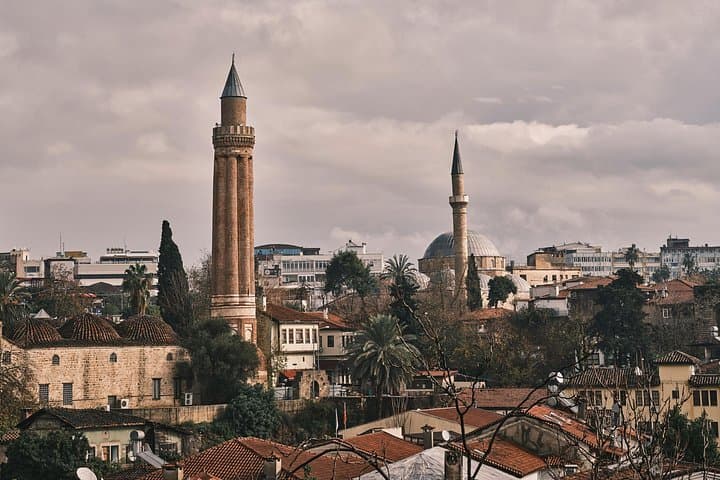

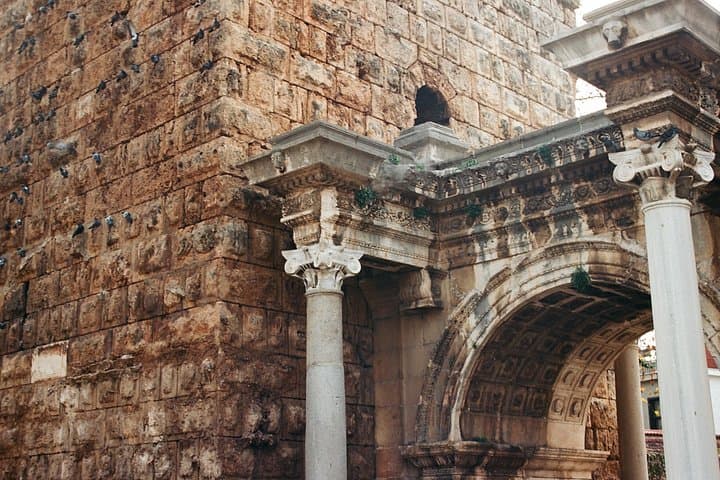

You step off the modern promenade and into a maze of worn cobbles and low stone houses: the salty breath of the Mediterranean meets the cool shade of narrow alleys as gulls wheel above Hadrian’s Gate. The air holds the faint scent of citrus and roasting coffee while your guide leads you past carved reliefs and a minaret that rises like a weathered column from another era.
You step off the modern promenade and into a maze of worn cobbles and low stone houses: the salty breath of the Mediterranean meets the cool shade of narrow alleys as gulls wheel above Hadrian’s Gate. The air holds the faint scent of citrus and roasting coffee while your guide leads you past carved reliefs and a minaret that rises like a weathered column from another era.
Kaleiçi sits where the Taurus Mountains slope toward the sea; its streets record Roman, Byzantine, Seljuk and Ottoman layers. Expect to see Hadrian’s Gate (130 AD), the fluted silhouette of Yivli Minare from the 13th century, Kesik Minare’s visible reworkings, the 13th-century Karatay medrese, and the 18th-century Tekeli Mehmet Pasha Mosque — each site revealing shifts in faith, power, and urban form more than a millennium old. The geology — limestone cliffs and alluvial terraces — shaped the harbor and the city’s compact footprint.
Practically: this is a 3–5 hour walking tour through compact, mostly flat streets with short flights of stairs and uneven cobbles; plan on 2–4 km of walking and minimal elevation gain (under ~100 m). Wear sturdy shoes, carry water, and time your visit for morning or late afternoon to avoid midday heat. Small-group format means more context, tailored storytelling, and stops at quiet courtyards that larger tours miss. Bring a camera, a light layer for sea breezes, and a respectful attitude in active religious sites. The route is rich in architectural detail and local flavor — a cultural walk that reads the city like a layered map.