THE ADVENTURE COLLECTIVE® · Independent discovery and booking for outdoor travel

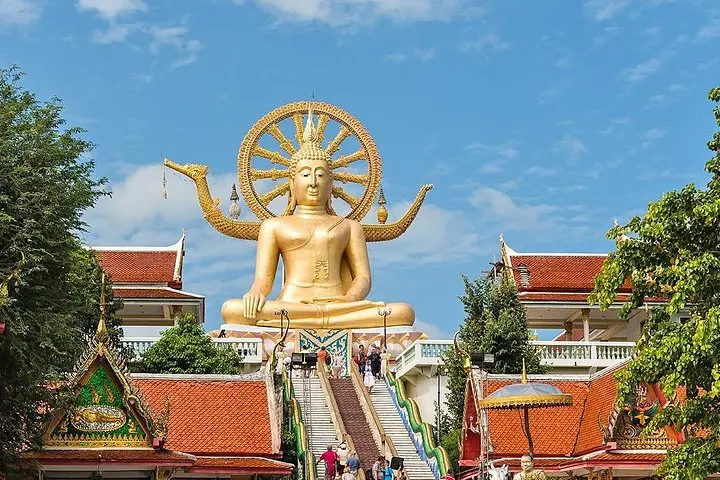
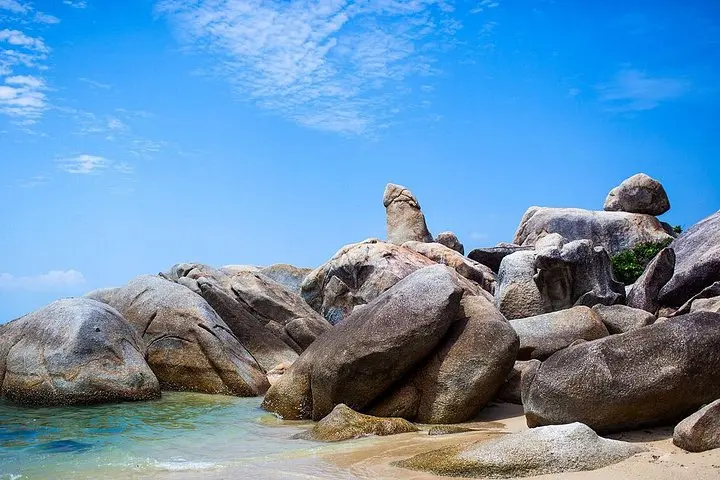
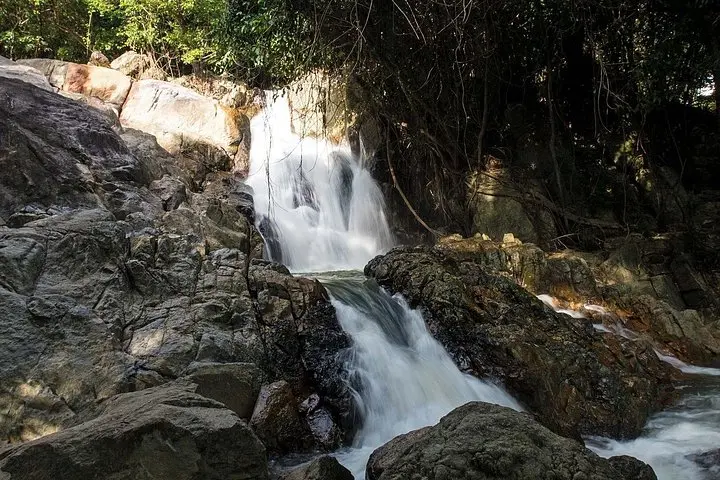
Spend four efficient hours sampling Koh Samui’s highlights: the iconic Big Buddha, the rock formations of Hin Ta Hin Yai, Wat Khunaram’s mummified monk, and the cascade of Na Muang. This short, guided loop pairs cultural sites with a refreshing waterfall finish.
Spend four efficient hours sampling Koh Samui’s highlights: the iconic Big Buddha, the rock formations of Hin Ta Hin Yai, Wat Khunaram’s mummified monk, and the cascade of Na Muang. This short, guided loop pairs cultural sites with a refreshing waterfall finish.
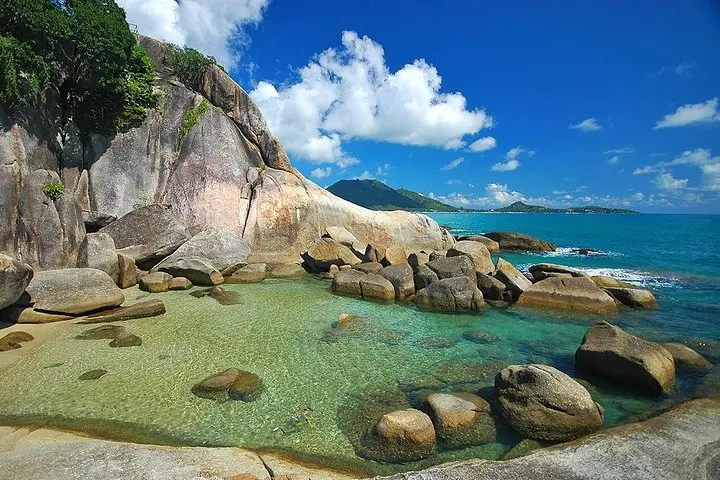
You step off a shaded minivan onto the coral-sliced rim of Koh Samui where the island’s main ring road threads past temples, rocky shorelines and humid jungle. The tour moves with a steady, local rhythm: first the 12-meter Big Buddha watching over a small causeway, then the wind-smoothed Grandmother and Grandfather rocks, a hush at Wat Khunaram, and finally the thunder of Na Muang waterfall.
Verified experiences and guided adventures in the surrounding area.
Operated by Panorama Destination Thailand · Ko Samui, Surat Thani
You step off a shaded minivan onto the coral-sliced rim of Koh Samui where the island’s main ring road threads past temples, rocky shorelines and humid jungle. The tour moves with a steady, local rhythm: first the 12-meter Big Buddha watching over a small causeway, then the wind-smoothed Grandmother and Grandfather rocks, a hush at Wat Khunaram, and finally the thunder of Na Muang waterfall.
Koh Samui’s coastline is recent geology — eroded granite and sandstone lifting from tropical seas — while inland pockets of laterite and thin soils host the island’s low hill forests. Big Buddha (Wat Phra Yai) is a modern shrine that became a focal point for both fishermen and coconut-planters as the island shifted from subsistence to tourism in the late 20th century. Wat Khunaram’s mummified monk speaks to a living Theravada devotion that coexists with the island’s more commercial faces.
Culturally, expect straightforward friendliness: vendors selling fruit and sticky rice, monks accepting quiet respect, and sightlines that reward a slow pace. Na Muang’s plunge pools invite cooling off after temple visits, but currents and slippery rocks demand care.
Practically: the half-day format (approximately four hours) is ideal for a tight agenda. Wear closed-toe shoes for temple steps and the waterfall approach, bring reef-safe sunscreen and a refillable water bottle, and carry modest clothing for temple entry. Morning departures dodge midday heat and make for clearer photos. The tour is low-strain but packed — a compact primer on Samui’s natural and cultural highlights.
Yes — round-trip transfers are provided for hotels in Chaweng, Choeng Mon, Bo Phut, Plai Laem and Mae Nam; confirm your pickup point at booking.
All mentioned entrance fees in the itinerary (such as Big Buddha and Na Muang) are included in the tour price.
The tour is labeled physically easy and suitable for most ages, but infants must sit on an adult’s lap during transport and close supervision is advised at the waterfall.
Temples and viewpoints require steps and some short walks; travelers with limited mobility should disclose requirements at booking to confirm accessibility.
Panorama Destination Thailand operates guided outdoor trips and adventures with an emphasis on safety, stewardship, and memorable experiences.
You step off a shaded minivan onto the coral-sliced rim of Koh Samui where the island’s main ring road threads past temples, rocky shorelines and humid jungle. The tour moves with a steady, local rhythm: first the 12-meter Big Buddha watching over a small causeway, then the wind-smoothed Grandmother and Grandfather rocks, a hush at Wat Khunaram, and finally the thunder of Na Muang waterfall.
You step off a shaded minivan onto the coral-sliced rim of Koh Samui where the island’s main ring road threads past temples, rocky shorelines and humid jungle. The tour moves with a steady, local rhythm: first the 12-meter Big Buddha watching over a small causeway, then the wind-smoothed Grandmother and Grandfather rocks, a hush at Wat Khunaram, and finally the thunder of Na Muang waterfall.
Koh Samui’s coastline is recent geology — eroded granite and sandstone lifting from tropical seas — while inland pockets of laterite and thin soils host the island’s low hill forests. Big Buddha (Wat Phra Yai) is a modern shrine that became a focal point for both fishermen and coconut-planters as the island shifted from subsistence to tourism in the late 20th century. Wat Khunaram’s mummified monk speaks to a living Theravada devotion that coexists with the island’s more commercial faces.
Culturally, expect straightforward friendliness: vendors selling fruit and sticky rice, monks accepting quiet respect, and sightlines that reward a slow pace. Na Muang’s plunge pools invite cooling off after temple visits, but currents and slippery rocks demand care.
Practically: the half-day format (approximately four hours) is ideal for a tight agenda. Wear closed-toe shoes for temple steps and the waterfall approach, bring reef-safe sunscreen and a refillable water bottle, and carry modest clothing for temple entry. Morning departures dodge midday heat and make for clearer photos. The tour is low-strain but packed — a compact primer on Samui’s natural and cultural highlights.