THE ADVENTURE COLLECTIVE® · Independent discovery and booking for outdoor travel

See Koh Samui’s iconic spiritual and natural sites in one compact morning or afternoon. From the 12-meter Big Buddha and 18-arm Guanyin to the cool plunge at Na Muang Waterfall, this small-group tour mixes culture, geology, and easy jungle hiking.
See Koh Samui’s iconic spiritual and natural sites in one compact morning or afternoon. From the 12-meter Big Buddha and 18-arm Guanyin to the cool plunge at Na Muang Waterfall, this small-group tour mixes culture, geology, and easy jungle hiking.
The van eases up a palm-lined road and the island unfolds in frames: a golden Buddha catching the glare, a stoic Guanyin reflected in a lotus pool, and jungle that smells of wet earth and wild ginger. This half-day loop through Koh Samui’s spiritual and natural highlights feels like flipping through postcards—except you’re allowed to step into each scene.
Verified experiences and guided adventures in the surrounding area.
Operated by TripGuru Thailand · Koh Samui, Surat Thani
The van eases up a palm-lined road and the island unfolds in frames: a golden Buddha catching the glare, a stoic Guanyin reflected in a lotus pool, and jungle that smells of wet earth and wild ginger. This half-day loop through Koh Samui’s spiritual and natural highlights feels like flipping through postcards—except you’re allowed to step into each scene.
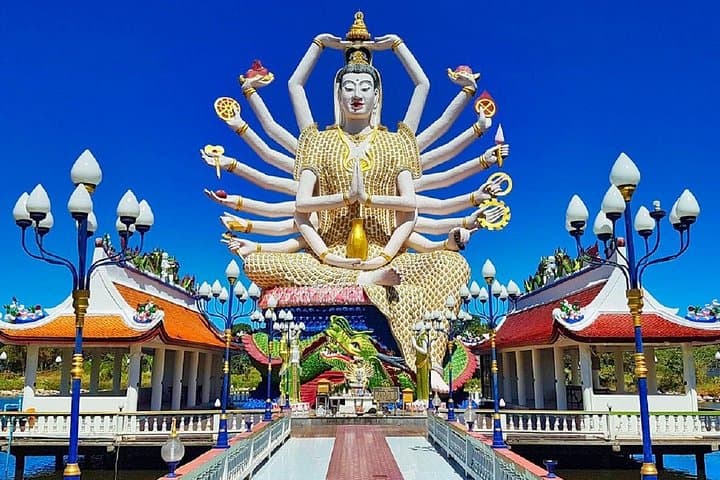
Begin at Wat Plai Laem, where the 18-armed Guanyin presides over a glassy pond. The statue’s extra arms don’t clutter the air; they seem to steady the island’s frantic sunlight, offering calm and a place to listen. The complex blends Thai and Chinese iconography—rooflines sweep like dragon tails and incense curls like small weather systems.
From there the tour climbs toward Wat Phra Yai, the island’s 12-meter Big Buddha. Perched on a rocky promontory, the gilded figure faces the sea and seems to measure tides of devotion and tourism in equal parts. The viewpoint outside the temple gives a clear read of Koh Samui’s coastline—turquoise beaches, fishing boats, and clusters of resorts—reminding you how faith and commerce share this shoreline.
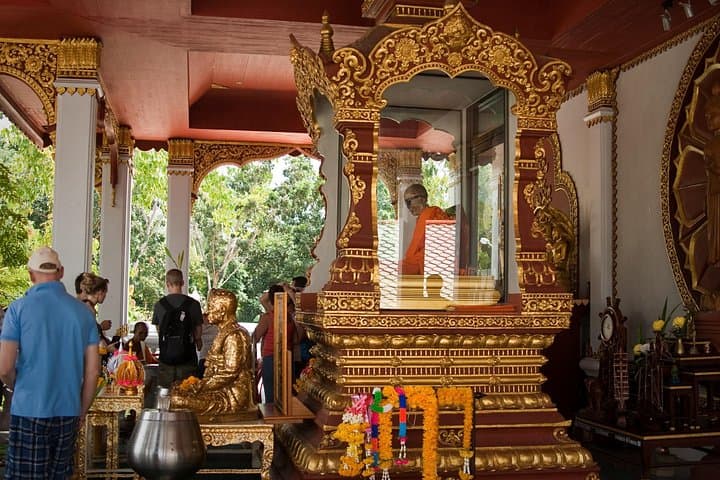
The mood shifts at Wat Khunaram, home to the preserved monk, Luang Pho Daeng. Seeing the mummified monk seated in meditative poise is a quieting, slightly uncanny moment; guides frame it as a lesson in impermanence rather than spectacle. The guide’s stories that follow—about local patrons, temple rituals, and island lore—anchor these sites to Samui’s living culture.
The tour pivots to the island’s geological side at Hin Ta & Hin Yai, rocks shaped by wind, wave, and time into uncanny forms, and then to Lad Koh Viewpoint where the ridge opens and the ocean stretches like an invitation.
Na Muang Waterfall finishes the day in green. The cascade pushes downhill in two tiers, and the lower pool tempts worn feet to cool off. Jungle paths here are humid and alive—monkeys chatter above, and the undergrowth presses close, as if the forest is curious about your sandals.
Practical edge: the experience is accessible but varied—temple steps, short hill climbs, and slick stones at the waterfall. Dress modestly for temples (shoulders and knees covered), wear shoes with grip for the waterfall approach, carry a refillable water bottle, and bring cash for small stall purchases. Small-group size (max 9) keeps the pace personal and allows time for photos and questions.
History and geology blend on this route: temples reflect Samui’s Thai-Chinese devotional mix, while coastal rock formations speak to a slow, erosive patience. Conservation here is informal—respect temple rules, avoid feeding wildlife, and stick to marked paths at Na Muang to protect fragile streambanks.
This half-day tour gives a compact, sensory primer to Koh Samui—calm shrines, dramatic views, and a jungle that reminds you the island keeps its own rhythm.
The tour runs about 5–6 hours, including hotel pickup and drop-off and short stops at each site.
Most temples on the route are free to enter, though some sites may request a small donation or have optional fees for special areas.
Yes—there’s a pool at the lower falls suitable for a dip, but check depth and current before entering and watch for slippery rocks.
Yes—this is an easy, family-friendly tour, but mobility issues could make temple steps and the waterfall approach challenging.
Light, breathable clothing that covers shoulders and knees for temples; shoes with good traction for the waterfall; a hat and sunscreen for viewpoints.
Pickup from 163+ accommodations is included; the driver will confirm the exact time the evening before—expect to be ready about 30 minutes before departure time.
TripGuru Thailand operates guided outdoor trips and adventures with an emphasis on safety, stewardship, and memorable experiences.


The van eases up a palm-lined road and the island unfolds in frames: a golden Buddha catching the glare, a stoic Guanyin reflected in a lotus pool, and jungle that smells of wet earth and wild ginger. This half-day loop through Koh Samui’s spiritual and natural highlights feels like flipping through postcards—except you’re allowed to step into each scene.
The van eases up a palm-lined road and the island unfolds in frames: a golden Buddha catching the glare, a stoic Guanyin reflected in a lotus pool, and jungle that smells of wet earth and wild ginger. This half-day loop through Koh Samui’s spiritual and natural highlights feels like flipping through postcards—except you’re allowed to step into each scene.
Begin at Wat Plai Laem, where the 18-armed Guanyin presides over a glassy pond. The statue’s extra arms don’t clutter the air; they seem to steady the island’s frantic sunlight, offering calm and a place to listen. The complex blends Thai and Chinese iconography—rooflines sweep like dragon tails and incense curls like small weather systems.
From there the tour climbs toward Wat Phra Yai, the island’s 12-meter Big Buddha. Perched on a rocky promontory, the gilded figure faces the sea and seems to measure tides of devotion and tourism in equal parts. The viewpoint outside the temple gives a clear read of Koh Samui’s coastline—turquoise beaches, fishing boats, and clusters of resorts—reminding you how faith and commerce share this shoreline.
The mood shifts at Wat Khunaram, home to the preserved monk, Luang Pho Daeng. Seeing the mummified monk seated in meditative poise is a quieting, slightly uncanny moment; guides frame it as a lesson in impermanence rather than spectacle. The guide’s stories that follow—about local patrons, temple rituals, and island lore—anchor these sites to Samui’s living culture.
The tour pivots to the island’s geological side at Hin Ta & Hin Yai, rocks shaped by wind, wave, and time into uncanny forms, and then to Lad Koh Viewpoint where the ridge opens and the ocean stretches like an invitation.
Na Muang Waterfall finishes the day in green. The cascade pushes downhill in two tiers, and the lower pool tempts worn feet to cool off. Jungle paths here are humid and alive—monkeys chatter above, and the undergrowth presses close, as if the forest is curious about your sandals.
Practical edge: the experience is accessible but varied—temple steps, short hill climbs, and slick stones at the waterfall. Dress modestly for temples (shoulders and knees covered), wear shoes with grip for the waterfall approach, carry a refillable water bottle, and bring cash for small stall purchases. Small-group size (max 9) keeps the pace personal and allows time for photos and questions.
History and geology blend on this route: temples reflect Samui’s Thai-Chinese devotional mix, while coastal rock formations speak to a slow, erosive patience. Conservation here is informal—respect temple rules, avoid feeding wildlife, and stick to marked paths at Na Muang to protect fragile streambanks.
This half-day tour gives a compact, sensory primer to Koh Samui—calm shrines, dramatic views, and a jungle that reminds you the island keeps its own rhythm.