THE ADVENTURE COLLECTIVE® · Independent discovery and booking for outdoor travel

Swap Angkor's stone for water and stilt houses on a half-day cruise to Kompong Phluk. Glide through Tonle Sap’s channels, watch a community that lives by the lake’s tides, and sample village life with a short temple visit and local snacks.
Swap Angkor's stone for water and stilt houses on a half-day cruise to Kompong Phluk. Glide through Tonle Sap’s channels, watch a community that lives by the lake’s tides, and sample village life with a short temple visit and local snacks.
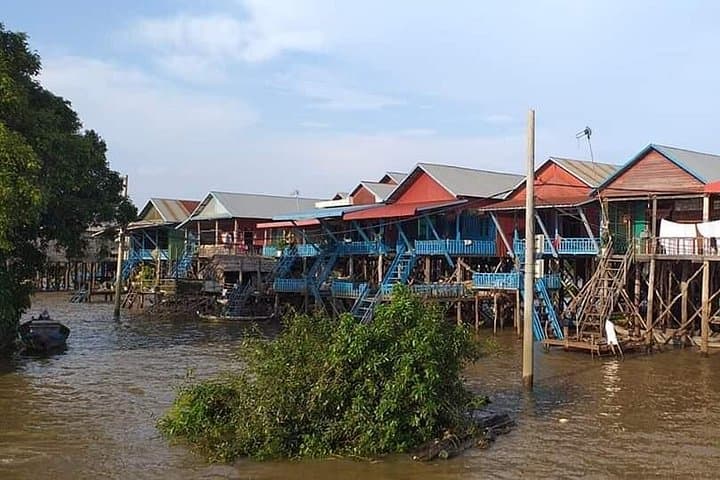
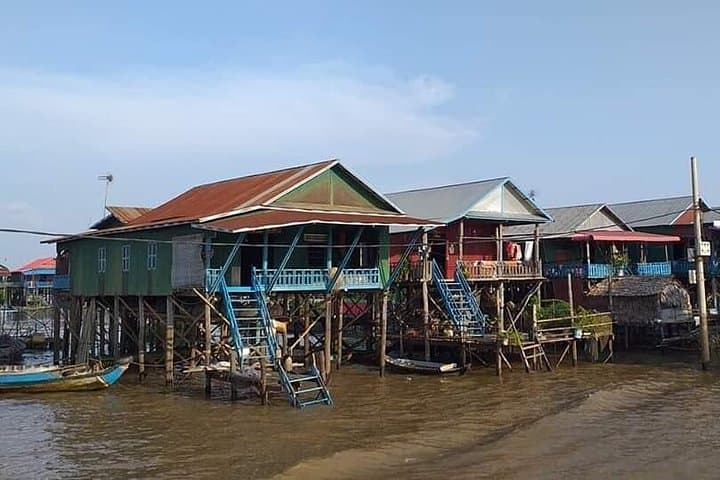
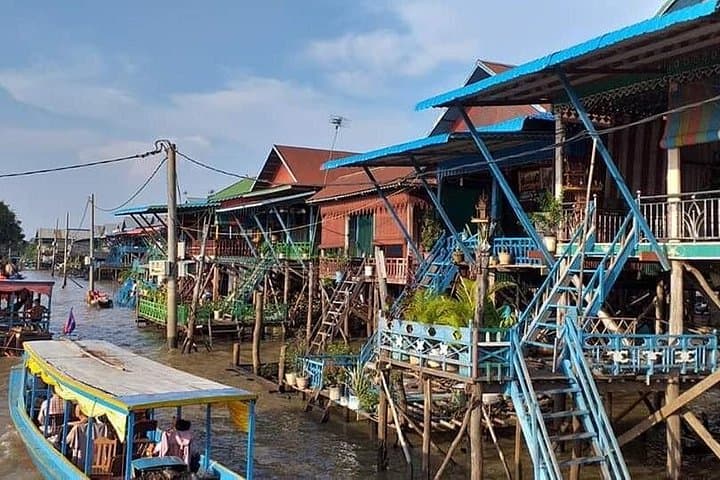
The boat slips away from a wooden landing and the lake takes command — water pushing at your hull, stilt houses rising like slow-motion architecture above the waves. In a single half-day you'll trade Siem Reap's dusty streets for a landscape that alternates between open water and narrow canals threaded through floating villages where schools, shops and shrines ride the tide.
Verified experiences and guided adventures in the surrounding area.
Operated by Buffalo Angkor · Siem Reap, Siem Reap Province
The boat slips away from a wooden landing and the lake takes command — water pushing at your hull, stilt houses rising like slow-motion architecture above the waves. In a single half-day you'll trade Siem Reap's dusty streets for a landscape that alternates between open water and narrow canals threaded through floating villages where schools, shops and shrines ride the tide.
Tonle Sap is a geological and hydrological marvel: its flow reverses seasonally as Mekong floodwaters spill into the lake, swelling it into Southeast Asia's largest freshwater body. Villages such as Kompong Phluk grew with that rhythm — houses on stilts or floating platforms built to live with the water rather than fight it. Culture here is practical and visible: rice planted on the back roads, families tending ducks, and fermented fish paste made along the shore.
Expect to glide past bird-filled shallows and community life that adapts to months of high water. Guides will often stop at a local monastery or market to sample Khmer snacks and observe daily routines.
Practical notes: this tour runs about 4–5 hours with pickup from Siem Reap; high-water months offer the most dramatic scenery and boat access (October–March/July–March depending on rains). Wear sun protection, insect repellent, and non-slip shoes for wet docks. Carry water and a light rain layer in the wet season. Respect private homes — ask before photographing inside village compounds — and listen to crew instructions for boarding and alighting. The half-day cruise is an accessible, low-impact way to experience Tonle Sap’s seasonal life and the adaptive culture of its lake communities.
High-water months provide the fullest lake views and best boat access; broadly aim for October–March, but local conditions vary with the monsoon.
Yes — the cruise is low-impact and wheelchair-accessible options are noted, but boarding docks can be wet; small children should be supervised.
Small daypacks are fine; large tripods or bulky luggage may be difficult on narrow boats — check with the operator before bringing gear.
Yes — most itineraries include a short village visit and a stop at a local temple; follow the guide’s cues for respectful photography and interaction.
Buffalo Angkor operates guided outdoor trips and adventures with an emphasis on safety, stewardship, and memorable experiences.

The boat slips away from a wooden landing and the lake takes command — water pushing at your hull, stilt houses rising like slow-motion architecture above the waves. In a single half-day you'll trade Siem Reap's dusty streets for a landscape that alternates between open water and narrow canals threaded through floating villages where schools, shops and shrines ride the tide.
The boat slips away from a wooden landing and the lake takes command — water pushing at your hull, stilt houses rising like slow-motion architecture above the waves. In a single half-day you'll trade Siem Reap's dusty streets for a landscape that alternates between open water and narrow canals threaded through floating villages where schools, shops and shrines ride the tide.
Tonle Sap is a geological and hydrological marvel: its flow reverses seasonally as Mekong floodwaters spill into the lake, swelling it into Southeast Asia's largest freshwater body. Villages such as Kompong Phluk grew with that rhythm — houses on stilts or floating platforms built to live with the water rather than fight it. Culture here is practical and visible: rice planted on the back roads, families tending ducks, and fermented fish paste made along the shore.
Expect to glide past bird-filled shallows and community life that adapts to months of high water. Guides will often stop at a local monastery or market to sample Khmer snacks and observe daily routines.
Practical notes: this tour runs about 4–5 hours with pickup from Siem Reap; high-water months offer the most dramatic scenery and boat access (October–March/July–March depending on rains). Wear sun protection, insect repellent, and non-slip shoes for wet docks. Carry water and a light rain layer in the wet season. Respect private homes — ask before photographing inside village compounds — and listen to crew instructions for boarding and alighting. The half-day cruise is an accessible, low-impact way to experience Tonle Sap’s seasonal life and the adaptive culture of its lake communities.