THE ADVENTURE COLLECTIVE® · Independent discovery and booking for outdoor travel

Glide through Tonle Sap’s watery streets to Kompong Pluk and meet the people whose lives rise and fall with the lake. This half-day boat tour blends cultural insight, wildlife sightings and practical local knowledge for travelers short on time.
Glide through Tonle Sap’s watery streets to Kompong Pluk and meet the people whose lives rise and fall with the lake. This half-day boat tour blends cultural insight, wildlife sightings and practical local knowledge for travelers short on time.
Morning light skims a vast inland sea as your guide steers a long-tail boat into narrow channels where stilt houses rise and fall with the lake. The water moves like a living floor; boats thread between trees and wooden stilts while children wave from shaded porches. You arrive feeling small in a landscape that shifts with the seasons.
Verified experiences and guided adventures in the surrounding area.
Operated by Siem Reap Private Tours · Kompong Pluk, Siem Reap Province
Morning light skims a vast inland sea as your guide steers a long-tail boat into narrow channels where stilt houses rise and fall with the lake. The water moves like a living floor; boats thread between trees and wooden stilts while children wave from shaded porches. You arrive feeling small in a landscape that shifts with the seasons.
Tonle Sap is Southeast Asia’s great seasonal pulse—floodplain, fishery and lifeblood for villages like Kompong Pluk. Centuries of Cambodians have adapted to its rhythm: wooden houses on stilts, schools and markets that float when the rainy season swells the lake. Geologically it’s a shallow basin fed by the Tonle Sap River; ecologically it supports rich fisheries that sustain local culture and commerce.
On this half-day tour expect a mix of gentle cruising and short onshore stops: a floating school, a small fish and crocodile farm, the raised walkways and the shuttered, water-level houses. Guides explain livelihoods—fishing, drying, and trading—and point out birds and the tangle of flooded mangrove-like trees that become islands in high water.
Practical side: tours typically include hotel pickup by air-conditioned van, bottled water and a cold towel; wear quick-dry clothing, sun protection and modest dress for village visits. Morning departures avoid heat and bring better light for photos; afternoons can be windier. Bring cash in riel or dollars for small purchases, and respect private homes—ask before photographing. The trip is low-impact but culturally sensitive: observe, listen and leave no trace.
Expect about 4–6 hours total including hotel pickup, travel to the lake, the boat visit and return to Siem Reap.
Basic restroom facilities are available near the village or at the boat base—bring hand sanitizer and small change for use.
Yes—families are common; infants should sit on laps and safety on boats is managed by the crew, but supervise small children near water.
An English-speaking licensed guide is included, and they can interpret local life and customs during visits.
Siem Reap Private Tours operates guided outdoor trips and adventures with an emphasis on safety, stewardship, and memorable experiences.
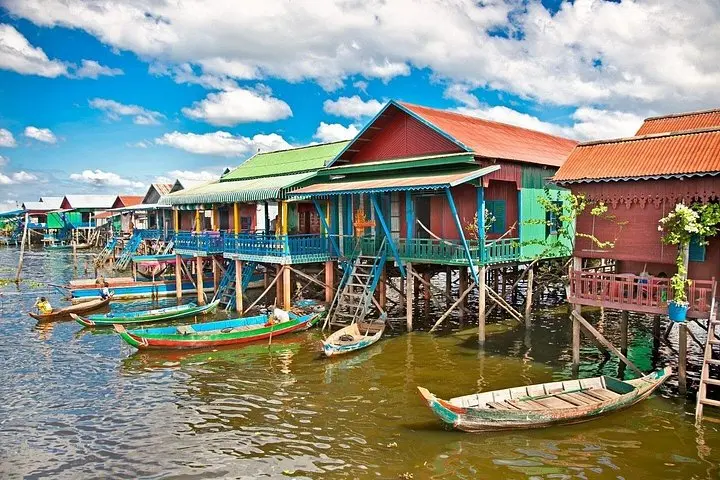
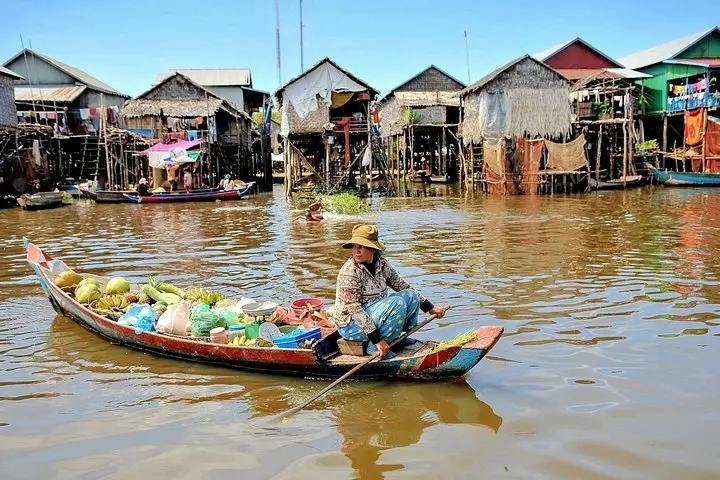
Morning light skims a vast inland sea as your guide steers a long-tail boat into narrow channels where stilt houses rise and fall with the lake. The water moves like a living floor; boats thread between trees and wooden stilts while children wave from shaded porches. You arrive feeling small in a landscape that shifts with the seasons.
Morning light skims a vast inland sea as your guide steers a long-tail boat into narrow channels where stilt houses rise and fall with the lake. The water moves like a living floor; boats thread between trees and wooden stilts while children wave from shaded porches. You arrive feeling small in a landscape that shifts with the seasons.
Tonle Sap is Southeast Asia’s great seasonal pulse—floodplain, fishery and lifeblood for villages like Kompong Pluk. Centuries of Cambodians have adapted to its rhythm: wooden houses on stilts, schools and markets that float when the rainy season swells the lake. Geologically it’s a shallow basin fed by the Tonle Sap River; ecologically it supports rich fisheries that sustain local culture and commerce.
On this half-day tour expect a mix of gentle cruising and short onshore stops: a floating school, a small fish and crocodile farm, the raised walkways and the shuttered, water-level houses. Guides explain livelihoods—fishing, drying, and trading—and point out birds and the tangle of flooded mangrove-like trees that become islands in high water.
Practical side: tours typically include hotel pickup by air-conditioned van, bottled water and a cold towel; wear quick-dry clothing, sun protection and modest dress for village visits. Morning departures avoid heat and bring better light for photos; afternoons can be windier. Bring cash in riel or dollars for small purchases, and respect private homes—ask before photographing. The trip is low-impact but culturally sensitive: observe, listen and leave no trace.