THE ADVENTURE COLLECTIVE® · Independent discovery and booking for outdoor travel

Drive from Avignon into the Luberon for a half-day of ochre cliffs, hilltop stone villages and the mysterious resurgence of the Sorgue at Fontaine-de-Vaucluse. Small groups, easy walks and photogenic panoramas make this an efficient taste of Provence.
Drive from Avignon into the Luberon for a half-day of ochre cliffs, hilltop stone villages and the mysterious resurgence of the Sorgue at Fontaine-de-Vaucluse. Small groups, easy walks and photogenic panoramas make this an efficient taste of Provence.
The minivan pulls out of Avignon at dawn and the air changes: vineyards thin into honey-colored scrub, and the road climbs toward the Luberon’s ochre cliffs. Roussillon announces itself in a flaring ribbon of red and orange soil that seems to warm the stone houses around it. Later, Gordes appears perched on limestone, terraces and dry-stone walls folding down the slope like steps.
Verified experiences and guided adventures in the surrounding area.
Operated by A la Francaise Tourisme · Fontaine-de-Vaucluse, Vaucluse
The minivan pulls out of Avignon at dawn and the air changes: vineyards thin into honey-colored scrub, and the road climbs toward the Luberon’s ochre cliffs. Roussillon announces itself in a flaring ribbon of red and orange soil that seems to warm the stone houses around it. Later, Gordes appears perched on limestone, terraces and dry-stone walls folding down the slope like steps.
This half-day loop blends geology and human habit: the ochre deposits around Roussillon are weathered remnants of iron-rich sediments once mined and traded, while Gordes’ stacked stone houses reflect centuries of Provençal building on a limestone escarpment. At Fontaine-de-Vaucluse you follow the Sorgue upstream to the spring; the resurgence bubbles from a karst throat whose depth has eluded speleologists and gives the river a cool, mysterious pulse.
Practical lines are clear. The tour runs about 5–5.5 hours with a maximum of eight people, transport in an air-conditioned minivan, and guided stops for photos and short walks. Expect cobbled streets, short uphill stretches and a riverside path to the source of the Sorgue. Bring sturdy shoes, sun protection and a refillable water bottle; there’s free time in each village for cafés and quick shopping.
Timing matters: spring and autumn offer milder walking and fewer crowds, while summer heats up quickly—start early and hydrate. The small-group format keeps the pace relaxed, letting you trade sweeping overlooks for neighborhood lanes and the quiet of a karst spring.
Meet outside Avignon’s Tourist Office; be ready at least 15 minutes before the scheduled departure time to check in.
It’s a short, mostly flat riverside walk suitable for most people; there are steps and cobbles in village centers, but no technical climbs.
Children under 4 are not permitted on this tour; older children are welcome but should be comfortable walking on uneven surfaces.
Yes—operators may modify stops for safety or to avoid heavy crowds; the tour can be canceled for severe weather with refund policies applying.
A la Francaise Tourisme operates guided outdoor trips and adventures with an emphasis on safety, stewardship, and memorable experiences.
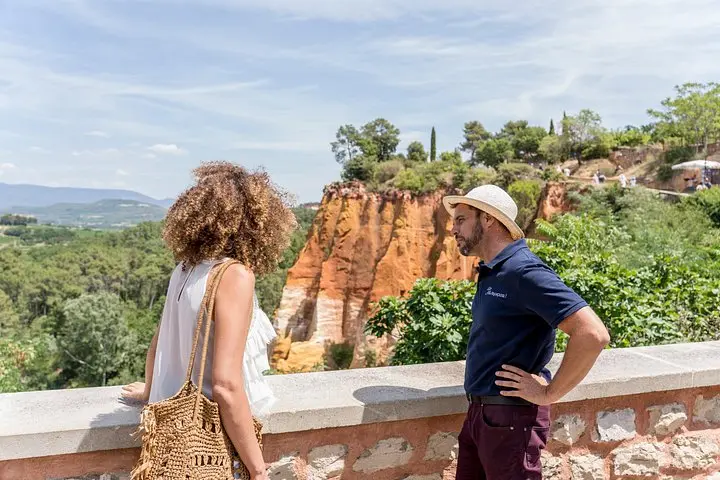
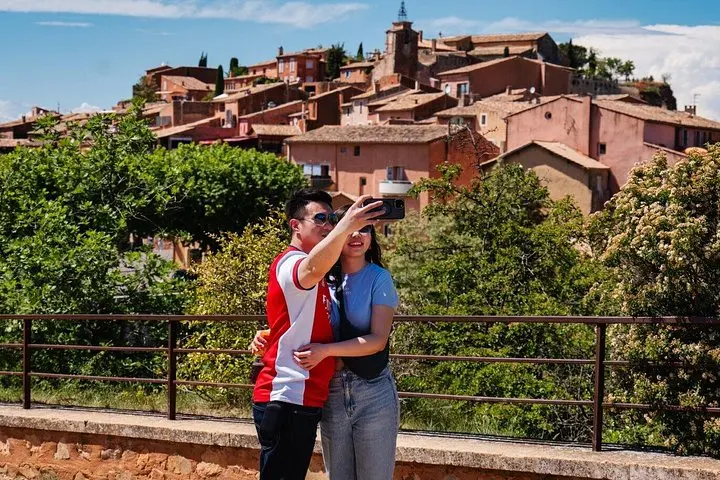
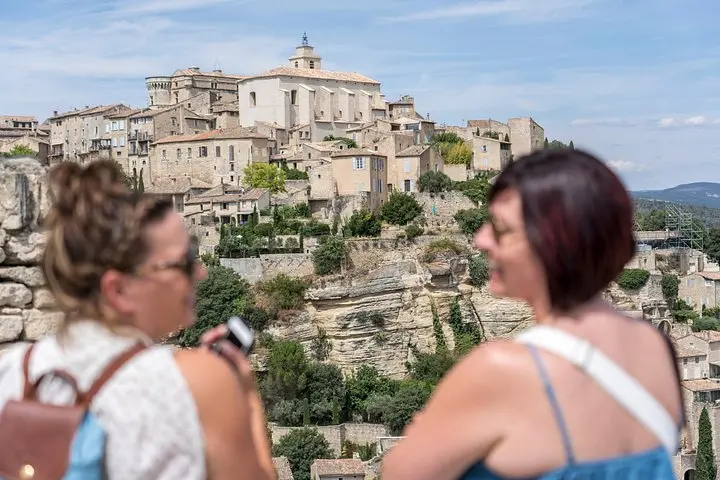
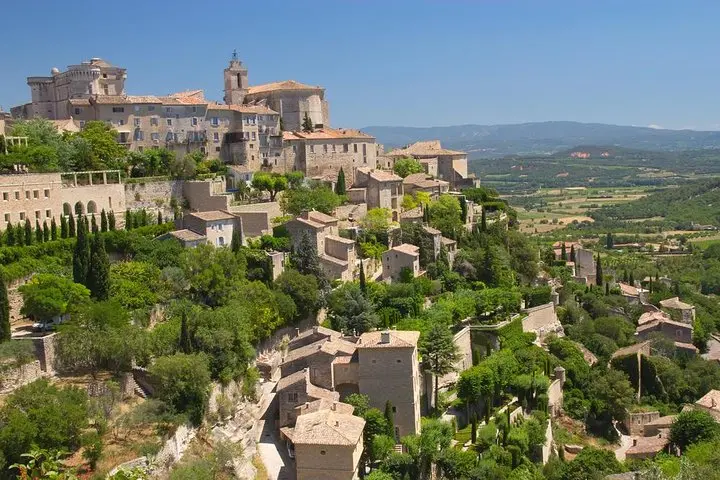
The minivan pulls out of Avignon at dawn and the air changes: vineyards thin into honey-colored scrub, and the road climbs toward the Luberon’s ochre cliffs. Roussillon announces itself in a flaring ribbon of red and orange soil that seems to warm the stone houses around it. Later, Gordes appears perched on limestone, terraces and dry-stone walls folding down the slope like steps.
The minivan pulls out of Avignon at dawn and the air changes: vineyards thin into honey-colored scrub, and the road climbs toward the Luberon’s ochre cliffs. Roussillon announces itself in a flaring ribbon of red and orange soil that seems to warm the stone houses around it. Later, Gordes appears perched on limestone, terraces and dry-stone walls folding down the slope like steps.
This half-day loop blends geology and human habit: the ochre deposits around Roussillon are weathered remnants of iron-rich sediments once mined and traded, while Gordes’ stacked stone houses reflect centuries of Provençal building on a limestone escarpment. At Fontaine-de-Vaucluse you follow the Sorgue upstream to the spring; the resurgence bubbles from a karst throat whose depth has eluded speleologists and gives the river a cool, mysterious pulse.
Practical lines are clear. The tour runs about 5–5.5 hours with a maximum of eight people, transport in an air-conditioned minivan, and guided stops for photos and short walks. Expect cobbled streets, short uphill stretches and a riverside path to the source of the Sorgue. Bring sturdy shoes, sun protection and a refillable water bottle; there’s free time in each village for cafés and quick shopping.
Timing matters: spring and autumn offer milder walking and fewer crowds, while summer heats up quickly—start early and hydrate. The small-group format keeps the pace relaxed, letting you trade sweeping overlooks for neighborhood lanes and the quiet of a karst spring.