THE ADVENTURE COLLECTIVE® · Independent discovery and booking for outdoor travel

Experience Marrakech’s medina in a focused half-day: explore Bahia Palace’s ornate courtyards, step into the scholarly calm of Ben Youssef Medersa, and navigate lively souks with a local guide. Ideal for travelers wanting a practical, sensory introduction to the Red City.
Experience Marrakech’s medina in a focused half-day: explore Bahia Palace’s ornate courtyards, step into the scholarly calm of Ben Youssef Medersa, and navigate lively souks with a local guide. Ideal for travelers wanting a practical, sensory introduction to the Red City.
A morning in Marrakech begins under a wide, dry sky where ochre walls catch the sun and the medina’s alleys unfurl like a living map. On this half-day guided city tour visitors move from bustling squares to quiet courtyards: the crowd thins and the carved cedar ceilings and zellige tiles of Bahia Palace come into focus, while the Ben Youssef Medersa reveals finely worked stucco and marble that once housed scholars.
Verified experiences and guided adventures in the surrounding area.
Operated by Great Travel Morocco · Marrakech, Marrakech-Safi
A morning in Marrakech begins under a wide, dry sky where ochre walls catch the sun and the medina’s alleys unfurl like a living map. On this half-day guided city tour visitors move from bustling squares to quiet courtyards: the crowd thins and the carved cedar ceilings and zellige tiles of Bahia Palace come into focus, while the Ben Youssef Medersa reveals finely worked stucco and marble that once housed scholars.
Marrakech grew from an 11th-century Almoravid foundation into a regional capital, its red ramparts built from local clay and sandstone that give the city its nickname, the Red City. The medina’s layout reflects centuries of trade and cultural exchange—Andalusian artisans, Berber traditions, and Ottoman-era influences. Stalls sell textiles, spices, and metalwork; negotiating price is part practicality, part social ritual.
Practically, expect 4–4.5 hours with moderate walking across uneven stone and occasional steps (roughly 3–4 km total). Comfortable, closed shoes and a lightweight scarf for mosque-adjacent sites are sensible. Midday in summer brings heat—schedule the tour for morning or late afternoon when possible. Guides typically include bottled water and hotel pickup, but carry local cash for small purchases and tips.
Photography is welcomed but be mindful around religious sites and vendors. Where the souks pressure you, step back, breathe, and let the guide take the lead.
This half-day offers a compact introduction to Marrakech’s architecture, markets, and living history—ideal for travelers who want a concentrated, practical encounter with the city’s sensory pulse before deeper exploration.
The guided half-day lasts about 4–4.5 hours and covers several sites within the medina with moderate walking.
Admissions are generally not included; bring cash for entry or confirm with the operator before booking.
Yes—this itinerary is listed as physically easy and allows stroller access, though some alleys are narrow and crowded.
Tipping is customary; 5–10% of the tour cost or an appropriate local amount is appreciated for good service.
Great Travel Morocco operates guided outdoor trips and adventures with an emphasis on safety, stewardship, and memorable experiences.
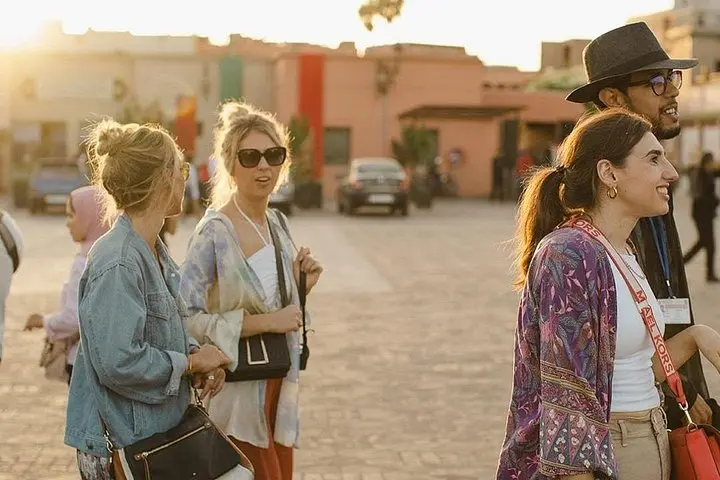
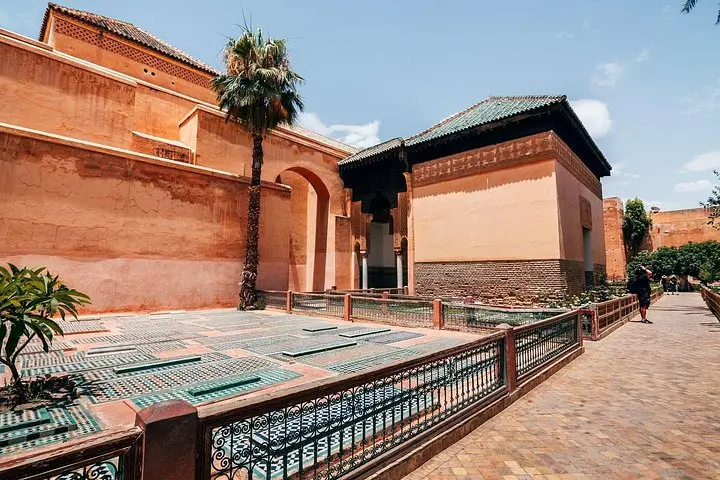
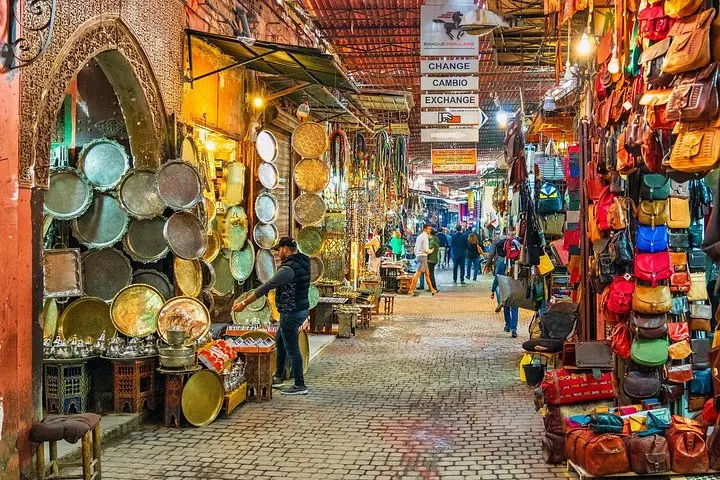
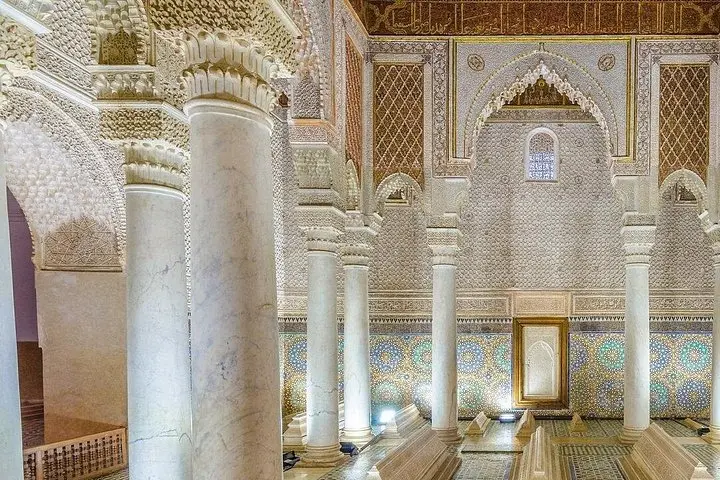
A morning in Marrakech begins under a wide, dry sky where ochre walls catch the sun and the medina’s alleys unfurl like a living map. On this half-day guided city tour visitors move from bustling squares to quiet courtyards: the crowd thins and the carved cedar ceilings and zellige tiles of Bahia Palace come into focus, while the Ben Youssef Medersa reveals finely worked stucco and marble that once housed scholars.
A morning in Marrakech begins under a wide, dry sky where ochre walls catch the sun and the medina’s alleys unfurl like a living map. On this half-day guided city tour visitors move from bustling squares to quiet courtyards: the crowd thins and the carved cedar ceilings and zellige tiles of Bahia Palace come into focus, while the Ben Youssef Medersa reveals finely worked stucco and marble that once housed scholars.
Marrakech grew from an 11th-century Almoravid foundation into a regional capital, its red ramparts built from local clay and sandstone that give the city its nickname, the Red City. The medina’s layout reflects centuries of trade and cultural exchange—Andalusian artisans, Berber traditions, and Ottoman-era influences. Stalls sell textiles, spices, and metalwork; negotiating price is part practicality, part social ritual.
Practically, expect 4–4.5 hours with moderate walking across uneven stone and occasional steps (roughly 3–4 km total). Comfortable, closed shoes and a lightweight scarf for mosque-adjacent sites are sensible. Midday in summer brings heat—schedule the tour for morning or late afternoon when possible. Guides typically include bottled water and hotel pickup, but carry local cash for small purchases and tips.
Photography is welcomed but be mindful around religious sites and vendors. Where the souks pressure you, step back, breathe, and let the guide take the lead.
This half-day offers a compact introduction to Marrakech’s architecture, markets, and living history—ideal for travelers who want a concentrated, practical encounter with the city’s sensory pulse before deeper exploration.