THE ADVENTURE COLLECTIVE® · Independent discovery and booking for outdoor travel

Experience Marrakech’s Medina on a four-hour guided walk that mixes Jemaa el-Fna energy with quieter palaces and hidden alleys. Perfect for first-time visitors who want an efficient, local-led orientation of the city’s history, markets, and architecture.
Experience Marrakech’s Medina on a four-hour guided walk that mixes Jemaa el-Fna energy with quieter palaces and hidden alleys. Perfect for first-time visitors who want an efficient, local-led orientation of the city’s history, markets, and architecture.
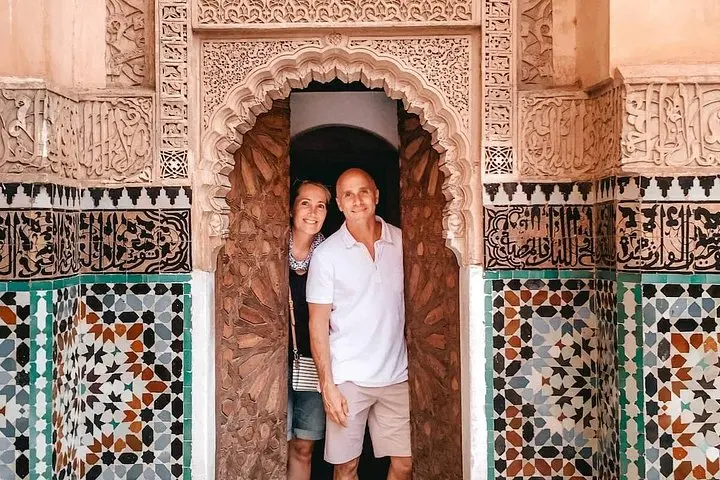
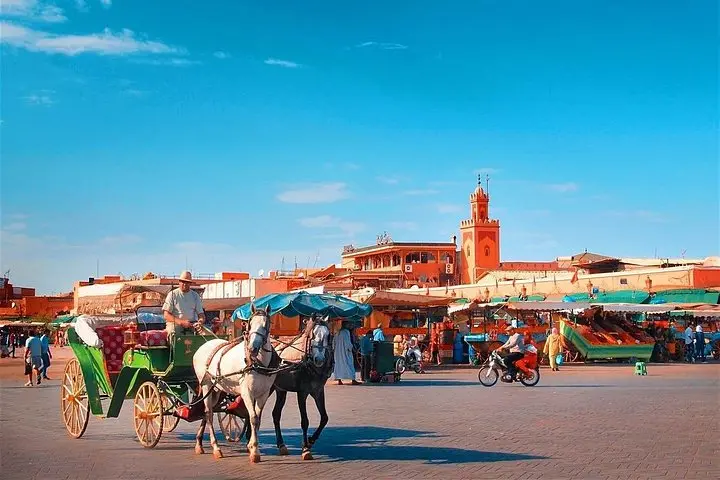
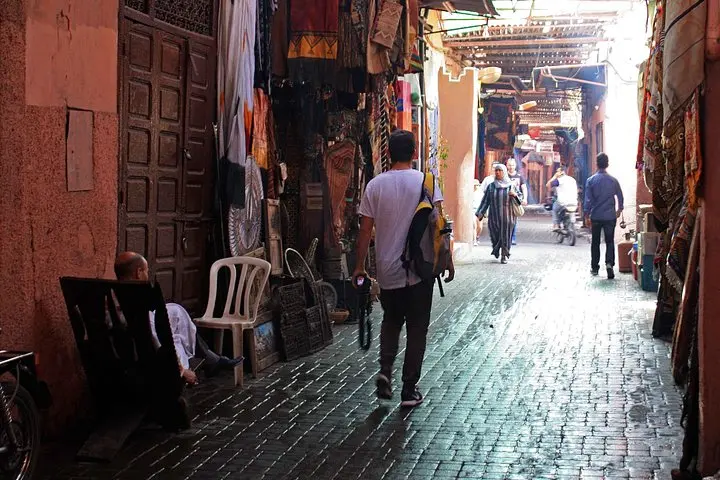
The sun leans low over Jemaa el-Fna and the square dares you to move with its current—vendors calling, orange-juice carts clinking, and narrow alleys that funnel you deeper into the Medina. On a four-hour guided walk you’ll push past crowds and into quieter courtyards, where carved cedar and zellij tile keep older stories in the shadows.
Verified experiences and guided adventures in the surrounding area.
Operated by Smart Morocco Tours Excursions · Marrakech, Marrakech-Safi
The sun leans low over Jemaa el-Fna and the square dares you to move with its current—vendors calling, orange-juice carts clinking, and narrow alleys that funnel you deeper into the Medina. On a four-hour guided walk you’ll push past crowds and into quieter courtyards, where carved cedar and zellij tile keep older stories in the shadows.
Marrakech’s medina is layered history: Almoravid foundations, Saadian marble, and later Alaouite neighborhoods stitched together by souks that grew around trade routes. The Koutoubia’s minaret marks a skyline forged from brick and faith, while Bahia Palace and Medersa Ben Youssef show the decorative metalwork and geometry that define Moroccan architecture. Geologically, the city sits on the Red City’s iron-rich clays, the ochre walls catching light differently at dawn and dusk.
Culturally, the Medina is a living market—artisans, spice merchants, storytellers—so etiquette matters: haggle respectfully, ask before photographing people, and follow your guide through tighter alleys where foot traffic rules apply.
Practically, expect uneven cobbles, short stairways inside riads, and bursts of heat in summer; comfortable shoes and a steady water bottle change the day. The guide can tailor stops—more souk time, deeper history at Saadian Tombs, or a rooftop break overlooking the square. This half-day is ideal for first-time visitors who want an efficient orientation that blends the loud pulse of Jemaa el-Fna with quieter heritage sites, leaving time afterward to return to the medina with confidence and curiosity.
The tour is four hours and typically covers 2–4 miles on mostly flat but uneven surfaces with some short staircases.
This half-day tour usually does not include admissions; confirm with the operator if you want tickets arranged in advance.
Yes—guides typically tailor the route to your interests, emphasizing crafts, history, or food stops when requested.
The tour is family-friendly but the Medina’s narrow alleys and cobbles can be challenging for strollers and some mobility aids—ask about meeting points and more accessible routes.
Smart Morocco Tours Excursions operates guided outdoor trips and adventures with an emphasis on safety, stewardship, and memorable experiences.
The sun leans low over Jemaa el-Fna and the square dares you to move with its current—vendors calling, orange-juice carts clinking, and narrow alleys that funnel you deeper into the Medina. On a four-hour guided walk you’ll push past crowds and into quieter courtyards, where carved cedar and zellij tile keep older stories in the shadows.
The sun leans low over Jemaa el-Fna and the square dares you to move with its current—vendors calling, orange-juice carts clinking, and narrow alleys that funnel you deeper into the Medina. On a four-hour guided walk you’ll push past crowds and into quieter courtyards, where carved cedar and zellij tile keep older stories in the shadows.
Marrakech’s medina is layered history: Almoravid foundations, Saadian marble, and later Alaouite neighborhoods stitched together by souks that grew around trade routes. The Koutoubia’s minaret marks a skyline forged from brick and faith, while Bahia Palace and Medersa Ben Youssef show the decorative metalwork and geometry that define Moroccan architecture. Geologically, the city sits on the Red City’s iron-rich clays, the ochre walls catching light differently at dawn and dusk.
Culturally, the Medina is a living market—artisans, spice merchants, storytellers—so etiquette matters: haggle respectfully, ask before photographing people, and follow your guide through tighter alleys where foot traffic rules apply.
Practically, expect uneven cobbles, short stairways inside riads, and bursts of heat in summer; comfortable shoes and a steady water bottle change the day. The guide can tailor stops—more souk time, deeper history at Saadian Tombs, or a rooftop break overlooking the square. This half-day is ideal for first-time visitors who want an efficient orientation that blends the loud pulse of Jemaa el-Fna with quieter heritage sites, leaving time afterward to return to the medina with confidence and curiosity.