THE ADVENTURE COLLECTIVE® · Independent discovery and booking for outdoor travel

Explore Marrakech’s Medina in a focused half-day private tour. Visit the Koutoubia, Jemaa el-Fna, Saadian Tombs and Bahia Palace with a local guide while sampling mint tea and local bread.
Explore Marrakech’s Medina in a focused half-day private tour. Visit the Koutoubia, Jemaa el-Fna, Saadian Tombs and Bahia Palace with a local guide while sampling mint tea and local bread.
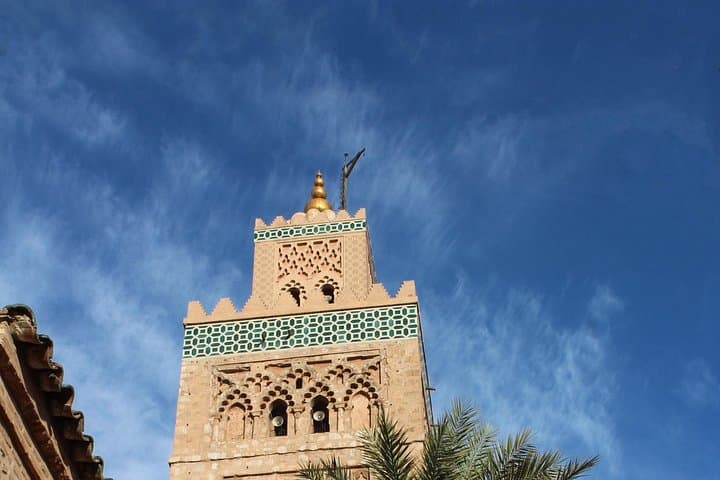
The city opens with a call to prayer and a swirl of spice-scented air. On a half-day private guided tour through Marrakech’s Medina, you move from wide plaza to tight alley, the Koutoubia’s minaret watching over orange-tiled roofs while vendors call from shadowed stalls.
Verified experiences and guided adventures in the surrounding area.
Operated by We Travel · Marrakech, Marrakech-Safi
The city opens with a call to prayer and a swirl of spice-scented air. On a half-day private guided tour through Marrakech’s Medina, you move from wide plaza to tight alley, the Koutoubia’s minaret watching over orange-tiled roofs while vendors call from shadowed stalls.
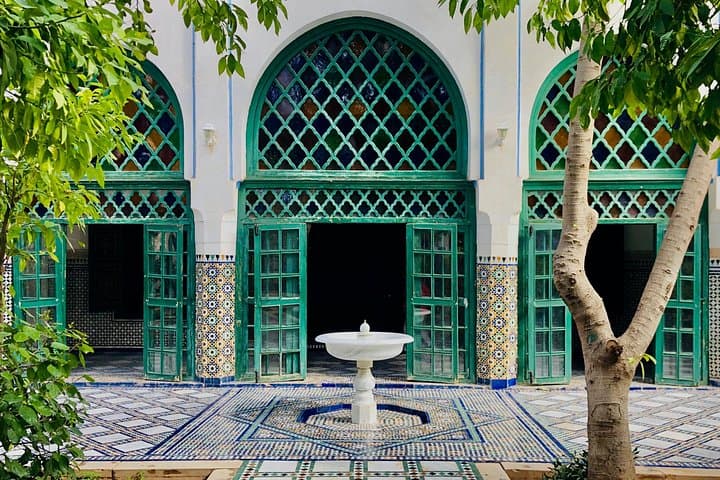
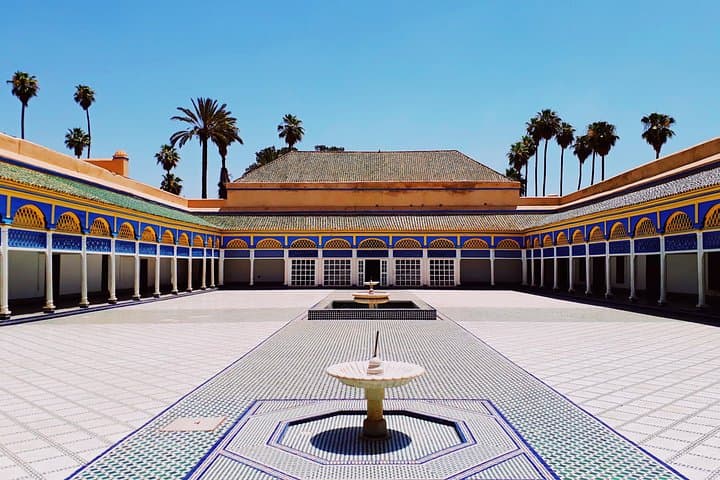
Start with the mosque’s exterior—an Almohad landmark from the 12th century—and let the guide frame its role in the city’s medieval growth. Walk toward Jemaa el-Fna, a UNESCO-listed square where snake-charmers, storytellers, and food stalls create an ever-changing street theater. The Saadian Tombs offer a quieter counterpoint: 16th–17th century tomb architecture with carved stucco and zellij mosaic work. End in the Bahia Palace’s courtyards to see late-19th-century artisan detail and cooling gardens.
Geology here is subtle: the city sits on red earth and alluvial plains at the edge of the High Atlas foothills, which appear on the horizon and influence the light and seasonal winds. Culturally, the Medina remains a living commercial quarter—markets for spices, textiles, and leather, and rooftop cafés for mint tea and people-watching.
Practical guidance: choose morning departures to avoid peak heat, wear closed-toe shoes for uneven paving, and carry small bills for purchases and tips. Tours are wheelchair-accessible in large parts but confirm specifics at booking. Bring water, a lightweight scarf for modesty and sun, and a camera with spare battery—the city moves fast and rewards quick feet and a patient eye.
Non-Muslims cannot enter the mosque’s prayer hall, but the exterior, gardens and surrounding plaza are open to visitors.
Hotel transfers are available for a fee; confirm pickup options and timing when you book the private tour.
Many areas and surfaces are wheelchair-accessible, but some narrow alleys in the Medina can be tight—notify the operator in advance to plan an accessible route.
Yes—private tours typically allow flexible departure times and route adjustments; communicate priorities (markets, photography, food stops) when booking.
We Travel operates guided outdoor trips and adventures with an emphasis on safety, stewardship, and memorable experiences.
The city opens with a call to prayer and a swirl of spice-scented air. On a half-day private guided tour through Marrakech’s Medina, you move from wide plaza to tight alley, the Koutoubia’s minaret watching over orange-tiled roofs while vendors call from shadowed stalls.
The city opens with a call to prayer and a swirl of spice-scented air. On a half-day private guided tour through Marrakech’s Medina, you move from wide plaza to tight alley, the Koutoubia’s minaret watching over orange-tiled roofs while vendors call from shadowed stalls.
Start with the mosque’s exterior—an Almohad landmark from the 12th century—and let the guide frame its role in the city’s medieval growth. Walk toward Jemaa el-Fna, a UNESCO-listed square where snake-charmers, storytellers, and food stalls create an ever-changing street theater. The Saadian Tombs offer a quieter counterpoint: 16th–17th century tomb architecture with carved stucco and zellij mosaic work. End in the Bahia Palace’s courtyards to see late-19th-century artisan detail and cooling gardens.
Geology here is subtle: the city sits on red earth and alluvial plains at the edge of the High Atlas foothills, which appear on the horizon and influence the light and seasonal winds. Culturally, the Medina remains a living commercial quarter—markets for spices, textiles, and leather, and rooftop cafés for mint tea and people-watching.
Practical guidance: choose morning departures to avoid peak heat, wear closed-toe shoes for uneven paving, and carry small bills for purchases and tips. Tours are wheelchair-accessible in large parts but confirm specifics at booking. Bring water, a lightweight scarf for modesty and sun, and a camera with spare battery—the city moves fast and rewards quick feet and a patient eye.