THE ADVENTURE COLLECTIVE® · Independent discovery and booking for outdoor travel

In a brisk half-day from Quebec City, feel the spray of Montmorency Falls and step into the hushed basilica at Sainte-Anne-de-Beaupré. This practical guide covers what to expect, timing tips, and how to get the best views on a short sightseeing loop.
In a brisk half-day from Quebec City, feel the spray of Montmorency Falls and step into the hushed basilica at Sainte-Anne-de-Beaupré. This practical guide covers what to expect, timing tips, and how to get the best views on a short sightseeing loop.
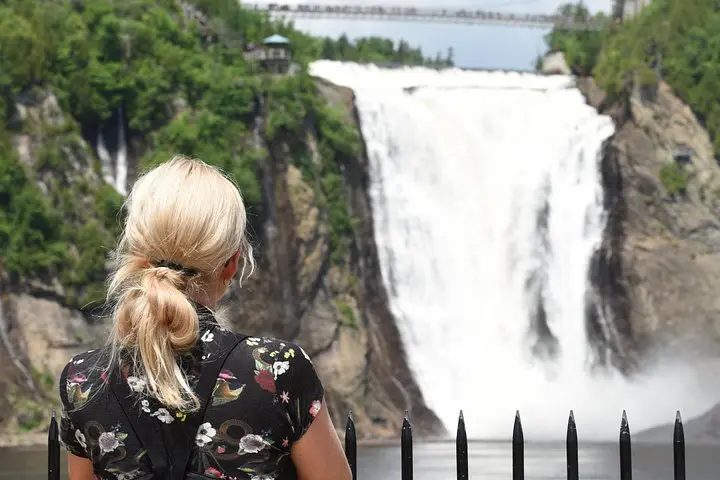
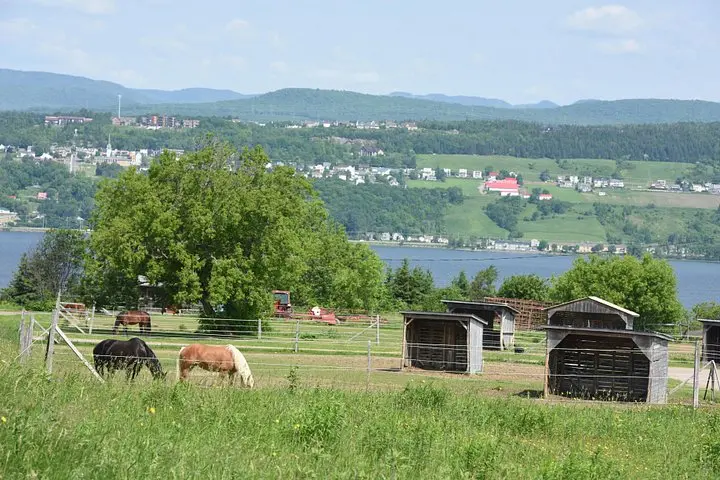
A short drive out of Old Québec unfolds in stages: the city’s stone facades drop away and the St. Lawrence opens to fields and rivers until the road pauses at Montmorency Falls. You feel the falls before you see them — a constant roar and spray that push cool mist onto the viewing platforms. At 83 meters (272 ft) the cascade is higher than Niagara, and visitors move between the base trail, a high suspension footbridge, and stairs that rise to a cresting overlook.
Verified experiences and guided adventures in the surrounding area.
Operated by Unitours · Quebec City, Quebec
A short drive out of Old Québec unfolds in stages: the city’s stone facades drop away and the St. Lawrence opens to fields and rivers until the road pauses at Montmorency Falls. You feel the falls before you see them — a constant roar and spray that push cool mist onto the viewing platforms. At 83 meters (272 ft) the cascade is higher than Niagara, and visitors move between the base trail, a high suspension footbridge, and stairs that rise to a cresting overlook.
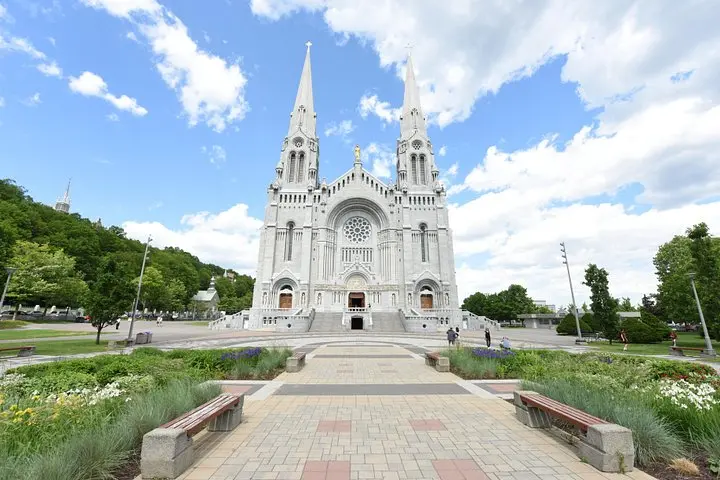
History here is layered: Indigenous peoples traveled these waterways long before European settlement; later the falls marked the eastern approach to the nascent city. Sainte-Anne-de-Beaupré, farther east, grew as a pilgrimage site after numerous reported healings in the 19th century, its basilica now drawing architecture lovers and faith pilgrims alike. The region’s geology is classic St. Lawrence lowlands — a mix of Precambrian bedrock and glacially scoured valleys giving way to wide river vistas.
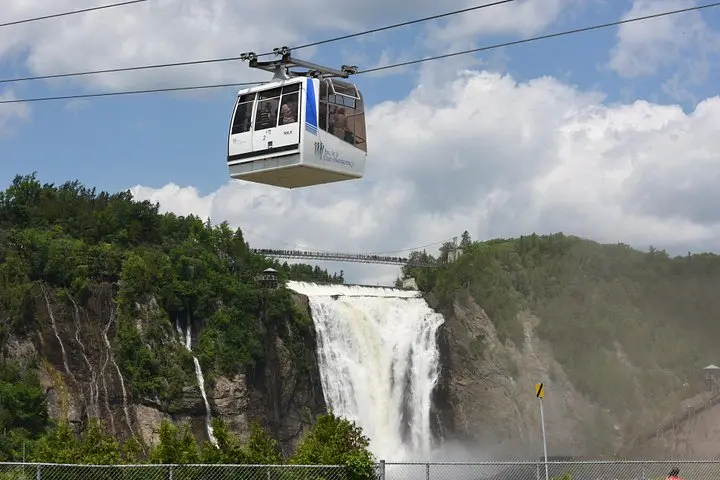
Practically, this half-day loop (roughly 4–5 hours by tour) gives about 40–45 minutes at each stop to photograph, walk circuits, and visit the basilica. Expect paved viewpoints, stairs and a cable-car option at the falls, and wide interior aisles at Sainte-Anne for quiet observation. Timing tips: mornings are less crowded at the falls, and late spring runoff makes the flow most dramatic. Footwear with grip and a light waterproof layer will keep the mist and sudden showers from spoiling the visit. The tour is an easy, accessible way to combine nature, culture, and regional flavors without extensive planning.
The tour runs about 4.5 hours total, with roughly 40–45 minutes allocated at Montmorency Falls and at Sainte-Anne-de-Beaupré.
This standard sightseeing tour typically includes park access to Montmorency viewpoints; check the booking page for specifics on admissions and included stops.
Yes—paths and many viewpoints are stroller-accessible, though some stairs and the suspension bridge are less stroller-friendly and may require a short carry.
Summer offers full access and the best weather; spring brings peak flow over the falls; fall adds foliage color, while winter offers dramatic ice formations but colder conditions.
Unitours operates guided outdoor trips and adventures with an emphasis on safety, stewardship, and memorable experiences.
A short drive out of Old Québec unfolds in stages: the city’s stone facades drop away and the St. Lawrence opens to fields and rivers until the road pauses at Montmorency Falls. You feel the falls before you see them — a constant roar and spray that push cool mist onto the viewing platforms. At 83 meters (272 ft) the cascade is higher than Niagara, and visitors move between the base trail, a high suspension footbridge, and stairs that rise to a cresting overlook.
A short drive out of Old Québec unfolds in stages: the city’s stone facades drop away and the St. Lawrence opens to fields and rivers until the road pauses at Montmorency Falls. You feel the falls before you see them — a constant roar and spray that push cool mist onto the viewing platforms. At 83 meters (272 ft) the cascade is higher than Niagara, and visitors move between the base trail, a high suspension footbridge, and stairs that rise to a cresting overlook.
History here is layered: Indigenous peoples traveled these waterways long before European settlement; later the falls marked the eastern approach to the nascent city. Sainte-Anne-de-Beaupré, farther east, grew as a pilgrimage site after numerous reported healings in the 19th century, its basilica now drawing architecture lovers and faith pilgrims alike. The region’s geology is classic St. Lawrence lowlands — a mix of Precambrian bedrock and glacially scoured valleys giving way to wide river vistas.
Practically, this half-day loop (roughly 4–5 hours by tour) gives about 40–45 minutes at each stop to photograph, walk circuits, and visit the basilica. Expect paved viewpoints, stairs and a cable-car option at the falls, and wide interior aisles at Sainte-Anne for quiet observation. Timing tips: mornings are less crowded at the falls, and late spring runoff makes the flow most dramatic. Footwear with grip and a light waterproof layer will keep the mist and sudden showers from spoiling the visit. The tour is an easy, accessible way to combine nature, culture, and regional flavors without extensive planning.