THE ADVENTURE COLLECTIVE® · Independent discovery and booking for outdoor travel

Spend a compact 4–5 hours moving from Hon Chong’s coastal boulders to the 8th-century Po Nagar Cham Towers, Long Son Pagoda’s hilltop white Buddha, and the lively stalls of Dam Market. This half-day car excursion gives a sharp, practical introduction to Nha Trang’s geology, history and local life.
Spend a compact 4–5 hours moving from Hon Chong’s coastal boulders to the 8th-century Po Nagar Cham Towers, Long Son Pagoda’s hilltop white Buddha, and the lively stalls of Dam Market. This half-day car excursion gives a sharp, practical introduction to Nha Trang’s geology, history and local life.
Morning light pushes across the South China Sea and the rocks at Hon Chong catch it first—an accidental skyline of stacked boulders that seem to have been balanced by someone with a sense of humor. On this half-day car excursion from Nha Trang, the city opens in short chapters: coastal outcrops, centuries-old brick towers, a hilltop white Buddha, and a market where the city’s present-day pulse is easiest to read.
Verified experiences and guided adventures in the surrounding area.
Operated by Lotus Tourist · Nha Trang, Khanh Hoa
Morning light pushes across the South China Sea and the rocks at Hon Chong catch it first—an accidental skyline of stacked boulders that seem to have been balanced by someone with a sense of humor. On this half-day car excursion from Nha Trang, the city opens in short chapters: coastal outcrops, centuries-old brick towers, a hilltop white Buddha, and a market where the city’s present-day pulse is easiest to read.
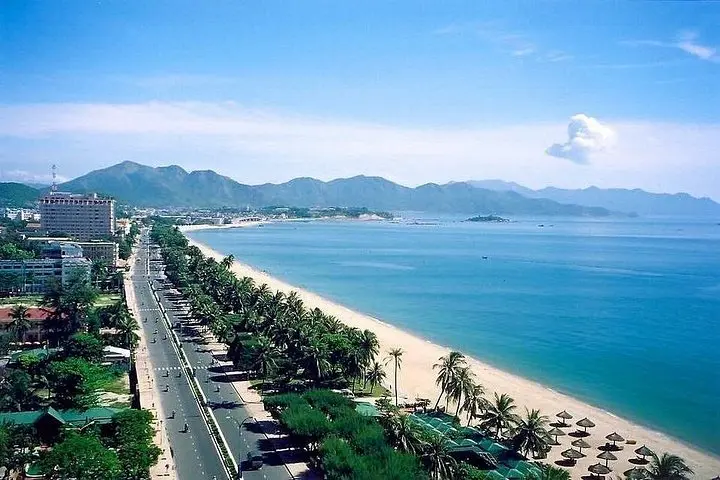
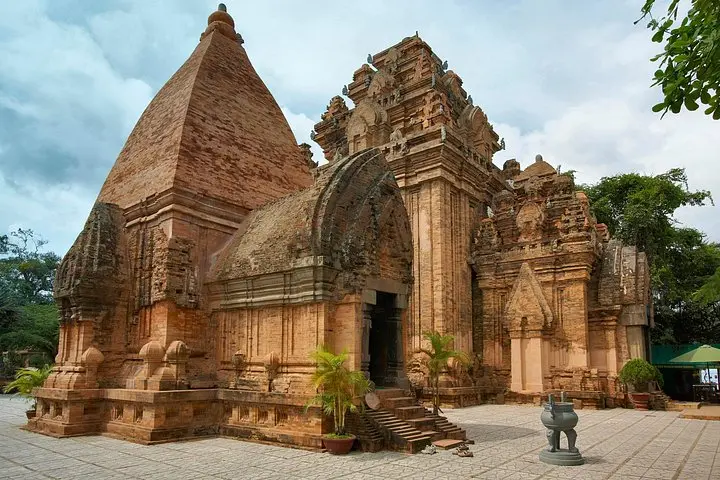
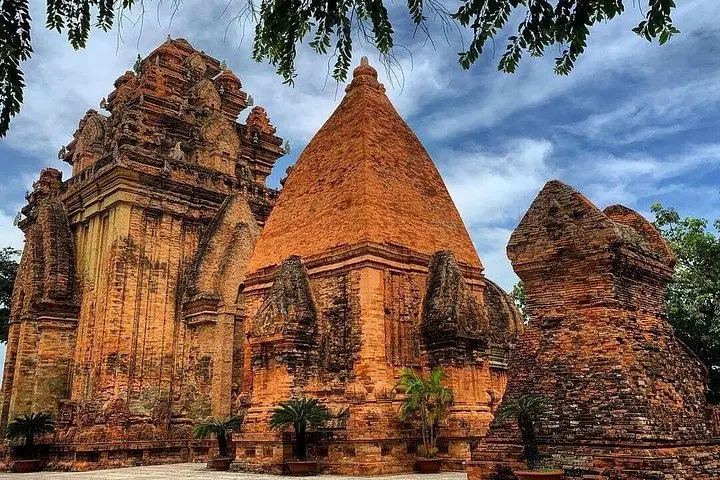
The route is compact but varied. Start at Hon Chong Promontory, a compact walk along jagged granite where tidal spray dares you closer to the edge and the five-fingered handprint gouged into the rock makes for an oddly intimate landmark. From there the tour moves inland to Po Nagar Cham Towers, a brick-and-laterite complex built before 781 A.D.—one of Vietnam’s clearest reminders of the Cham kingdom’s maritime reach. The towers’ thick, sunbaked walls and sculpted lintels speak to an era of ritual and sea trade; they also provide a calm contrast to the bustle back toward the harbor.
Geology and faith intersect again at Long Son Pagoda. The climb up to the white Buddha is modest—hundreds of steps, cues for pause rather than exhaustion—and the statue commands views over Nha Trang’s sprawl and bay. Down in town, Nha Trang Cathedral’s stone façade frames a different colonial and religious thread in the city’s history, a quieter stop to consider the layered influences that shape modern Vietnam.
The final scene is Dam Market (Chợ Đầm), crowded and color-fast: stalls heaving with catch, clothes, spices and small souvenirs. This is where the city’s commerce is most tactile—vendors call, calculators click, and a friendly haggling rhythm sets the tone for buying lacquerware or a quick bowl of street-side noodle soup.
Practical notes: the tour runs about 4–5 hours with hotel or port pickup within roughly 1.5 km of Bãi Tắm Hòn Chồng; entrance fees, bottled water, and lunch are included. Wear sun protection and comfortable shoes—some temple steps and uneven coastal rock require stable footing. Bring cash for small purchases at Dam Market and a lightweight scarf for temple entrances where shoulders must be covered. Guides generally speak English and keep the pace relaxed; the group limit is small, making it suitable for travelers who want cultural context without a marathon schedule.
This half-day sequence is an efficient primer on Nha Trang—geology, Cham history, Buddhist practice, and the everyday commerce that keeps the city moving—delivered in a single, well-paced morning or afternoon.
The tour lasts about 4–5 hours and includes hotel or port pickup within ~1.5 km, entrance fees for listed sites, bottled water, lunch, and an English-speaking guide.
Yes—infants must sit on an adult’s lap. The pace is relaxed, but uneven surfaces and steps may be challenging for very young children.
Yes—vegetarian, vegan and gluten-free options can be requested when booking; note special requirements in your reservation.
They involve moderate walking and some stair climbing (dozens to around a hundred steps); most visitors with average fitness can manage them.
Yes—pickup is available from hotels and the port; the guide will meet guests near Bãi Tắm Hòn Chồng within the specified pickup radius.
All sales are final and non-refundable; the operator may cancel for bad weather or insufficient travelers.
Lotus Tourist operates guided outdoor trips and adventures with an emphasis on safety, stewardship, and memorable experiences.

Morning light pushes across the South China Sea and the rocks at Hon Chong catch it first—an accidental skyline of stacked boulders that seem to have been balanced by someone with a sense of humor. On this half-day car excursion from Nha Trang, the city opens in short chapters: coastal outcrops, centuries-old brick towers, a hilltop white Buddha, and a market where the city’s present-day pulse is easiest to read.
Morning light pushes across the South China Sea and the rocks at Hon Chong catch it first—an accidental skyline of stacked boulders that seem to have been balanced by someone with a sense of humor. On this half-day car excursion from Nha Trang, the city opens in short chapters: coastal outcrops, centuries-old brick towers, a hilltop white Buddha, and a market where the city’s present-day pulse is easiest to read.
The route is compact but varied. Start at Hon Chong Promontory, a compact walk along jagged granite where tidal spray dares you closer to the edge and the five-fingered handprint gouged into the rock makes for an oddly intimate landmark. From there the tour moves inland to Po Nagar Cham Towers, a brick-and-laterite complex built before 781 A.D.—one of Vietnam’s clearest reminders of the Cham kingdom’s maritime reach. The towers’ thick, sunbaked walls and sculpted lintels speak to an era of ritual and sea trade; they also provide a calm contrast to the bustle back toward the harbor.
Geology and faith intersect again at Long Son Pagoda. The climb up to the white Buddha is modest—hundreds of steps, cues for pause rather than exhaustion—and the statue commands views over Nha Trang’s sprawl and bay. Down in town, Nha Trang Cathedral’s stone façade frames a different colonial and religious thread in the city’s history, a quieter stop to consider the layered influences that shape modern Vietnam.
The final scene is Dam Market (Chợ Đầm), crowded and color-fast: stalls heaving with catch, clothes, spices and small souvenirs. This is where the city’s commerce is most tactile—vendors call, calculators click, and a friendly haggling rhythm sets the tone for buying lacquerware or a quick bowl of street-side noodle soup.
Practical notes: the tour runs about 4–5 hours with hotel or port pickup within roughly 1.5 km of Bãi Tắm Hòn Chồng; entrance fees, bottled water, and lunch are included. Wear sun protection and comfortable shoes—some temple steps and uneven coastal rock require stable footing. Bring cash for small purchases at Dam Market and a lightweight scarf for temple entrances where shoulders must be covered. Guides generally speak English and keep the pace relaxed; the group limit is small, making it suitable for travelers who want cultural context without a marathon schedule.
This half-day sequence is an efficient primer on Nha Trang—geology, Cham history, Buddhist practice, and the everyday commerce that keeps the city moving—delivered in a single, well-paced morning or afternoon.