THE ADVENTURE COLLECTIVE® · Independent discovery and booking for outdoor travel

See Nha Trang’s shoreline, Cham towers, and city highlights in a private half-day car tour. Ideal for cruise arrivals or a hotel pickup, the route packs culture, coastal geology, and market life into 3–4 hours.
See Nha Trang’s shoreline, Cham towers, and city highlights in a private half-day car tour. Ideal for cruise arrivals or a hotel pickup, the route packs culture, coastal geology, and market life into 3–4 hours.
The guide pulls the van to the curb and the town unfolds like a set of snapshots—fishermen hauling nets at the harbor, a line of motorbikes threading past pastel villas, the South China Sea pressing blue on the horizon. In three to four hours the tour stitches together Nha Trang’s geological oddities and spiritual landmarks: granite boulders that look like a child stacked them for fun, Cham brick towers older than most European nations, and a white Buddha that watches the city from a low crest.
Verified experiences and guided adventures in the surrounding area.
Operated by Vietnam Motorcycle Tour · Nha Trang, Khanh Hoa
The guide pulls the van to the curb and the town unfolds like a set of snapshots—fishermen hauling nets at the harbor, a line of motorbikes threading past pastel villas, the South China Sea pressing blue on the horizon. In three to four hours the tour stitches together Nha Trang’s geological oddities and spiritual landmarks: granite boulders that look like a child stacked them for fun, Cham brick towers older than most European nations, and a white Buddha that watches the city from a low crest.
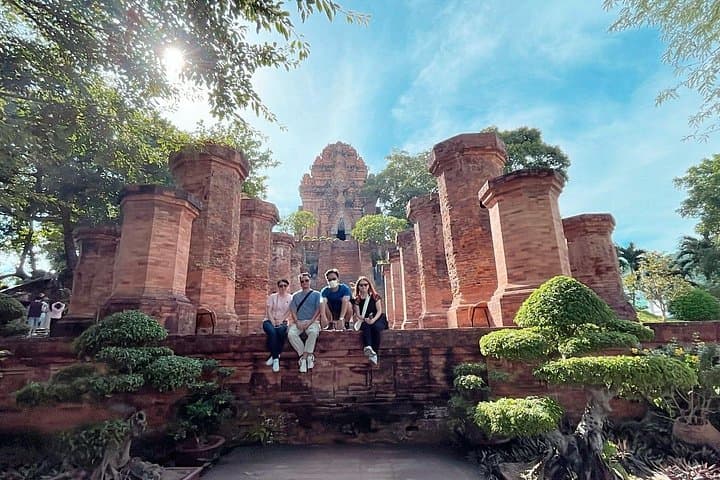
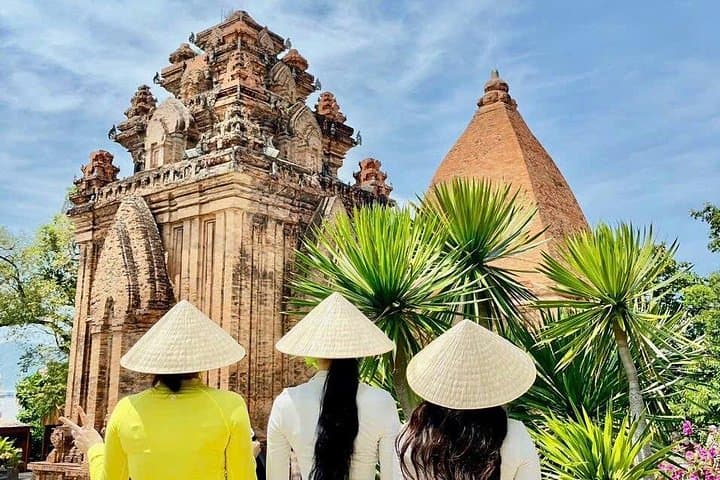
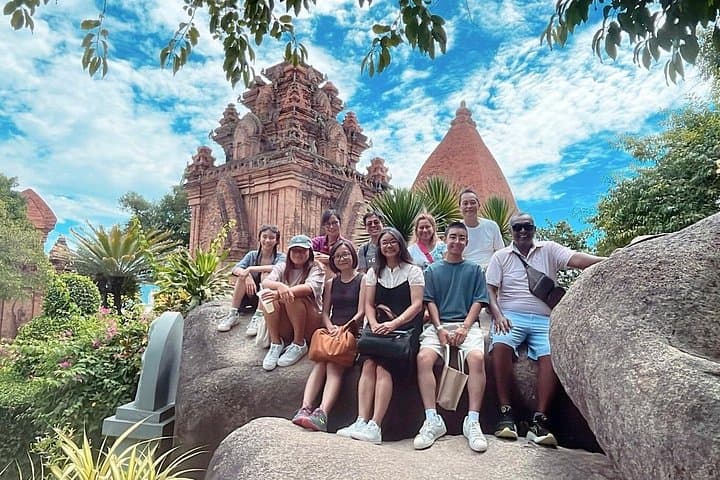
Hon Chong, a shelf of rounded boulders at La San foothill, is the first stop. The rocks lean and balance like an argument left unresolved; salt spray dares you forward and the sea pulls at the view. From there the minivan eases into the Po Nagar complex, where red-brick Cham towers—built before 781 AD—hold carvings of deities and inscriptions that mapped ancient maritime routes. The guide explains the site’s role as a religious anchor for fishing communities, and how the Cham built resilient structures from fired brick and lime mortar that have outlasted dynasties.
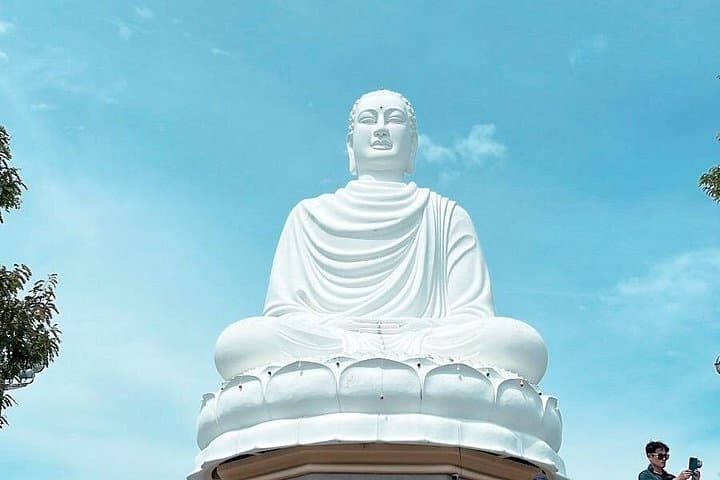
Long Son Pagoda and its 24-meter white Buddha provide a quieter counterpoint: incense folds into the air, and the statue watches over the city like a patient elder. Nearby, Nha Trang Cathedral (the “stone church”) speaks to French colonial influence—stained glass, pointed arches, and a bell that has rung through typhoons and peacetime alike. The loop finishes at Dam Market, where colors and smells switch the tempo: dried seafood, lacquerware, and fruit stands throng with vendors and bargaining tourists.
This is a practical half-day: it’s private and flexible, built for travelers coming from cruise ports, resorts, or the airport. Expect short walks (30–60 minutes at each stop), shaded paths, and stair climbs at pagodas. Dress respectfully for temples—shoulders and knees covered—and leave room in your bag for market finds and a sunburn remedy.
Timing matters: mornings are cooler and light is best for photography; late afternoon brings softer tones but more heat earlier in the day. The tour includes bottled water, lunch, entrance fees, and an English guide; pick-up from central hotels or Cam Ranh port is usually included (resort pick-ups along the coast may carry a surcharge). For comfort bring sun protection, low-traction shoes for climbing on wet rock, and small bills for market purchases and tips. For travelers who want a broader day trip into the mountains, this half-day also works as a primer—introducing Nha Trang’s layered history, its geology, and the living culture along its shoreline.
The private half-day tour runs approximately 3–4 hours depending on pickup location and traffic.
Yes—pickup from Cau Da port or central hotels is included; pickups from outlying resorts may incur an extra charge.
Entrance fees are included in the tour price, as are bottled water, lunch, and an English-speaking guide.
Yes—walking is light and stops are short, but there are temple steps and uneven rock surfaces that may be difficult for those with mobility issues.
This is a private tour and can be adjusted to suit your interests and timing within the half-day window, subject to guide availability.
Cover shoulders and knees; lightweight long sleeves or a sarong work well in tropical heat and show respect at religious sites.
Vietnam Motorcycle Tour operates guided outdoor trips and adventures with an emphasis on safety, stewardship, and memorable experiences.
The guide pulls the van to the curb and the town unfolds like a set of snapshots—fishermen hauling nets at the harbor, a line of motorbikes threading past pastel villas, the South China Sea pressing blue on the horizon. In three to four hours the tour stitches together Nha Trang’s geological oddities and spiritual landmarks: granite boulders that look like a child stacked them for fun, Cham brick towers older than most European nations, and a white Buddha that watches the city from a low crest.
The guide pulls the van to the curb and the town unfolds like a set of snapshots—fishermen hauling nets at the harbor, a line of motorbikes threading past pastel villas, the South China Sea pressing blue on the horizon. In three to four hours the tour stitches together Nha Trang’s geological oddities and spiritual landmarks: granite boulders that look like a child stacked them for fun, Cham brick towers older than most European nations, and a white Buddha that watches the city from a low crest.
Hon Chong, a shelf of rounded boulders at La San foothill, is the first stop. The rocks lean and balance like an argument left unresolved; salt spray dares you forward and the sea pulls at the view. From there the minivan eases into the Po Nagar complex, where red-brick Cham towers—built before 781 AD—hold carvings of deities and inscriptions that mapped ancient maritime routes. The guide explains the site’s role as a religious anchor for fishing communities, and how the Cham built resilient structures from fired brick and lime mortar that have outlasted dynasties.
Long Son Pagoda and its 24-meter white Buddha provide a quieter counterpoint: incense folds into the air, and the statue watches over the city like a patient elder. Nearby, Nha Trang Cathedral (the “stone church”) speaks to French colonial influence—stained glass, pointed arches, and a bell that has rung through typhoons and peacetime alike. The loop finishes at Dam Market, where colors and smells switch the tempo: dried seafood, lacquerware, and fruit stands throng with vendors and bargaining tourists.
This is a practical half-day: it’s private and flexible, built for travelers coming from cruise ports, resorts, or the airport. Expect short walks (30–60 minutes at each stop), shaded paths, and stair climbs at pagodas. Dress respectfully for temples—shoulders and knees covered—and leave room in your bag for market finds and a sunburn remedy.
Timing matters: mornings are cooler and light is best for photography; late afternoon brings softer tones but more heat earlier in the day. The tour includes bottled water, lunch, entrance fees, and an English guide; pick-up from central hotels or Cam Ranh port is usually included (resort pick-ups along the coast may carry a surcharge). For comfort bring sun protection, low-traction shoes for climbing on wet rock, and small bills for market purchases and tips. For travelers who want a broader day trip into the mountains, this half-day also works as a primer—introducing Nha Trang’s layered history, its geology, and the living culture along its shoreline.