THE ADVENTURE COLLECTIVE® · Independent discovery and booking for outdoor travel

Explore the Giza Plateau in a private half-day tour that pairs expert Egyptologist commentary with a camel ride and traditional Egyptian lunch. Ideal for visitors wanting skip-the-line access, panoramic photos, and a compact introduction to ancient Egypt.
Explore the Giza Plateau in a private half-day tour that pairs expert Egyptologist commentary with a camel ride and traditional Egyptian lunch. Ideal for visitors wanting skip-the-line access, panoramic photos, and a compact introduction to ancient Egypt.
The Giza Plateau opens like a living lesson in scale: three step-sided giants—Khufu, Khafre and Menkaure—stacked against a flat, sunbaked horizon while the Sphinx watches, stoic and wind-scoured. A private guide and driver move you through the site with ease, pausing at overlooks where the desert light sharpens the pyramid faces and a camel train ambles along the rim, the animals steady and surprisingly patient.
Verified experiences and guided adventures in the surrounding area.
Operated by Misk Tours · Giza, Giza Governorate
The Giza Plateau opens like a living lesson in scale: three step-sided giants—Khufu, Khafre and Menkaure—stacked against a flat, sunbaked horizon while the Sphinx watches, stoic and wind-scoured. A private guide and driver move you through the site with ease, pausing at overlooks where the desert light sharpens the pyramid faces and a camel train ambles along the rim, the animals steady and surprisingly patient.
Geology here is blunt and old—limestone beds quarried and reset into enormous tombs, with the plateau sitting on Pleistocene and Holocene deposits that give way to sandy washes below. Culturally, Giza is where pharaonic power was made visible: funerary temples, causeways and the Valley Temple remind visitors that these were working complexes, not isolated monuments. Modern Cairo presses close—city noise and commerce framing the ancient silence.
Practically, this is a half-day, low-impact outing with short walks on uneven stone and compacted sand. Tours typically include hotel pickup, an Egyptologist guide, entrance fee options, bottled water, and a 30-minute camel ride; lunch at a nearby restaurant can be added. Best times are early morning or late afternoon when temperatures are moderate and light is most photogenic. Bring sun protection, comfortable closed shoes for walking on loose rock and sand, and small change for tips or photos. Respect signage and restrictions—climbing the pyramids is illegal and damages fragile masonry. With a little preparation, the plateau rewards visitors with visceral proximity to ancient engineering and a clear sense of human ambition shaped in stone.
Some packages include entrance fees as an option; confirm at booking whether admission to the plateau and the Sphinx area are covered.
Camel rides are typically offered as an optional, supervised 20–30 minute experience and are suitable for most people; operators provide guidance and handlers.
Access to the interior of the Great Pyramid is sometimes available but limited and often requires a separate ticket—ask your guide in advance.
Pickup in central Cairo or Giza usually takes 20–45 minutes depending on traffic; hotels farther afield will add time.
Misk Tours operates guided outdoor trips and adventures with an emphasis on safety, stewardship, and memorable experiences.


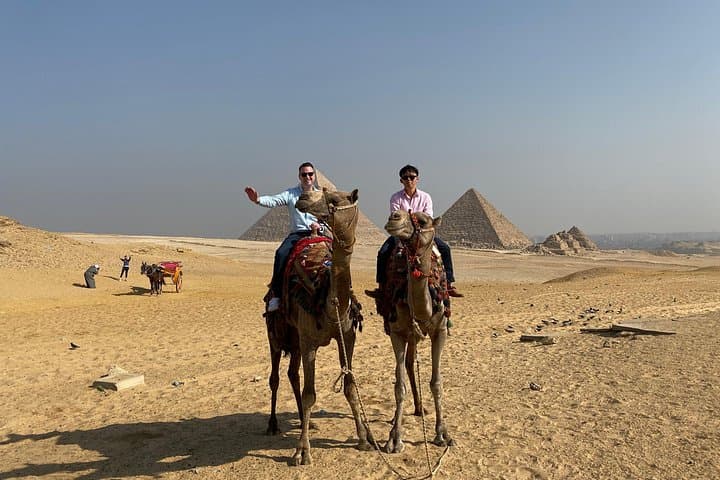

The Giza Plateau opens like a living lesson in scale: three step-sided giants—Khufu, Khafre and Menkaure—stacked against a flat, sunbaked horizon while the Sphinx watches, stoic and wind-scoured. A private guide and driver move you through the site with ease, pausing at overlooks where the desert light sharpens the pyramid faces and a camel train ambles along the rim, the animals steady and surprisingly patient.
The Giza Plateau opens like a living lesson in scale: three step-sided giants—Khufu, Khafre and Menkaure—stacked against a flat, sunbaked horizon while the Sphinx watches, stoic and wind-scoured. A private guide and driver move you through the site with ease, pausing at overlooks where the desert light sharpens the pyramid faces and a camel train ambles along the rim, the animals steady and surprisingly patient.
Geology here is blunt and old—limestone beds quarried and reset into enormous tombs, with the plateau sitting on Pleistocene and Holocene deposits that give way to sandy washes below. Culturally, Giza is where pharaonic power was made visible: funerary temples, causeways and the Valley Temple remind visitors that these were working complexes, not isolated monuments. Modern Cairo presses close—city noise and commerce framing the ancient silence.
Practically, this is a half-day, low-impact outing with short walks on uneven stone and compacted sand. Tours typically include hotel pickup, an Egyptologist guide, entrance fee options, bottled water, and a 30-minute camel ride; lunch at a nearby restaurant can be added. Best times are early morning or late afternoon when temperatures are moderate and light is most photogenic. Bring sun protection, comfortable closed shoes for walking on loose rock and sand, and small change for tips or photos. Respect signage and restrictions—climbing the pyramids is illegal and damages fragile masonry. With a little preparation, the plateau rewards visitors with visceral proximity to ancient engineering and a clear sense of human ambition shaped in stone.