THE ADVENTURE COLLECTIVE® · Independent discovery and booking for outdoor travel

A focused half-day private visit to the Giza plateau that pairs up-close pyramid views with a short camel ride and a stroll through local bazaars. Ideal for morning visitors who want efficient, guided access to the Great Pyramid, Sphinx, and panoramic viewpoints.
A focused half-day private visit to the Giza plateau that pairs up-close pyramid views with a short camel ride and a stroll through local bazaars. Ideal for morning visitors who want efficient, guided access to the Great Pyramid, Sphinx, and panoramic viewpoints.
You arrive at first light and the plateau feels less like a tourist site and more like a stage where stone giants hold their audience. The Great Pyramid’s faces catch the sun and the wind carries the grit of millennia across open sand; handlers lead well-trained camels in slow, deliberate rhythms so visitors can circle the base and frame impossible photos.
Verified experiences and guided adventures in the surrounding area.
Operated by Hesham Egypt tour guide · Giza, Giza Governorate
You arrive at first light and the plateau feels less like a tourist site and more like a stage where stone giants hold their audience. The Great Pyramid’s faces catch the sun and the wind carries the grit of millennia across open sand; handlers lead well-trained camels in slow, deliberate rhythms so visitors can circle the base and frame impossible photos.
The Giza plateau is both archaeological core and working landscape: three major pyramids date to the Fourth Dynasty (around 2560–2490 BCE), with the Sphinx carved from bedrock to guard the necropolis. Geologically, the plateau sits on a limestone outcrop whose blocks were quarried for royal tombs — you can see tool marks and bedding planes if you look closely. Culturally the area hums with vendors, guides, and descendants of communities that have lived on the city’s edge for generations.
Expect dusty, uneven ground and short walks between viewpoints; interior entry to the Great Pyramid requires a separate ticket and a narrow climb. The camel ride included is brief — about 15 minutes — and run by handlers who know how to seat and hold riders safely. End with a stop at a local bazaar for small souvenirs and street food if you have time.
Practical guidance: arrive early to avoid heat and crowds, bring cash in Egyptian pounds for entrance fees and tips, wear sturdy closed shoes and sun protection, and respect onsite rules (do not climb the pyramids). This half-day private tour is compact but gives a clear, practical introduction to one of the world’s oldest cultural landscapes.
No — standard tour pricing often excludes official site entry to pyramid interiors; pay the entrance fee at the site in local currency if you want to go inside.
Handlers run brief, supervised rides; most children and mobile older adults can participate, but those with severe mobility issues, pregnancy, or recent injuries should skip it.
Climbing the pyramids is illegal and strictly enforced; do not attempt to climb or remove any stones—stay on designated paths and viewpoints.
Photography of the site is allowed for personal use, but drones are restricted and require permits from Egyptian authorities; your guide can advise on current rules.
Hesham Egypt tour guide operates guided outdoor trips and adventures with an emphasis on safety, stewardship, and memorable experiences.
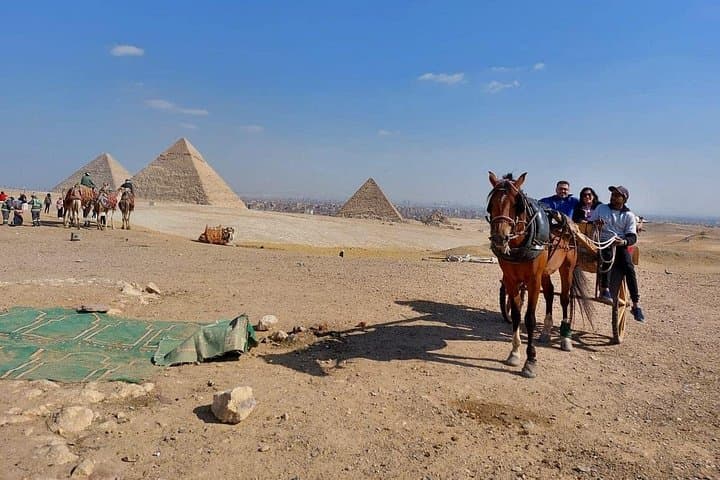

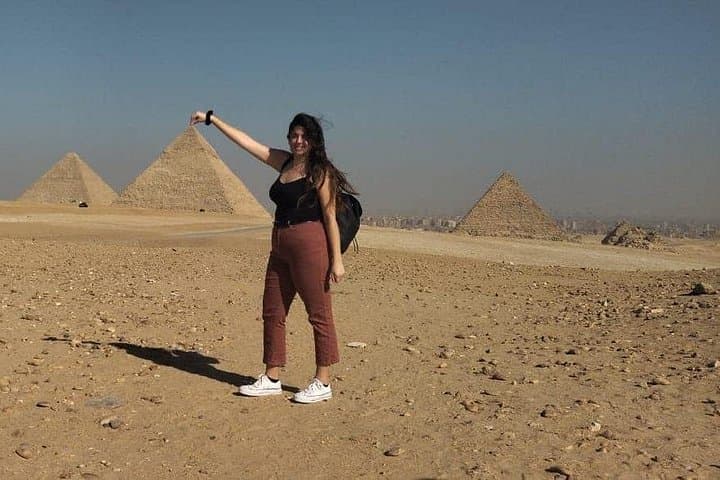
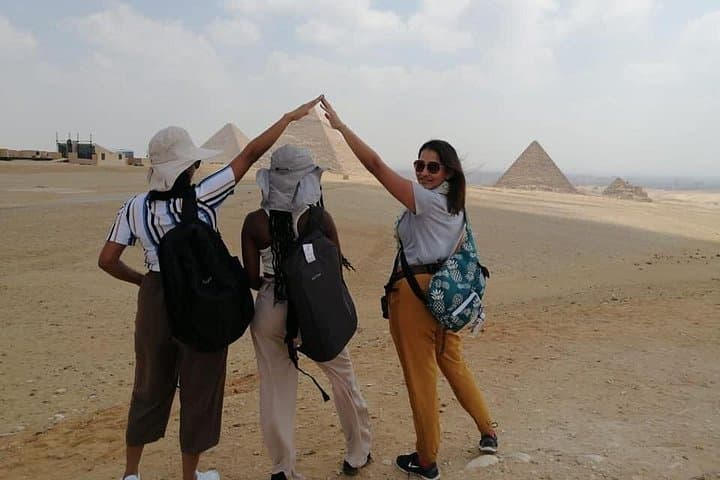
You arrive at first light and the plateau feels less like a tourist site and more like a stage where stone giants hold their audience. The Great Pyramid’s faces catch the sun and the wind carries the grit of millennia across open sand; handlers lead well-trained camels in slow, deliberate rhythms so visitors can circle the base and frame impossible photos.
You arrive at first light and the plateau feels less like a tourist site and more like a stage where stone giants hold their audience. The Great Pyramid’s faces catch the sun and the wind carries the grit of millennia across open sand; handlers lead well-trained camels in slow, deliberate rhythms so visitors can circle the base and frame impossible photos.
The Giza plateau is both archaeological core and working landscape: three major pyramids date to the Fourth Dynasty (around 2560–2490 BCE), with the Sphinx carved from bedrock to guard the necropolis. Geologically, the plateau sits on a limestone outcrop whose blocks were quarried for royal tombs — you can see tool marks and bedding planes if you look closely. Culturally the area hums with vendors, guides, and descendants of communities that have lived on the city’s edge for generations.
Expect dusty, uneven ground and short walks between viewpoints; interior entry to the Great Pyramid requires a separate ticket and a narrow climb. The camel ride included is brief — about 15 minutes — and run by handlers who know how to seat and hold riders safely. End with a stop at a local bazaar for small souvenirs and street food if you have time.
Practical guidance: arrive early to avoid heat and crowds, bring cash in Egyptian pounds for entrance fees and tips, wear sturdy closed shoes and sun protection, and respect onsite rules (do not climb the pyramids). This half-day private tour is compact but gives a clear, practical introduction to one of the world’s oldest cultural landscapes.