THE ADVENTURE COLLECTIVE® · Independent discovery and booking for outdoor travel

Walk the wind‑tower lanes of Bastakiya, cross Dubai Creek by abra and haggle for spices and gold on a private half‑day guided tour that unpacks the city’s pearling and trading past.
Walk the wind‑tower lanes of Bastakiya, cross Dubai Creek by abra and haggle for spices and gold on a private half‑day guided tour that unpacks the city’s pearling and trading past.
The abra cuts a dark ribbon across Dubai Creek as the sun climbs, varnishing wooden hulls and throwing the stone alleys of Al Fahidi into hard contrast. On a private half‑day tour you walk those alleys, step into wind‑tower courtyards, and cross the water where the city’s old merchants once moved spices and pearls by boat.
Verified experiences and guided adventures in the surrounding area.
Operated by One Click Tourism · Dubai, Dubai
The abra cuts a dark ribbon across Dubai Creek as the sun climbs, varnishing wooden hulls and throwing the stone alleys of Al Fahidi into hard contrast. On a private half‑day tour you walk those alleys, step into wind‑tower courtyards, and cross the water where the city’s old merchants once moved spices and pearls by boat.
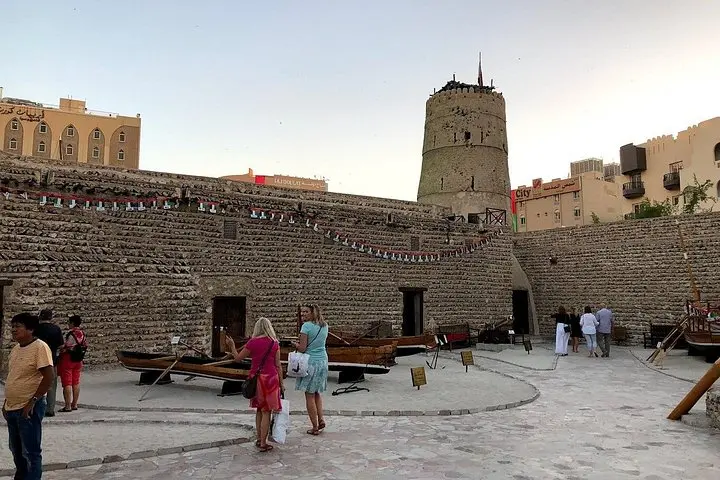
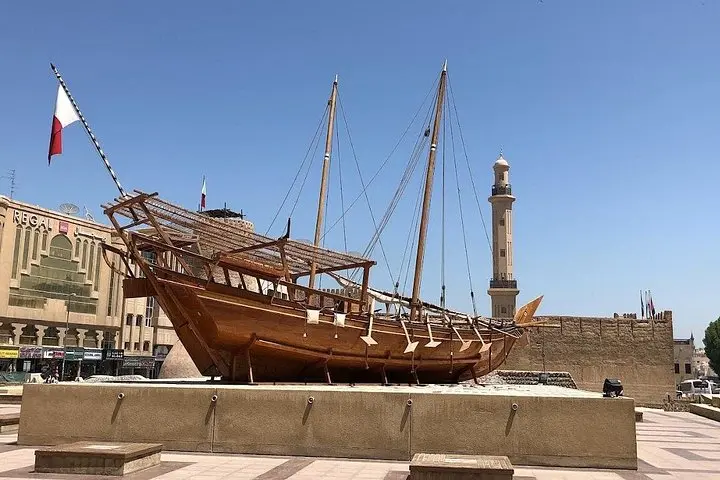
Bastakiya preserves houses built by Persian traders who brought wind‑towers (barjeel) to cool interiors before electricity. Nearby, Al Fahidi Fort—the oldest building in Dubai—now houses exhibits on pearling, trade routes and the emirate’s rapid 20th‑century growth. The Gold and Spice Souks on the Deira side remain active market places where textures, scents and bargaining are part of the rhythm.
Geologically this is an estuarine landscape: Dubai Creek carved a sheltered inlet that enabled settlement and trade. Culturally it’s layered—Bedouin, pearling communities, Gulf merchants and recent global commerce—visible in architecture and market goods.
Practical guidance: expect mostly paved, level walking (roughly 3–5 km total) with negligible elevation gain; wear comfortable shoes and carry water—heat is the main constraint. Morning or late afternoon departures ease temperatures and light for photos. Bring small change for abra fares and bargaining in souks; respect dress codes in religious or traditional sites. The tour includes air‑conditioned pickup and drop‑off, bottled water, and a private guide who can tailor stops to interests like the Coffee Museum, courtyard galleries or a short stop for dates and camel‑milk chocolates. This is a low‑impact, urban cultural outing—sensory, accessible and a practical primer on old Dubai.
Yes—this private tour includes hotel pickup and drop‑off in an air‑conditioned vehicle.
The tour description lists visits but not paid admissions; check with the operator if Dubai Museum entry is required for your itinerary.
The tour notes wheelchair accessibility, but some narrow alleyways in Bastakiya and market crowds may limit movement—advise the operator of needs in advance.
Many small vendors prefer cash; bring small dirham notes for purchases and abra fares though larger shops may accept cards.
One Click Tourism operates guided outdoor trips and adventures with an emphasis on safety, stewardship, and memorable experiences.
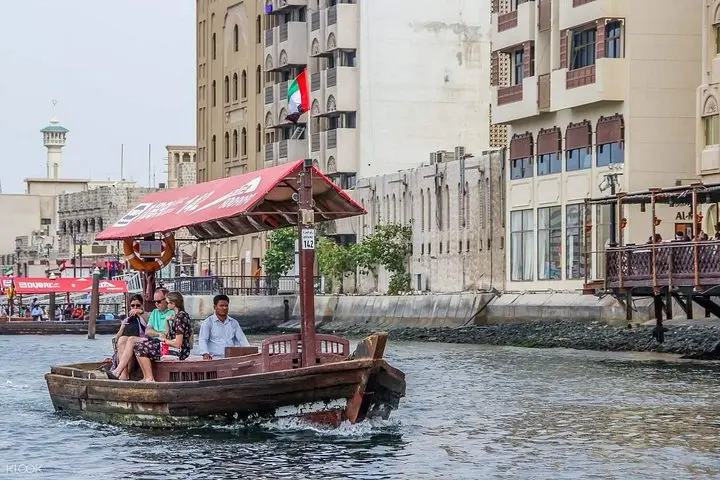
The abra cuts a dark ribbon across Dubai Creek as the sun climbs, varnishing wooden hulls and throwing the stone alleys of Al Fahidi into hard contrast. On a private half‑day tour you walk those alleys, step into wind‑tower courtyards, and cross the water where the city’s old merchants once moved spices and pearls by boat.
The abra cuts a dark ribbon across Dubai Creek as the sun climbs, varnishing wooden hulls and throwing the stone alleys of Al Fahidi into hard contrast. On a private half‑day tour you walk those alleys, step into wind‑tower courtyards, and cross the water where the city’s old merchants once moved spices and pearls by boat.
Bastakiya preserves houses built by Persian traders who brought wind‑towers (barjeel) to cool interiors before electricity. Nearby, Al Fahidi Fort—the oldest building in Dubai—now houses exhibits on pearling, trade routes and the emirate’s rapid 20th‑century growth. The Gold and Spice Souks on the Deira side remain active market places where textures, scents and bargaining are part of the rhythm.
Geologically this is an estuarine landscape: Dubai Creek carved a sheltered inlet that enabled settlement and trade. Culturally it’s layered—Bedouin, pearling communities, Gulf merchants and recent global commerce—visible in architecture and market goods.
Practical guidance: expect mostly paved, level walking (roughly 3–5 km total) with negligible elevation gain; wear comfortable shoes and carry water—heat is the main constraint. Morning or late afternoon departures ease temperatures and light for photos. Bring small change for abra fares and bargaining in souks; respect dress codes in religious or traditional sites. The tour includes air‑conditioned pickup and drop‑off, bottled water, and a private guide who can tailor stops to interests like the Coffee Museum, courtyard galleries or a short stop for dates and camel‑milk chocolates. This is a low‑impact, urban cultural outing—sensory, accessible and a practical primer on old Dubai.