THE ADVENTURE COLLECTIVE® · Independent discovery and booking for outdoor travel

See Koh Samui’s highlights in a private half-day: golden Buddhas, odd rock formations, temple shrines and a forest waterfall. This tightly paced tour mixes cultural stops with a cool natural pool—ideal for first-time visitors.
See Koh Samui’s highlights in a private half-day: golden Buddhas, odd rock formations, temple shrines and a forest waterfall. This tightly paced tour mixes cultural stops with a cool natural pool—ideal for first-time visitors.
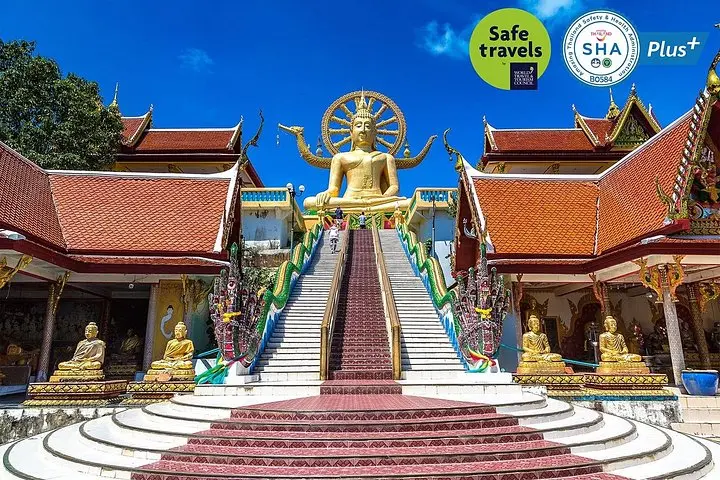
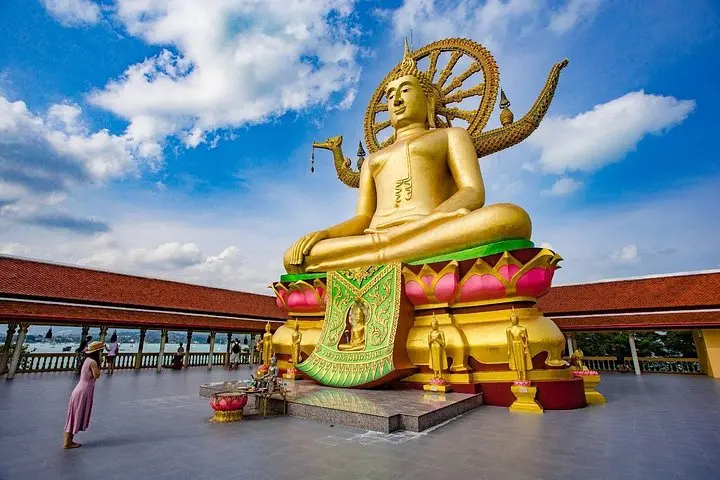
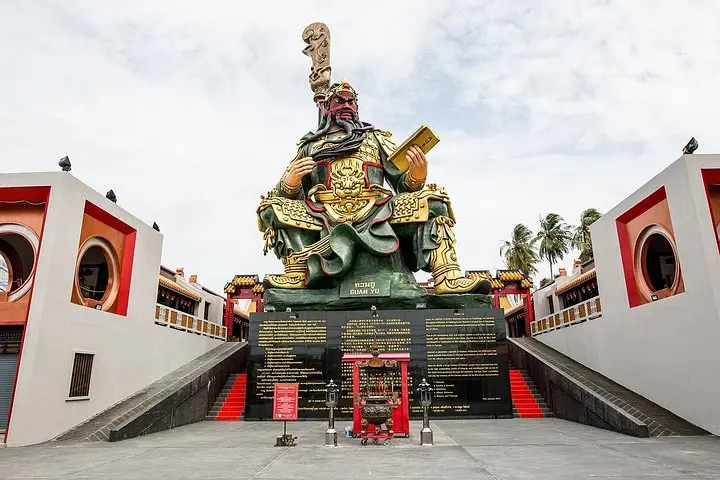
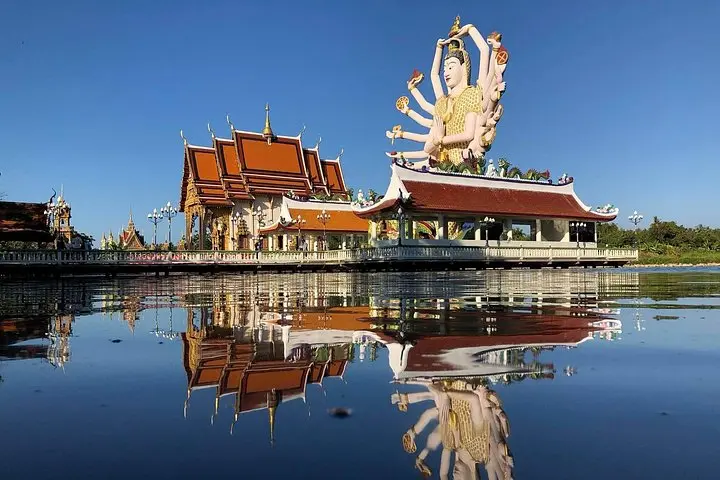
You step into an air-conditioned van as the island yawns—frangipani on the wind, the sea glittering through palms. The driver threads coastal roads, passing fishermen hauling nets and beach vendors opening shutters, while a guide outlines a half-day sweep of Koh Samui’s most recognizable stops: the 12‑meter golden Big Buddha, the odd geological jokes of Hin Ta and Hin Yai, the peaceful Guanyin at Wat Plai Laem, the quiet reverence at Khunaram, and the cool plunge pool at Na Mueang.
Verified experiences and guided adventures in the surrounding area.
Operated by Oh-Hoo · Chaweng, Surat Thani
You step into an air-conditioned van as the island yawns—frangipani on the wind, the sea glittering through palms. The driver threads coastal roads, passing fishermen hauling nets and beach vendors opening shutters, while a guide outlines a half-day sweep of Koh Samui’s most recognizable stops: the 12‑meter golden Big Buddha, the odd geological jokes of Hin Ta and Hin Yai, the peaceful Guanyin at Wat Plai Laem, the quiet reverence at Khunaram, and the cool plunge pool at Na Mueang.
The route reads like a compact primer on Samui’s culture and geology. Big Buddha (Wat Phra Yai), built in the late 20th century, dominates a small islet off the northeast shore—its gilded form a modern landmark that signals the island’s embrace of Theravada Buddhism. Plai Laem’s white Guanyin statue points to the region’s Chinese-Thai currents: merchants and migrants brought familiar devotional forms that blended with local practice. The rock stacks at Lamai—Grandfather and Grandmother Rocks—are not only the stuff of local legend but visible evidence of the island’s ancient granite and metamorphic bedrock, smoothed by sea and time.
Khunaram Temple introduces a different cultural register: the preserved monk encased in a glass shrine is a reminder of merit-making and the island’s living rituals. Then Na Mueang waterfall, in the island’s interior, offers a literal shift in texture—forest replacing shoreline, limestone and boulders framing pools that invite a quick, refreshing dip when the season allows.
For travelers this tour is practical as much as picturesque. Expect 4–5 hours on the road with several brief walks—dozens of steps at Big Buddha and short uphill stretches to viewpoints—so bring comfortable shoes. Temples require modest dress: shoulders and knees covered; a sarong or light scarf is a convenient stopgap. If you plan to swim at Na Mueang, pack a swimsuit and a towel; waterfall flow varies with the monsoon, so the guide will adapt the itinerary if pools are low.
Logistics are simple: private pickup from most Koh Samui hotels (confirm pickup times), bottled water and sunscreen are essentials, and small bills in Thai baht will smooth donations, snacks, and souvenir purchases in Nathon. Midday heat is intense from March to May; mornings and late afternoons offer softer light and fewer crowds—ideal for photos on the Big Buddha platform and the Lad Koh viewpoint.
This is a tour of contrasts—gold leaf and granite, temple bells and rushing water—that gives new arrivals a compact, well-paced orientation to Koh Samui. It’s an entry point: a single morning that sets up deeper exploration, whether you follow it with a seafood lunch in Nathon or an afternoon on Chaweng’s sand.
Yes; while major stops don’t charge entry, temple donations, parking, snacks, and souvenirs are cash-preferred—bring small Thai baht notes.
Often yes, but flow depends on season; guides will confirm safety and depth before you enter the water.
Most temple visits are free; any specific paid attractions will be noted by your guide—bring modest donations for merit-making.
Pickup is available from most hotels; some remote locations may incur an extra transfer fee—confirm at booking.
The tour is family-friendly with short walks, but it’s not recommended for travelers with serious mobility issues due to stair sections and uneven terrain.
Guides often speak English; confirm language needs at booking if you require another language or a translator.
Oh-Hoo operates guided outdoor trips and adventures with an emphasis on safety, stewardship, and memorable experiences.
You step into an air-conditioned van as the island yawns—frangipani on the wind, the sea glittering through palms. The driver threads coastal roads, passing fishermen hauling nets and beach vendors opening shutters, while a guide outlines a half-day sweep of Koh Samui’s most recognizable stops: the 12‑meter golden Big Buddha, the odd geological jokes of Hin Ta and Hin Yai, the peaceful Guanyin at Wat Plai Laem, the quiet reverence at Khunaram, and the cool plunge pool at Na Mueang.
You step into an air-conditioned van as the island yawns—frangipani on the wind, the sea glittering through palms. The driver threads coastal roads, passing fishermen hauling nets and beach vendors opening shutters, while a guide outlines a half-day sweep of Koh Samui’s most recognizable stops: the 12‑meter golden Big Buddha, the odd geological jokes of Hin Ta and Hin Yai, the peaceful Guanyin at Wat Plai Laem, the quiet reverence at Khunaram, and the cool plunge pool at Na Mueang.
The route reads like a compact primer on Samui’s culture and geology. Big Buddha (Wat Phra Yai), built in the late 20th century, dominates a small islet off the northeast shore—its gilded form a modern landmark that signals the island’s embrace of Theravada Buddhism. Plai Laem’s white Guanyin statue points to the region’s Chinese-Thai currents: merchants and migrants brought familiar devotional forms that blended with local practice. The rock stacks at Lamai—Grandfather and Grandmother Rocks—are not only the stuff of local legend but visible evidence of the island’s ancient granite and metamorphic bedrock, smoothed by sea and time.
Khunaram Temple introduces a different cultural register: the preserved monk encased in a glass shrine is a reminder of merit-making and the island’s living rituals. Then Na Mueang waterfall, in the island’s interior, offers a literal shift in texture—forest replacing shoreline, limestone and boulders framing pools that invite a quick, refreshing dip when the season allows.
For travelers this tour is practical as much as picturesque. Expect 4–5 hours on the road with several brief walks—dozens of steps at Big Buddha and short uphill stretches to viewpoints—so bring comfortable shoes. Temples require modest dress: shoulders and knees covered; a sarong or light scarf is a convenient stopgap. If you plan to swim at Na Mueang, pack a swimsuit and a towel; waterfall flow varies with the monsoon, so the guide will adapt the itinerary if pools are low.
Logistics are simple: private pickup from most Koh Samui hotels (confirm pickup times), bottled water and sunscreen are essentials, and small bills in Thai baht will smooth donations, snacks, and souvenir purchases in Nathon. Midday heat is intense from March to May; mornings and late afternoons offer softer light and fewer crowds—ideal for photos on the Big Buddha platform and the Lad Koh viewpoint.
This is a tour of contrasts—gold leaf and granite, temple bells and rushing water—that gives new arrivals a compact, well-paced orientation to Koh Samui. It’s an entry point: a single morning that sets up deeper exploration, whether you follow it with a seafood lunch in Nathon or an afternoon on Chaweng’s sand.