THE ADVENTURE COLLECTIVE® · Independent discovery and booking for outdoor travel

A compact private tour that pairs carved temple courtyards and a traditional Balinese house with the accessible power of Tegenungan Waterfall. Ideal for travelers wanting culture and a splash of nature without a full-day commitment.
A compact private tour that pairs carved temple courtyards and a traditional Balinese house with the accessible power of Tegenungan Waterfall. Ideal for travelers wanting culture and a splash of nature without a full-day commitment.
You step out of an air-conditioned car and the Balinese lowland opens—humid air, the distant roar of water, and a thread of carved stone walls that mark village compounds. South of central Ubud the road drops through rice paddies toward Kemenuh; the day unfurls from a courtyard of carved guardians to a temple courtyard and finally to a plunging curtain of basalt and spray at Tegenungan.
Verified experiences and guided adventures in the surrounding area.
Operated by Bali Tour Destination · Ubud, Bali
You step out of an air-conditioned car and the Balinese lowland opens—humid air, the distant roar of water, and a thread of carved stone walls that mark village compounds. South of central Ubud the road drops through rice paddies toward Kemenuh; the day unfurls from a courtyard of carved guardians to a temple courtyard and finally to a plunging curtain of basalt and spray at Tegenungan.
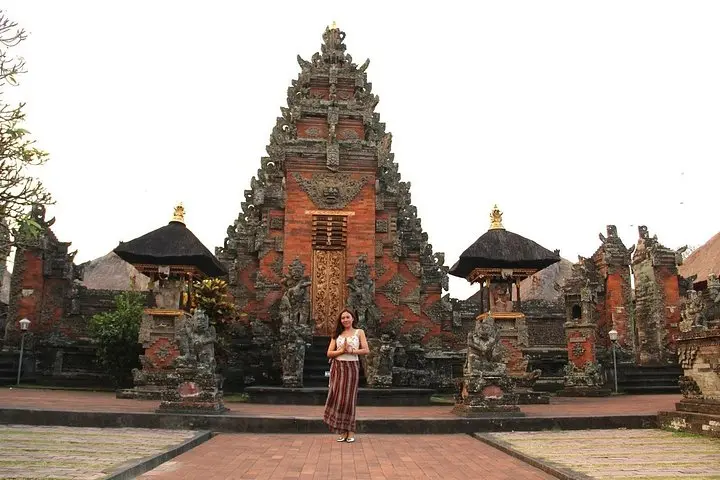
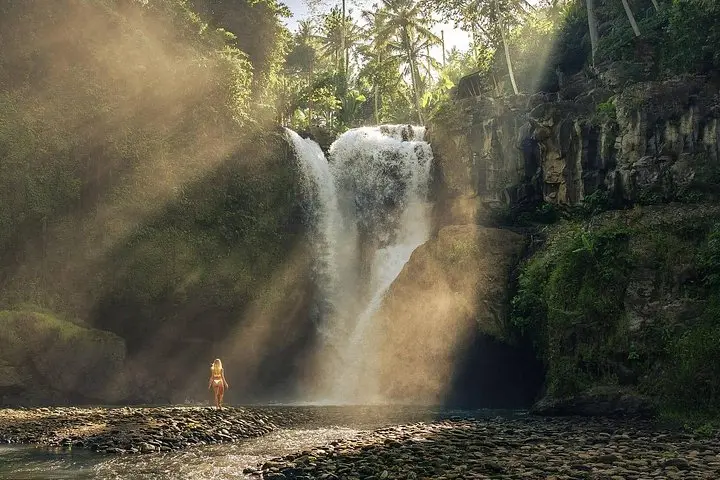
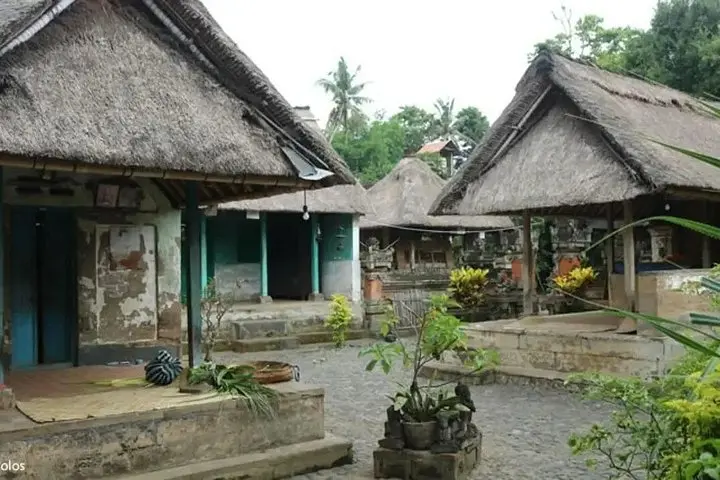
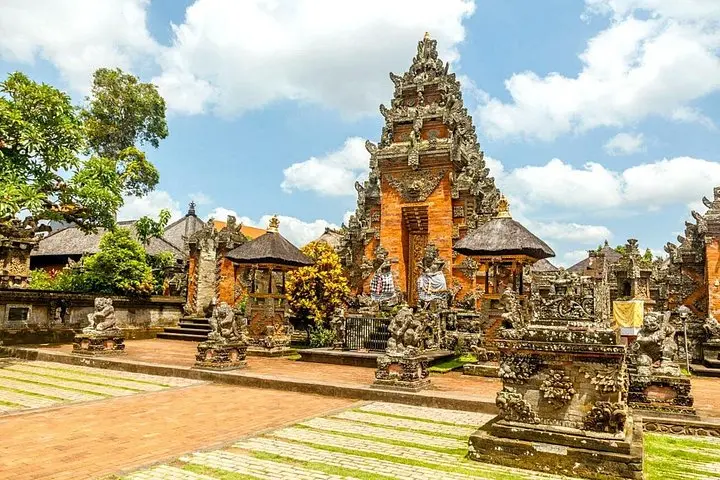
Batuan Temple (a Puseh temple with origins tied to island religious reforms around 1000–1020 AD) displays dense stone reliefs and compact courtyards that reflect Balinese village organization: functions separated into pavilions rather than rooms. Nearby, a Balinese traditional house compound shows cosmic alignment in doorway placement and family altars. Tegenungan Waterfall sits lower than Bali’s highland cascades; its sandstone steps and pools are shaped by river dynamics rather than alpine runoff, so currents can be surprising when the rains begin.
Expect short walks on uneven steps, narrow village lanes, and a descent to the waterfall viewpoint. Guides will advise modest dress at temples—sarong and sash—and safe footing at wet lookouts. Bring swimwear and a towel if you plan on wading, but watch for slippery stone and stronger flows after heavy rain. Carry cash for small entrance fees and market purchases; mornings or late afternoons avoid the busiest bus windows. Hydrate, wear grip-friendly shoes, and respect offerings and temple etiquette—leave no trace and support local vendors modestly. This half-day mixes culture, geology, and a dash of adventure without demanding technical skills.
The private half-day runs about 5–6 hours and typically includes a Balinese traditional house compound, Batuan Temple, and Tegenungan Waterfall with transport and bottled water included.
Entrance fees for listed stops and an English-speaking driver/guide are included; bring small cash for incidental purchases or optional tips.
Yes—it's classified as physically easy, but there are stairs and uneven surfaces at the waterfall and temples; inform the operator of mobility needs in advance.
Modest clothing is required—knees and shoulders covered. Many guides provide or rent sarongs and sashes for visitors who need them.
Bali Tour Destination operates guided outdoor trips and adventures with an emphasis on safety, stewardship, and memorable experiences.
You step out of an air-conditioned car and the Balinese lowland opens—humid air, the distant roar of water, and a thread of carved stone walls that mark village compounds. South of central Ubud the road drops through rice paddies toward Kemenuh; the day unfurls from a courtyard of carved guardians to a temple courtyard and finally to a plunging curtain of basalt and spray at Tegenungan.
You step out of an air-conditioned car and the Balinese lowland opens—humid air, the distant roar of water, and a thread of carved stone walls that mark village compounds. South of central Ubud the road drops through rice paddies toward Kemenuh; the day unfurls from a courtyard of carved guardians to a temple courtyard and finally to a plunging curtain of basalt and spray at Tegenungan.
Batuan Temple (a Puseh temple with origins tied to island religious reforms around 1000–1020 AD) displays dense stone reliefs and compact courtyards that reflect Balinese village organization: functions separated into pavilions rather than rooms. Nearby, a Balinese traditional house compound shows cosmic alignment in doorway placement and family altars. Tegenungan Waterfall sits lower than Bali’s highland cascades; its sandstone steps and pools are shaped by river dynamics rather than alpine runoff, so currents can be surprising when the rains begin.
Expect short walks on uneven steps, narrow village lanes, and a descent to the waterfall viewpoint. Guides will advise modest dress at temples—sarong and sash—and safe footing at wet lookouts. Bring swimwear and a towel if you plan on wading, but watch for slippery stone and stronger flows after heavy rain. Carry cash for small entrance fees and market purchases; mornings or late afternoons avoid the busiest bus windows. Hydrate, wear grip-friendly shoes, and respect offerings and temple etiquette—leave no trace and support local vendors modestly. This half-day mixes culture, geology, and a dash of adventure without demanding technical skills.