THE ADVENTURE COLLECTIVE® · Independent discovery and booking for outdoor travel

Explore the Temple of Hathor at Dendera on a private half‑day from Luxor. This guided visit highlights the Dendera Zodiac, Roman‑era reliefs, and measured time for photography and local context.
Explore the Temple of Hathor at Dendera on a private half‑day from Luxor. This guided visit highlights the Dendera Zodiac, Roman‑era reliefs, and measured time for photography and local context.
You step from the air‑conditioned car into the arid light of Upper Egypt, the desert breeze tugging at your scarf as the temple’s sandstone volumes rise ahead. Columns crowned with Hathor’s face throw patterned shadows; the river’s presence is felt not in sight but in the cultivated fields that frame the approach, a reminder that this stone sanctuary once drew pilgrims from the Nile’s banks.
Verified experiences and guided adventures in the surrounding area.
Operated by WebWaWoot · Dendera, Qena Governorate
You step from the air‑conditioned car into the arid light of Upper Egypt, the desert breeze tugging at your scarf as the temple’s sandstone volumes rise ahead. Columns crowned with Hathor’s face throw patterned shadows; the river’s presence is felt not in sight but in the cultivated fields that frame the approach, a reminder that this stone sanctuary once drew pilgrims from the Nile’s banks.
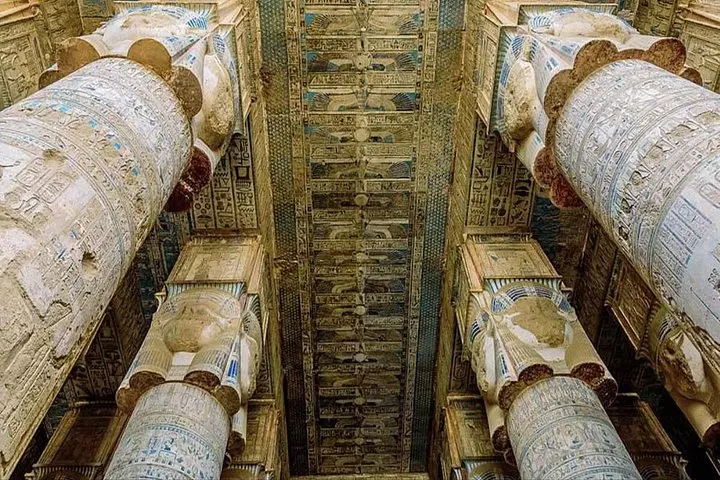
Built largely during the late Ptolemaic and Roman periods, Dendera’s Temple of Hathor is one of Egypt’s better‑preserved sacred complexes. Its reliefs mix pharaonic iconography with portraits of Roman emperors; the painted ceiling that holds the Dendera Zodiac maps the night sky in high relief. Geologically the complex rests on sedimentary Nile deposits and local limestone, the very material that preserves colors and carvings despite millennia of sun and sand.
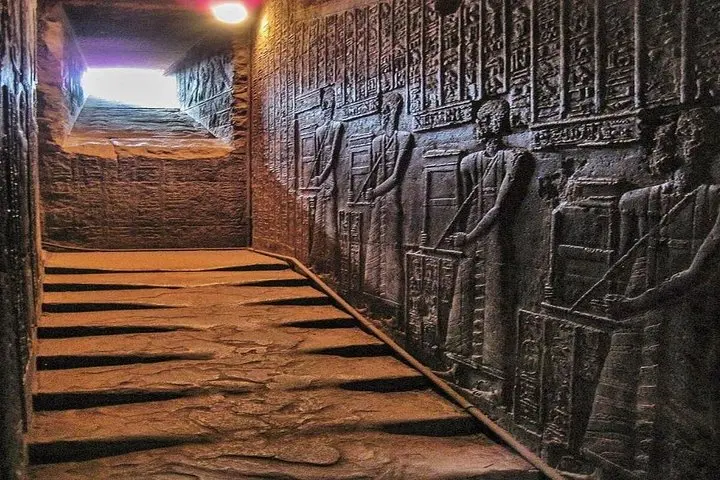
Culturally, this is a site of motherhood, music and jubilee — Hathor’s roles echo across carved scenes of offerings, childbirth reliefs and ritual coronations. Local village life remains close: vendors, farmers and guide families sustain the living economy around the ruins.
Practicalities: tours run about four hours from Luxor with hotel pickup and drop‑off. Expect walking on flat, sometimes uneven stone; bring sun protection, comfortable shoes and small change for water or tips. Early mornings are cooler and lighting is kinder for photography. Admission is typically separate from private transfers, so confirm fees in advance. Move deliberately through the hypostyle halls, read the panels with your Egyptologist guide, and give the reliefs the respect—and distance—they need to last another millennia.
Pickup, transfer and the visit take about four hours total; driving each way is roughly 1–1.5 hours depending on traffic.
Entrance fees are typically not included in private transfer tours—confirm at booking so you can pay on site if needed.
Yes; the itinerary is gentle and family‑friendly but infants must sit on an adult’s lap during transfers per provider rules.
Photography is generally allowed, but avoid flash on painted reliefs and follow your guide’s instructions regarding restricted areas.
WebWaWoot operates guided outdoor trips and adventures with an emphasis on safety, stewardship, and memorable experiences.
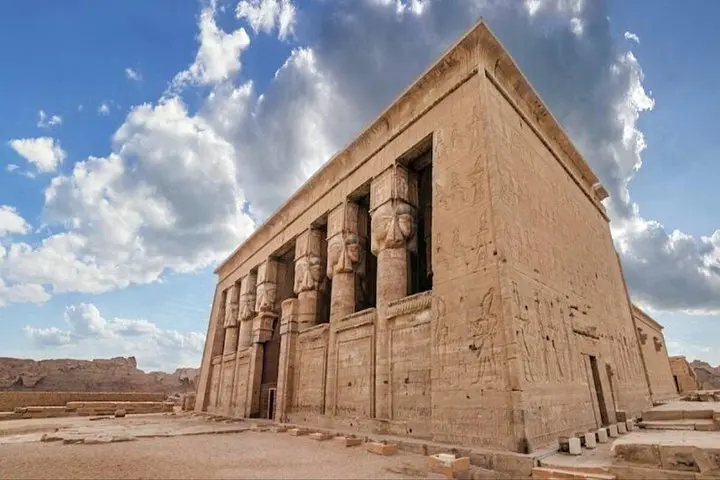
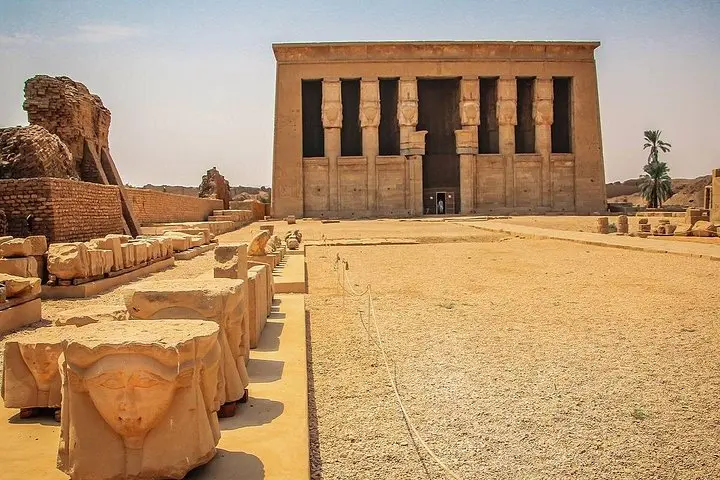
You step from the air‑conditioned car into the arid light of Upper Egypt, the desert breeze tugging at your scarf as the temple’s sandstone volumes rise ahead. Columns crowned with Hathor’s face throw patterned shadows; the river’s presence is felt not in sight but in the cultivated fields that frame the approach, a reminder that this stone sanctuary once drew pilgrims from the Nile’s banks.
You step from the air‑conditioned car into the arid light of Upper Egypt, the desert breeze tugging at your scarf as the temple’s sandstone volumes rise ahead. Columns crowned with Hathor’s face throw patterned shadows; the river’s presence is felt not in sight but in the cultivated fields that frame the approach, a reminder that this stone sanctuary once drew pilgrims from the Nile’s banks.
Built largely during the late Ptolemaic and Roman periods, Dendera’s Temple of Hathor is one of Egypt’s better‑preserved sacred complexes. Its reliefs mix pharaonic iconography with portraits of Roman emperors; the painted ceiling that holds the Dendera Zodiac maps the night sky in high relief. Geologically the complex rests on sedimentary Nile deposits and local limestone, the very material that preserves colors and carvings despite millennia of sun and sand.
Culturally, this is a site of motherhood, music and jubilee — Hathor’s roles echo across carved scenes of offerings, childbirth reliefs and ritual coronations. Local village life remains close: vendors, farmers and guide families sustain the living economy around the ruins.
Practicalities: tours run about four hours from Luxor with hotel pickup and drop‑off. Expect walking on flat, sometimes uneven stone; bring sun protection, comfortable shoes and small change for water or tips. Early mornings are cooler and lighting is kinder for photography. Admission is typically separate from private transfers, so confirm fees in advance. Move deliberately through the hypostyle halls, read the panels with your Egyptologist guide, and give the reliefs the respect—and distance—they need to last another millennia.