THE ADVENTURE COLLECTIVE® · Independent discovery and booking for outdoor travel

Walk Cardiff with a local: three and a half hours from Roman fortifications and Victorian markets to the regenerated waterfront. This private half-day tour combines civic history, cultural stops, and local tips for food and drink.
Walk Cardiff with a local: three and a half hours from Roman fortifications and Victorian markets to the regenerated waterfront. This private half-day tour combines civic history, cultural stops, and local tips for food and drink.
You step off a tram and into a city that still remembers its rivers and its industry — the Taff runs like a line through Cardiff, daring you to follow from the civic centre down to the glittering bay. Cobbled arcades hum with independent shops, a Victorian market exhales the smell of baking and coffee, and modern glass at the waterfront reflects a skyline rebuilt from coal money.
Verified experiences and guided adventures in the surrounding area.
Operated by Tours Of The UK · Cardiff, Wales
You step off a tram and into a city that still remembers its rivers and its industry — the Taff runs like a line through Cardiff, daring you to follow from the civic centre down to the glittering bay. Cobbled arcades hum with independent shops, a Victorian market exhales the smell of baking and coffee, and modern glass at the waterfront reflects a skyline rebuilt from coal money.
Cardiff began as a Roman fort on the Taff; later the Normans held the keep, and the Bute family turned docks into global coal arteries. The walking tour threads these eras together — from medieval St John the Baptist Church and the stone-faced civic centre to the Wales Millennium Centre and the Senedd at Cardiff Bay. Guides explain how geology (the South Wales Coalfield) drove urban growth and how the decline of heavy industry shaped present-day regeneration.
Along the way you’ll pass Spillers Records, the world’s oldest record shop, the Princes Stadium’s urban drama, and Aneurin Bevan’s statue — a prompt to discuss social history and Welsh identity. The route mixes pedestrian streets, market alleys, and waterfront promenades; a short hop by local train or taxi takes you down to the bay if you prefer to save walking time.
Practical notes: the tour runs about 3.5 hours, is private and paced to your group, and can include short interior visits (the National Museum is closed Mondays). Wear stout walking shoes, bring a waterproof layer, and budget for local transit if you want the train to the bay. Expect frequent stops for stories, photos, and local recommendations for food and pubs.
The private tour lasts about 3.5 hours; start location is typically in central Cardiff and can be arranged with your guide.
Yes when open — the museum is included as a brief visit when it's operating (closed Mondays). If it’s closed, the guide will adjust the itinerary.
No — you can walk, take a local train, or a taxi to the bay; fares are not included in the tour price.
Yes — the tour is stroller accessible and family-friendly, but it requires moderate walking stamina for several hours.
Tours Of The UK operates guided outdoor trips and adventures with an emphasis on safety, stewardship, and memorable experiences.


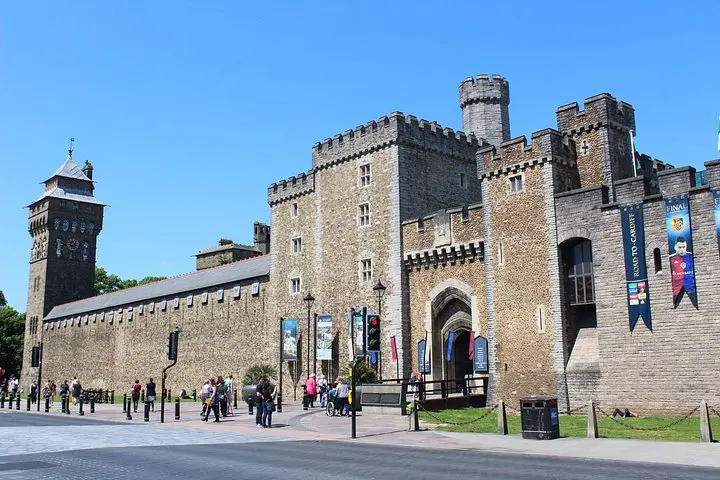

You step off a tram and into a city that still remembers its rivers and its industry — the Taff runs like a line through Cardiff, daring you to follow from the civic centre down to the glittering bay. Cobbled arcades hum with independent shops, a Victorian market exhales the smell of baking and coffee, and modern glass at the waterfront reflects a skyline rebuilt from coal money.
You step off a tram and into a city that still remembers its rivers and its industry — the Taff runs like a line through Cardiff, daring you to follow from the civic centre down to the glittering bay. Cobbled arcades hum with independent shops, a Victorian market exhales the smell of baking and coffee, and modern glass at the waterfront reflects a skyline rebuilt from coal money.
Cardiff began as a Roman fort on the Taff; later the Normans held the keep, and the Bute family turned docks into global coal arteries. The walking tour threads these eras together — from medieval St John the Baptist Church and the stone-faced civic centre to the Wales Millennium Centre and the Senedd at Cardiff Bay. Guides explain how geology (the South Wales Coalfield) drove urban growth and how the decline of heavy industry shaped present-day regeneration.
Along the way you’ll pass Spillers Records, the world’s oldest record shop, the Princes Stadium’s urban drama, and Aneurin Bevan’s statue — a prompt to discuss social history and Welsh identity. The route mixes pedestrian streets, market alleys, and waterfront promenades; a short hop by local train or taxi takes you down to the bay if you prefer to save walking time.
Practical notes: the tour runs about 3.5 hours, is private and paced to your group, and can include short interior visits (the National Museum is closed Mondays). Wear stout walking shoes, bring a waterproof layer, and budget for local transit if you want the train to the bay. Expect frequent stops for stories, photos, and local recommendations for food and pubs.