THE ADVENTURE COLLECTIVE® · Independent discovery and booking for outdoor travel

Spend a concentrated 3–4 hours exploring Ahu Tahai, Ahu Akivi and the Puna Pau crater on Easter Island. This half-day tour combines restored moai platforms, volcanic scenery and local storytelling for a compact introduction to Rapa Nui’s archaeology.
Spend a concentrated 3–4 hours exploring Ahu Tahai, Ahu Akivi and the Puna Pau crater on Easter Island. This half-day tour combines restored moai platforms, volcanic scenery and local storytelling for a compact introduction to Rapa Nui’s archaeology.
You arrive on a short stretch of coast where wind and surf set the rhythm: gulls skitter, the Pacific dares you to look farther, and stone figures stare back across the grass. The tour begins near the village road at Ahu Tahai, where restored platforms and a moai with white-coral eyes create an immediate, human-scale connection to Rapa Nui's past.
Verified experiences and guided adventures in the surrounding area.
Operated by ParaViajantes Tours · Hanga Roa, Valparaíso Region
You arrive on a short stretch of coast where wind and surf set the rhythm: gulls skitter, the Pacific dares you to look farther, and stone figures stare back across the grass. The tour begins near the village road at Ahu Tahai, where restored platforms and a moai with white-coral eyes create an immediate, human-scale connection to Rapa Nui's past.
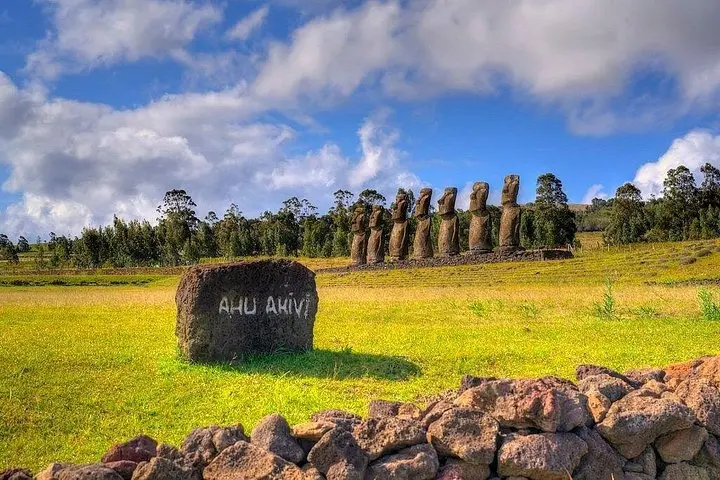
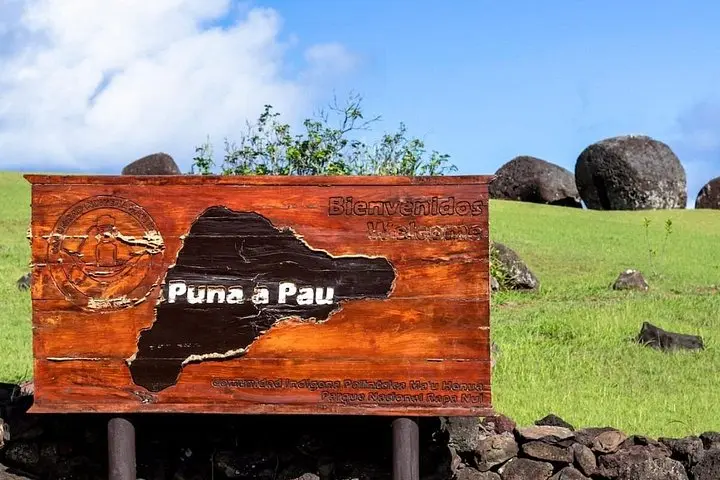
History and geology sit side by side here. The moai were carved from volcanic tuff between the 13th and 17th centuries and moved across plains of hardened lava; Puna Pau, a small scoria crater, supplied the red pukao (headdresses). Ahu Akivi's seven moai — unusual for facing seaward — mark a different chapter in island ritual and astronomy, restored in the 1960s as part of archeological recoveries.
Culturally, local guides will explain carving techniques, oral histories, and contemporary connections between Rapa Nui communities and these sites. The views from Puna Pau toward Terevaka offer a clear sense of the island’s volcanic spine and the terrain that shaped ritual routes.
Practical guidance: the excursion runs about 3–4 hours with short walks between sites and modest climbs to viewpoints. Bring sun protection, a refillable water bottle, and a camera for coastal light. Wear sturdy walking shoes — footing on uneven lava and grassy slopes can be slick when wet. Respect ropes and signage: do not climb on ahu or moai. Confirm pickup details via WhatsApp and carry ID; park and site management may request it. With concise logistics and vivid scenery, this half-day gives a concentrated, on-the-ground primer to Rapa Nui’s archaeology and landscape.
Yes—roundtrip transportation is included; the operator will confirm pickup point and time via WhatsApp.
Yes—bookings request passport details and lodging so the operator can coordinate entry and logistics.
Yes—local guides are available in both Spanish and English.
Infants must sit on laps; the tour is generally easy but is not recommended for pregnant travelers or those with serious spinal or cardiovascular conditions.
ParaViajantes Tours operates guided outdoor trips and adventures with an emphasis on safety, stewardship, and memorable experiences.
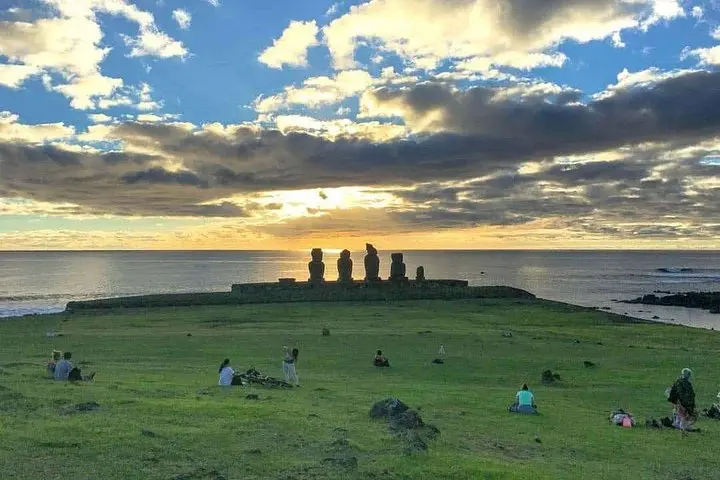
You arrive on a short stretch of coast where wind and surf set the rhythm: gulls skitter, the Pacific dares you to look farther, and stone figures stare back across the grass. The tour begins near the village road at Ahu Tahai, where restored platforms and a moai with white-coral eyes create an immediate, human-scale connection to Rapa Nui's past.
You arrive on a short stretch of coast where wind and surf set the rhythm: gulls skitter, the Pacific dares you to look farther, and stone figures stare back across the grass. The tour begins near the village road at Ahu Tahai, where restored platforms and a moai with white-coral eyes create an immediate, human-scale connection to Rapa Nui's past.
History and geology sit side by side here. The moai were carved from volcanic tuff between the 13th and 17th centuries and moved across plains of hardened lava; Puna Pau, a small scoria crater, supplied the red pukao (headdresses). Ahu Akivi's seven moai — unusual for facing seaward — mark a different chapter in island ritual and astronomy, restored in the 1960s as part of archeological recoveries.
Culturally, local guides will explain carving techniques, oral histories, and contemporary connections between Rapa Nui communities and these sites. The views from Puna Pau toward Terevaka offer a clear sense of the island’s volcanic spine and the terrain that shaped ritual routes.
Practical guidance: the excursion runs about 3–4 hours with short walks between sites and modest climbs to viewpoints. Bring sun protection, a refillable water bottle, and a camera for coastal light. Wear sturdy walking shoes — footing on uneven lava and grassy slopes can be slick when wet. Respect ropes and signage: do not climb on ahu or moai. Confirm pickup details via WhatsApp and carry ID; park and site management may request it. With concise logistics and vivid scenery, this half-day gives a concentrated, on-the-ground primer to Rapa Nui’s archaeology and landscape.