THE ADVENTURE COLLECTIVE® · Independent discovery and booking for outdoor travel

Scale Todra Gorge’s dramatic limestone walls on a focused half-day climbing session. Local guides, supplied equipment and routes for multiple levels make this a compact, transportive introduction to one of Morocco’s premier canyon climbs.
Scale Todra Gorge’s dramatic limestone walls on a focused half-day climbing session. Local guides, supplied equipment and routes for multiple levels make this a compact, transportive introduction to one of Morocco’s premier canyon climbs.
You step off the dusty lane and into a paper-thin world of light and shadow: the Todra canyon squeezes the sky into a narrow ribbon while limestone walls rise like sheer pages on either side. The riverbed—more a braided ribbon of sand and polished stones in summer—runs down the middle, daring you to cross its bright expanse and put your hands on rock that has been polished by wind, water and climbers for decades.
Verified experiences and guided adventures in the surrounding area.
Operated by Morocco Rock Climbing · Tinghir, Drâa-Tafilalet
You step off the dusty lane and into a paper-thin world of light and shadow: the Todra canyon squeezes the sky into a narrow ribbon while limestone walls rise like sheer pages on either side. The riverbed—more a braided ribbon of sand and polished stones in summer—runs down the middle, daring you to cross its bright expanse and put your hands on rock that has been polished by wind, water and climbers for decades.
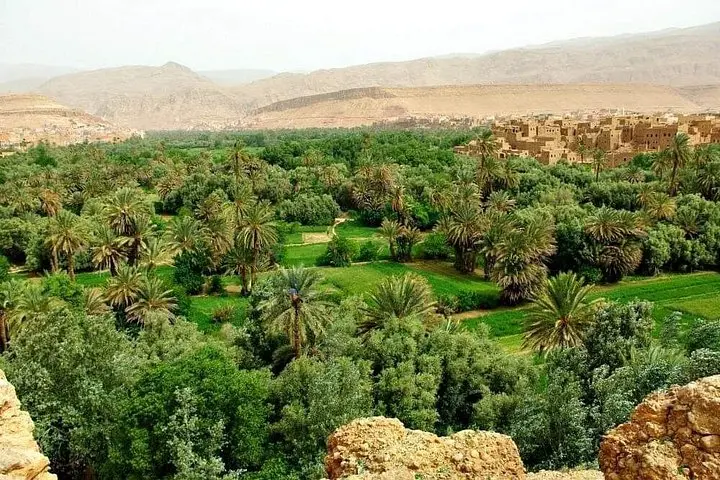
Todra Gorge is a place shaped by tectonics and time. The High Atlas thrusts north, cracking and folding ancient marine limestone into vertical cliffs that now rise 150–300 meters above the canyon floor. The Berber villages that dot the approach have long used the gorge as a corridor between the desert and mountain pastures; you’ll pass vineyards and almond trees that survive on the thin soils squeezed from the shale. Climbers arrived in numbers in the late 20th century, attracted by long, clean faces and reliable dry weather. Routes here are a mix of bolted sport lanes and longer trad pitches—enough variety to keep both nervous first-timers and hardened sport climbers satisfied.
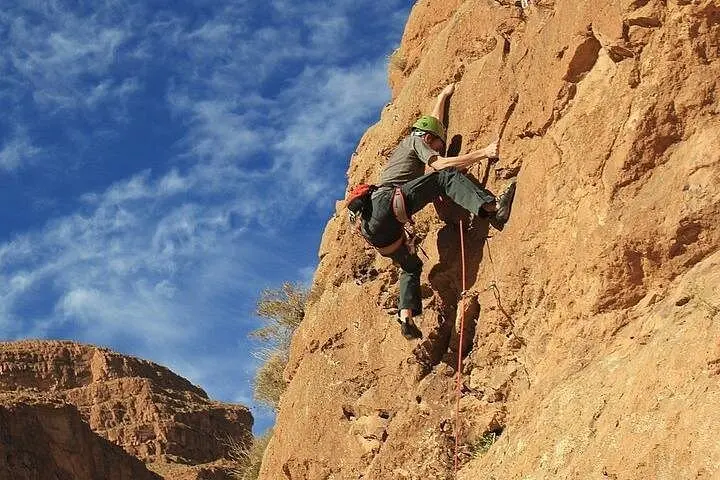
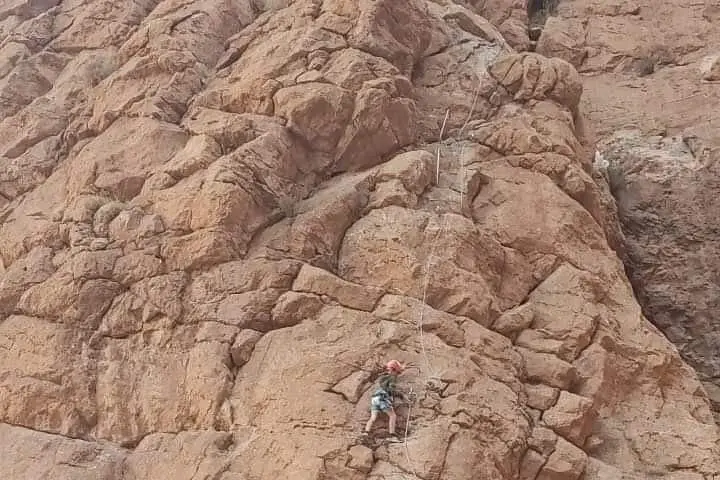
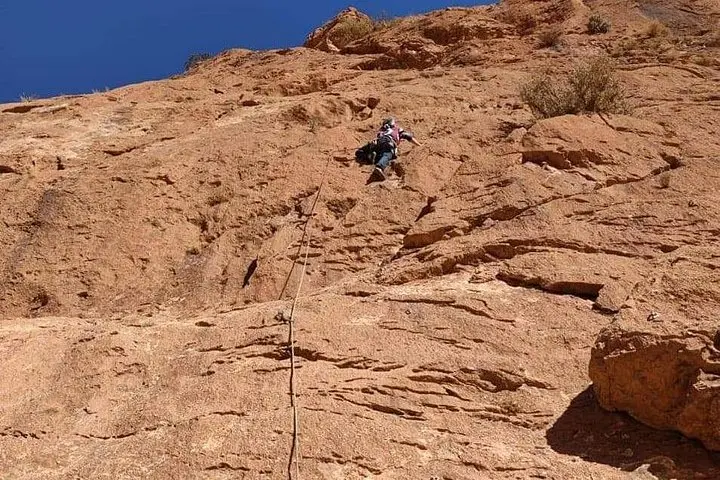
On a half-day outing with a local guide, the program is compact and exact: meet at Hotel El Mansour in Todra, kit up, walk into the canyon and spend the session on single-pitch routes and short multi-pitch lines suited to your group. The limestone is often pocketed and featured, so technique—footwork, body positioning and route-reading—matters more than brute force. The guide sets anchors, coaches movement and manages safety; all technical equipment is provided.
Practical details matter here. Most climbs used on half-day trips are 20–60 meters with a handful of longer pitches available for experienced parties. Expect sun on the upper walls and cool shade in the riverbed; temperatures swing quickly. The activity requires a moderate level of fitness and basic mobility—stair-climb endurance translates well to approach and movement on the rock. Note that this outing is not recommended for people with significant back, heart, or pregnancy-related restrictions.
For planning: spring and fall offer the most comfortable conditions; start early in summer to beat heat and aim for mid-afternoon in winter when the sun warms the canyon. Bring plenty of water, grippy shoes—even street-style approach shoes feel slick on sand—and a light layer for cooling winds when you’re stationary. Leave no trace: rope slings and chalk are part of the climbing culture here, but dispose of tape and packaging responsibly to keep the gorge clean.
By the time you rappel or walk down, the canyon has shifted again: its light has thinned, colors have deepened, and the rock seems to breathe back. Todra doesn’t just test your climbing skill. It insists you read the route, respect the heat and finish with the sky still visible between two very deliberate walls.
The tour runs about 4 hours (half-day), including approach, instruction, multiple climbs and demob.
No—beginners can join because the guide will set up easy single-pitch routes, but you should have basic mobility and a moderate fitness level.
Yes—harnesses, helmets, ropes and other technical gear are supplied by the operator.
Groups meet at Hotel El Mansour in Todra Gorge, with itineraries beginning and ending there.
Not recommended for people with serious back, heart issues, or pregnancy; participants must be able to move on uneven terrain.
Spring and fall offer ideal temperatures; early morning in summer and midday in winter work best to manage heat and light.
Morocco Rock Climbing operates guided outdoor trips and adventures with an emphasis on safety, stewardship, and memorable experiences.
You step off the dusty lane and into a paper-thin world of light and shadow: the Todra canyon squeezes the sky into a narrow ribbon while limestone walls rise like sheer pages on either side. The riverbed—more a braided ribbon of sand and polished stones in summer—runs down the middle, daring you to cross its bright expanse and put your hands on rock that has been polished by wind, water and climbers for decades.
You step off the dusty lane and into a paper-thin world of light and shadow: the Todra canyon squeezes the sky into a narrow ribbon while limestone walls rise like sheer pages on either side. The riverbed—more a braided ribbon of sand and polished stones in summer—runs down the middle, daring you to cross its bright expanse and put your hands on rock that has been polished by wind, water and climbers for decades.
Todra Gorge is a place shaped by tectonics and time. The High Atlas thrusts north, cracking and folding ancient marine limestone into vertical cliffs that now rise 150–300 meters above the canyon floor. The Berber villages that dot the approach have long used the gorge as a corridor between the desert and mountain pastures; you’ll pass vineyards and almond trees that survive on the thin soils squeezed from the shale. Climbers arrived in numbers in the late 20th century, attracted by long, clean faces and reliable dry weather. Routes here are a mix of bolted sport lanes and longer trad pitches—enough variety to keep both nervous first-timers and hardened sport climbers satisfied.
On a half-day outing with a local guide, the program is compact and exact: meet at Hotel El Mansour in Todra, kit up, walk into the canyon and spend the session on single-pitch routes and short multi-pitch lines suited to your group. The limestone is often pocketed and featured, so technique—footwork, body positioning and route-reading—matters more than brute force. The guide sets anchors, coaches movement and manages safety; all technical equipment is provided.
Practical details matter here. Most climbs used on half-day trips are 20–60 meters with a handful of longer pitches available for experienced parties. Expect sun on the upper walls and cool shade in the riverbed; temperatures swing quickly. The activity requires a moderate level of fitness and basic mobility—stair-climb endurance translates well to approach and movement on the rock. Note that this outing is not recommended for people with significant back, heart, or pregnancy-related restrictions.
For planning: spring and fall offer the most comfortable conditions; start early in summer to beat heat and aim for mid-afternoon in winter when the sun warms the canyon. Bring plenty of water, grippy shoes—even street-style approach shoes feel slick on sand—and a light layer for cooling winds when you’re stationary. Leave no trace: rope slings and chalk are part of the climbing culture here, but dispose of tape and packaging responsibly to keep the gorge clean.
By the time you rappel or walk down, the canyon has shifted again: its light has thinned, colors have deepened, and the rock seems to breathe back. Todra doesn’t just test your climbing skill. It insists you read the route, respect the heat and finish with the sky still visible between two very deliberate walls.