THE ADVENTURE COLLECTIVE® · Independent discovery and booking for outdoor travel

Glide across Lake Nahuel Huapi from Puerto Petunia on a half-day sailing that visits turquoise bays and small islands. This easy outing combines calm anchored bays, Andean views and light refreshments.
Glide across Lake Nahuel Huapi from Puerto Petunia on a half-day sailing that visits turquoise bays and small islands. This easy outing combines calm anchored bays, Andean views and light refreshments.
On a clear morning the boat slips away from Puerto Petunia, the house-lined shore of Nahuel Huapi shrinking as the Andes open around the water.
Wind combs the lake and the hull hums; gulls wheel over Huemul Island and Isla de las Gaviotas as the guide points to the rounded promontory of the San Pedro peninsula.
Verified experiences and guided adventures in the surrounding area.
Operated by Pikapi Travel Buenos Aires · San Carlos de Bariloche, Río Negro
On a clear morning the boat slips away from Puerto Petunia, the house-lined shore of Nahuel Huapi shrinking as the Andes open around the water.
Wind combs the lake and the hull hums; gulls wheel over Huemul Island and Isla de las Gaviotas as the guide points to the rounded promontory of the San Pedro peninsula.
Lake Nahuel Huapi is geologic in scale — glacial basins carved by ice and now filled to depths approaching 464 meters — its cold meltwater giving deep-blue clarity. The route follows the Bell Arm, threading past calm inlets such as Bahía Serena, then skims Isla de las Gallinas toward the Neuquén shore near Puerto Venado. Local culture carries Mapuche roots alongside waves of European settlers; small coves served fishermen long before tourism arrived.
Expect a relaxed five-hour outing: hotel transfer to Puerto Petunia, roughly three hours aboard a small sailing vessel, and time anchored in a sheltered turquoise cove for mate and medialunas. Weather writes the day's plan — sudden Patagonian gusts can push sails and rearrange the route — so captains adjust for safety and comfort.
Practical guidance: dress in windproof layers and a light waterproof, bring strong sun protection and a reusable water bottle, and use camera wrist straps on moving decks. Seasickness remedies make a difference for sensitive travelers. Morning departures usually mean calmer water and better light for island views.
The full activity runs about five hours from hotel pickup; expect roughly three hours aboard the sailing vessel on the lake.
Yes — the tour is suitable for most ages; infants are required to sit on an adult’s lap during the trip.
Most stops are anchored bays for swimming or viewing rather than long landings; exact stops depend on weather and water conditions.
Light refreshments are included—infusions (mate) and medialunas (crescent pastries); bring extra snacks if you need more.
Pikapi Travel Buenos Aires operates guided outdoor trips and adventures with an emphasis on safety, stewardship, and memorable experiences.
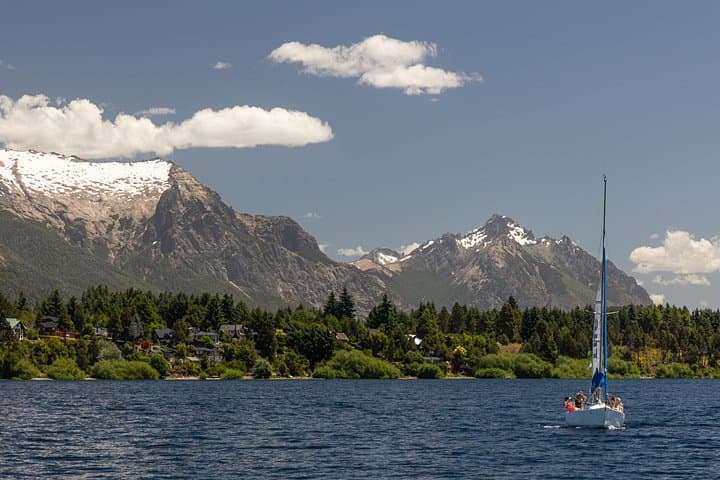
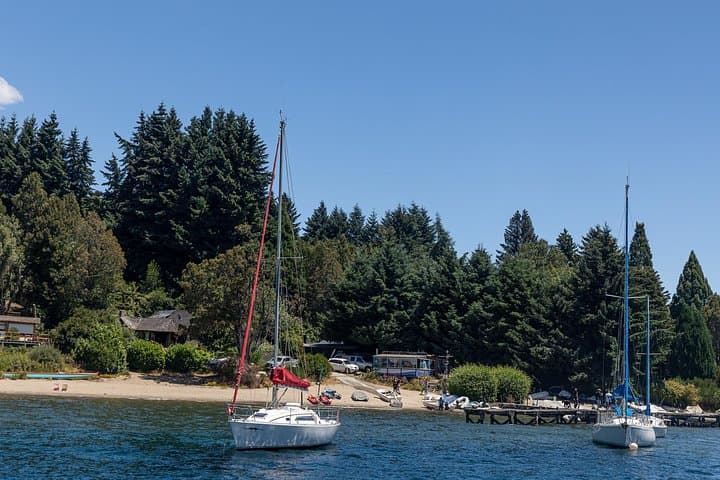
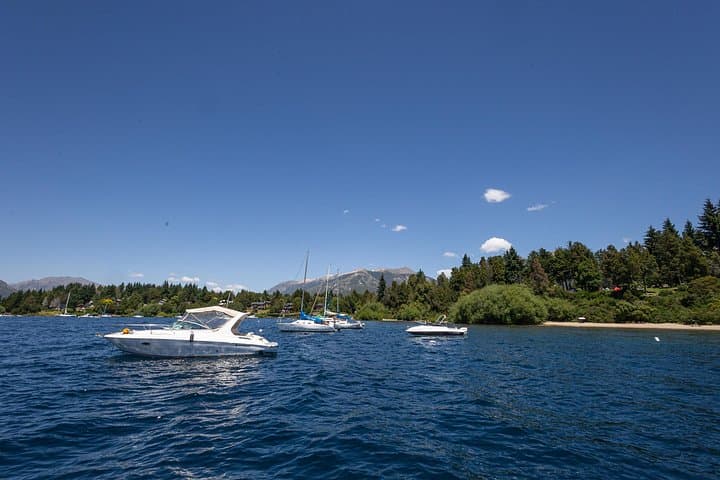
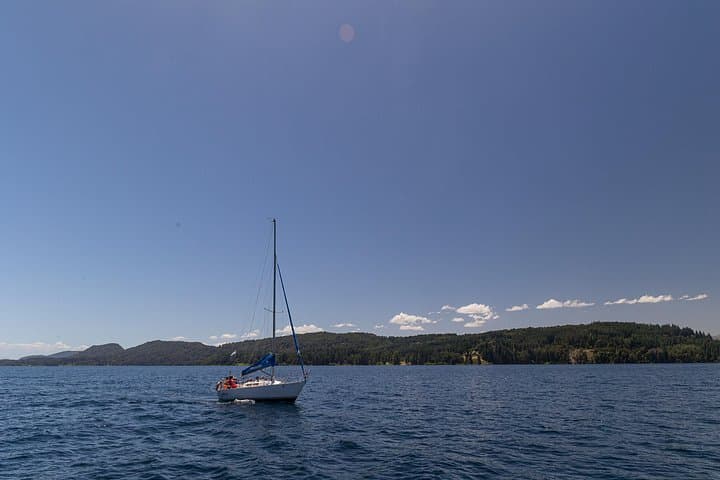
On a clear morning the boat slips away from Puerto Petunia, the house-lined shore of Nahuel Huapi shrinking as the Andes open around the water.
Wind combs the lake and the hull hums; gulls wheel over Huemul Island and Isla de las Gaviotas as the guide points to the rounded promontory of the San Pedro peninsula.
Lake Nahuel Huapi is geologic in scale — glacial basins carved by ice and now filled to depths approaching 464 meters — its cold meltwater giving deep-blue clarity. The route follows the Bell Arm, threading past calm inlets such as Bahía Serena, then skims Isla de las Gallinas toward the Neuquén shore near Puerto Venado. Local culture carries Mapuche roots alongside waves of European settlers; small coves served fishermen long before tourism arrived.
Expect a relaxed five-hour outing: hotel transfer to Puerto Petunia, roughly three hours aboard a small sailing vessel, and time anchored in a sheltered turquoise cove for mate and medialunas. Weather writes the day's plan — sudden Patagonian gusts can push sails and rearrange the route — so captains adjust for safety and comfort.
Practical guidance: dress in windproof layers and a light waterproof, bring strong sun protection and a reusable water bottle, and use camera wrist straps on moving decks. Seasickness remedies make a difference for sensitive travelers. Morning departures usually mean calmer water and better light for island views.