THE ADVENTURE COLLECTIVE® · Independent discovery and booking for outdoor travel

Paddle out of Picton and into the sheltered coves of Queen Charlotte Sound on a guided half-day sea kayak. Expect calm bays, close wildlife encounters, and expert local guides on this 4-hour maritime escape.
Paddle out of Picton and into the sheltered coves of Queen Charlotte Sound on a guided half-day sea kayak. Expect calm bays, close wildlife encounters, and expert local guides on this 4-hour maritime escape.
The first strokes push you away from Picton’s working wharf and into a blue that seems to hold the harbor itself. In the space between the town and the next headland the water straightens into lanes of glass and the Sound breathes—currents testing your balance, gulls riding an invisible wind. Guides check spray skirts and clip drybags; their voices fold into the rhythm of paddles as the group threads through sheltered coves toward bush-clad shorelines.
Verified experiences and guided adventures in the surrounding area.
Operated by Wilderness Guides · Picton, Marlborough
The first strokes push you away from Picton’s working wharf and into a blue that seems to hold the harbor itself. In the space between the town and the next headland the water straightens into lanes of glass and the Sound breathes—currents testing your balance, gulls riding an invisible wind. Guides check spray skirts and clip drybags; their voices fold into the rhythm of paddles as the group threads through sheltered coves toward bush-clad shorelines.
This is Queen Charlotte Sound at its gentlest: four hours of tidal choreography among ridges carved long ago when sea levels rose and drowned ancient river valleys. The Marlborough Sounds are not a fjord but a maze of drowned valleys and rocky headlands, an edge of New Zealand that reads like geological memory. Māori used these waterways for food and travel for centuries, and the region reappears in navigator's journals after Captain Cook charted and named parts of the sound in 1770. Today the same bays still hold kelp forests and quiet beaches where seabirds—cormorants, shags and the occasional little blue penguin—fish the shallows.
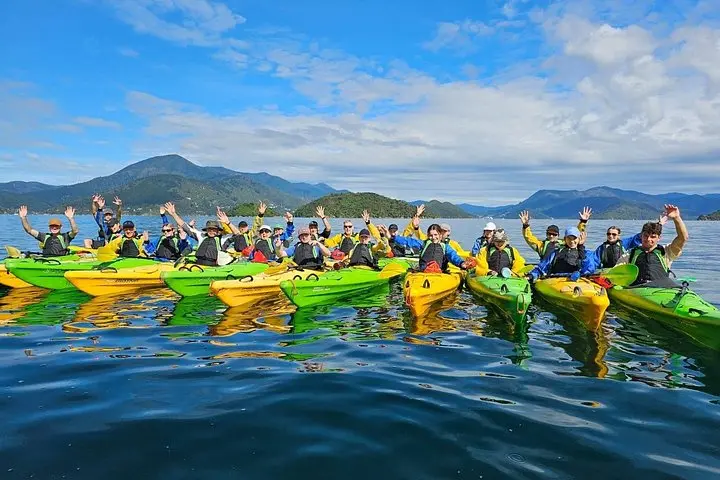
Wildlife is the other steady companion. Stingrays and eagle rays glide like shadowed leaves beneath the kayak; curious fur seals pop up to inspect paddlers; huge starfish cling under intertidal rocks; and on lucky days a pod of dolphins will escort the group for minutes that feel longer than time allows. Guides here run small groups (roughly one guide per eight kayakers) and bring local knowledge: where a shy penguin likes to slip ashore at dusk, which coves hold the best intertidal life to examine at low tide.
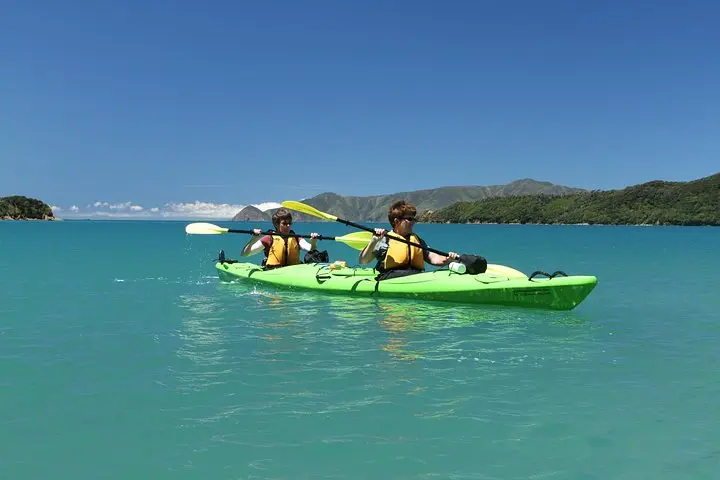
Practical edge: expect roughly 6–10 km of paddling in a typical half-day route, all at sea level with short, sheltered crossings between bays. Equipment is provided—sit-on-top or touring kayaks, paddles, buoyancy aids and a roll-and-clip drybag for a phone or small camera. The launch point is the Picton Waterfront (corner of London Quay and Wellington Street), where operators consolidate groups and run a short safety briefing before heading out.
Timing matters: mornings generally offer flatter water and better wildlife viewing; wind picks up in the afternoon and can make crossings choppier. Bring layered fabrics, a waterproof shell, a water bottle, reef-safe sunscreen and secure footwear for rocky beach exits. Fitness should be moderate—able to paddle steadily for several hours and re-enter a kayak from shallow water if needed. Children eight and older can join with an adult.
Small-group guiding, a strong local conservation ethic, and simple logistics make this an ideal half-day introduction to the Marlborough Sounds—a place where geology meets sea and the water keeps daring you to look closer.
The tour lasts four hours; typical paddling distance is about 6–10 km depending on conditions and the chosen route.
No formal experience required—guides teach paddling basics and safety, though you should be comfortable swimming and able to paddle at a steady pace.
Common sightings include stingrays, eagle rays, cormorants, seals, large starfish, and occasionally little blue penguins and dolphins.
Meet at the operator's office on the Picton Waterfront (corner of London Quay and Wellington Street); minimum age is 8 and children must be accompanied by an adult.
Tours are canceled or rescheduled if conditions are unsafe; you can cancel for a full refund at least 24 hours before departure per the operator's policy.
Yes—kayak, paddle, buoyancy aid and a small roll-and-clip drybag for a phone or camera are included.
Wilderness Guides operates guided outdoor trips and adventures with an emphasis on safety, stewardship, and memorable experiences.
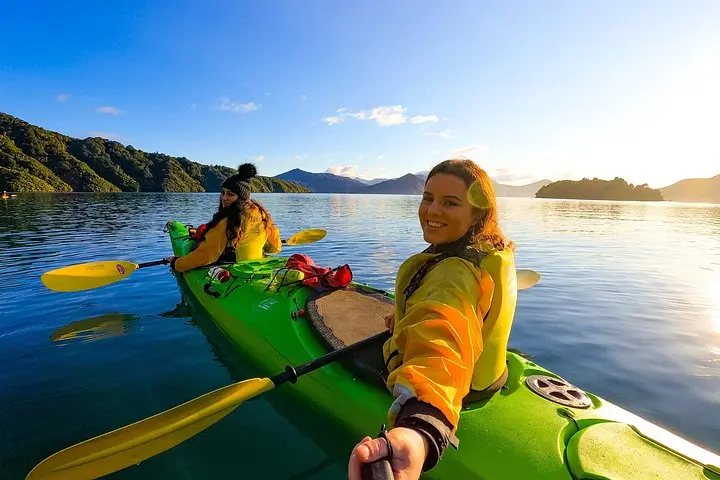
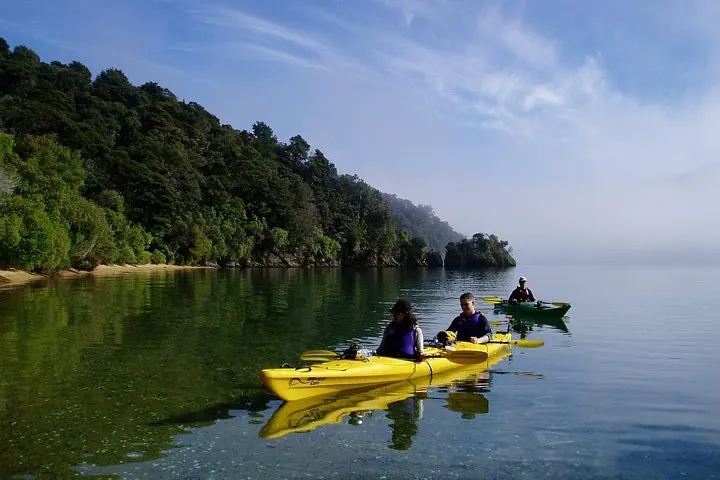
The first strokes push you away from Picton’s working wharf and into a blue that seems to hold the harbor itself. In the space between the town and the next headland the water straightens into lanes of glass and the Sound breathes—currents testing your balance, gulls riding an invisible wind. Guides check spray skirts and clip drybags; their voices fold into the rhythm of paddles as the group threads through sheltered coves toward bush-clad shorelines.
The first strokes push you away from Picton’s working wharf and into a blue that seems to hold the harbor itself. In the space between the town and the next headland the water straightens into lanes of glass and the Sound breathes—currents testing your balance, gulls riding an invisible wind. Guides check spray skirts and clip drybags; their voices fold into the rhythm of paddles as the group threads through sheltered coves toward bush-clad shorelines.
This is Queen Charlotte Sound at its gentlest: four hours of tidal choreography among ridges carved long ago when sea levels rose and drowned ancient river valleys. The Marlborough Sounds are not a fjord but a maze of drowned valleys and rocky headlands, an edge of New Zealand that reads like geological memory. Māori used these waterways for food and travel for centuries, and the region reappears in navigator's journals after Captain Cook charted and named parts of the sound in 1770. Today the same bays still hold kelp forests and quiet beaches where seabirds—cormorants, shags and the occasional little blue penguin—fish the shallows.
Wildlife is the other steady companion. Stingrays and eagle rays glide like shadowed leaves beneath the kayak; curious fur seals pop up to inspect paddlers; huge starfish cling under intertidal rocks; and on lucky days a pod of dolphins will escort the group for minutes that feel longer than time allows. Guides here run small groups (roughly one guide per eight kayakers) and bring local knowledge: where a shy penguin likes to slip ashore at dusk, which coves hold the best intertidal life to examine at low tide.
Practical edge: expect roughly 6–10 km of paddling in a typical half-day route, all at sea level with short, sheltered crossings between bays. Equipment is provided—sit-on-top or touring kayaks, paddles, buoyancy aids and a roll-and-clip drybag for a phone or small camera. The launch point is the Picton Waterfront (corner of London Quay and Wellington Street), where operators consolidate groups and run a short safety briefing before heading out.
Timing matters: mornings generally offer flatter water and better wildlife viewing; wind picks up in the afternoon and can make crossings choppier. Bring layered fabrics, a waterproof shell, a water bottle, reef-safe sunscreen and secure footwear for rocky beach exits. Fitness should be moderate—able to paddle steadily for several hours and re-enter a kayak from shallow water if needed. Children eight and older can join with an adult.
Small-group guiding, a strong local conservation ethic, and simple logistics make this an ideal half-day introduction to the Marlborough Sounds—a place where geology meets sea and the water keeps daring you to look closer.