THE ADVENTURE COLLECTIVE® · Independent discovery and booking for outdoor travel

Drive a historic gravel pass into the Swartberg Mountains for a half-day private eco-tour: a 900 m ascent to summit views, short sandstone walks, fynbos habitats and conservation insights from local guides. Ideal for travelers based in Oudtshoorn who want nature, history and wildlife in one morning.
Drive a historic gravel pass into the Swartberg Mountains for a half-day private eco-tour: a 900 m ascent to summit views, short sandstone walks, fynbos habitats and conservation insights from local guides. Ideal for travelers based in Oudtshoorn who want nature, history and wildlife in one morning.
You crest the gravel ribbon of Swartberg Pass and the air changes — thinner, cooler, humming with insect and bird calls. The road carved by Thomas Bain in the 1880s climbs 900 meters to a summit at roughly 1,580 m, where sandstone ribs unfold into hard-bodied cliffs and open views over the Klein- and Great Karoo. Wind rousts protea heads and scrub; a Verreaux's eagle wheels, daring you to look up.
Verified experiences and guided adventures in the surrounding area.
Operated by True South Travel · Oudtshoorn, Western Cape
You crest the gravel ribbon of Swartberg Pass and the air changes — thinner, cooler, humming with insect and bird calls. The road carved by Thomas Bain in the 1880s climbs 900 meters to a summit at roughly 1,580 m, where sandstone ribs unfold into hard-bodied cliffs and open views over the Klein- and Great Karoo. Wind rousts protea heads and scrub; a Verreaux's eagle wheels, daring you to look up.
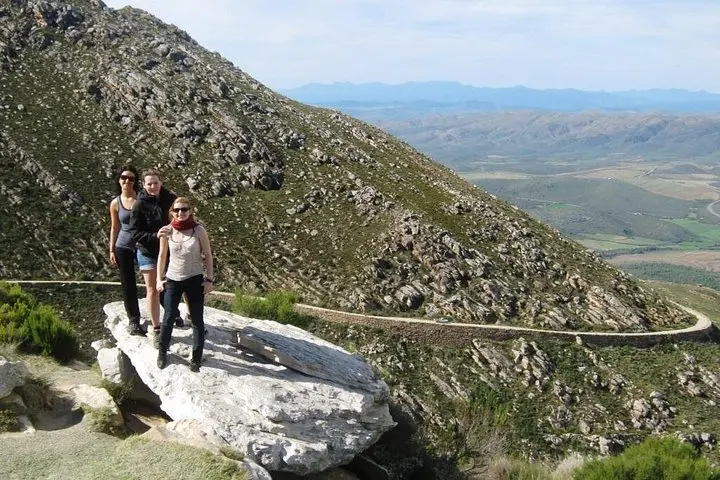
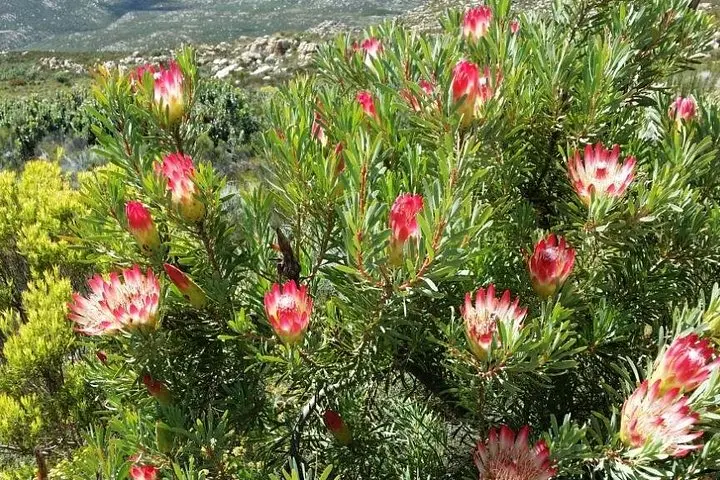
The pass itself is a living piece of engineering history: a dry-stone road and retaining walls hand-assembled by 19th-century crews. Geologically the Swartberg is old sandstone — rock layers folded and exposed over 300 million years — and the slopes host fynbos plant communities unique to the Cape Floristic Region, a UNESCO World Heritage area.
Local culture and conservation intersect here. Guides often explain the H.O.P.E. Foundation’s community and habitat projects that support biodiversity and sustainable tourism. Wildlife is skittish but visible: klipspringer on ledges and nectar-hunting sunbirds among proteas.
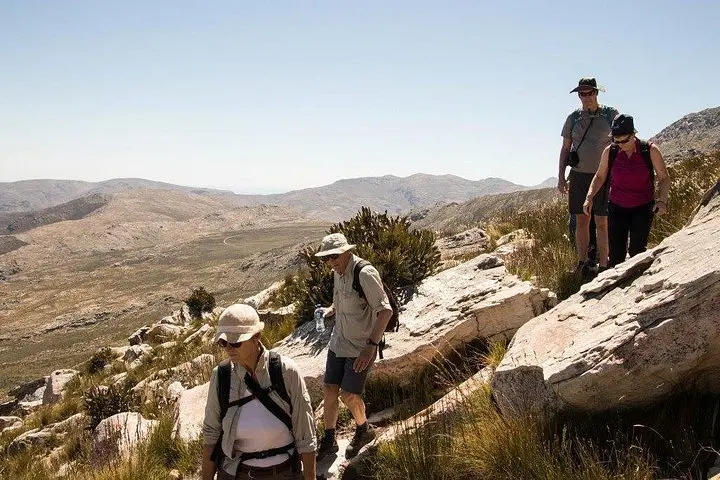
Practical guidance: plan for a 4–5 hour half-day tour with transfers from Oudtshoorn. The route is gravel and can be dusty; solid walking shoes, sun protection and a filled water bottle are essential. Expect moderate walking on uneven trails and short steep sections — nothing technical, but allow time for photo stops and a leisure walk at the summit. Confirm pickup at least 48 hours ahead. A light lunch in Oudtshoorn follows the descent, a good moment to warm up and compare sightings. Leave no trace: fynbos is fragile and slow to recover.
The summit walk is a leisure trail with some short steep or uneven sections; it’s rated moderate and accessible to most people who are comfortable with short hikes.
Yes — you must call the operator at least 48 hours before departure to confirm your pickup location and time.
National Park fees are included in the tour price according to the itinerary details.
Children can join but must be accompanied by an adult; infants are required to sit on an adult’s lap during transfers.
True South Travel operates guided outdoor trips and adventures with an emphasis on safety, stewardship, and memorable experiences.
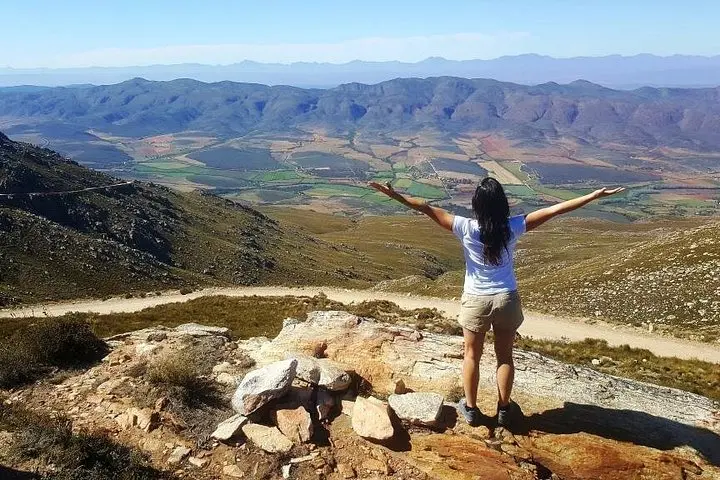
You crest the gravel ribbon of Swartberg Pass and the air changes — thinner, cooler, humming with insect and bird calls. The road carved by Thomas Bain in the 1880s climbs 900 meters to a summit at roughly 1,580 m, where sandstone ribs unfold into hard-bodied cliffs and open views over the Klein- and Great Karoo. Wind rousts protea heads and scrub; a Verreaux's eagle wheels, daring you to look up.
You crest the gravel ribbon of Swartberg Pass and the air changes — thinner, cooler, humming with insect and bird calls. The road carved by Thomas Bain in the 1880s climbs 900 meters to a summit at roughly 1,580 m, where sandstone ribs unfold into hard-bodied cliffs and open views over the Klein- and Great Karoo. Wind rousts protea heads and scrub; a Verreaux's eagle wheels, daring you to look up.
The pass itself is a living piece of engineering history: a dry-stone road and retaining walls hand-assembled by 19th-century crews. Geologically the Swartberg is old sandstone — rock layers folded and exposed over 300 million years — and the slopes host fynbos plant communities unique to the Cape Floristic Region, a UNESCO World Heritage area.
Local culture and conservation intersect here. Guides often explain the H.O.P.E. Foundation’s community and habitat projects that support biodiversity and sustainable tourism. Wildlife is skittish but visible: klipspringer on ledges and nectar-hunting sunbirds among proteas.
Practical guidance: plan for a 4–5 hour half-day tour with transfers from Oudtshoorn. The route is gravel and can be dusty; solid walking shoes, sun protection and a filled water bottle are essential. Expect moderate walking on uneven trails and short steep sections — nothing technical, but allow time for photo stops and a leisure walk at the summit. Confirm pickup at least 48 hours ahead. A light lunch in Oudtshoorn follows the descent, a good moment to warm up and compare sightings. Leave no trace: fynbos is fragile and slow to recover.