THE ADVENTURE COLLECTIVE® · Independent discovery and booking for outdoor travel

Climb from pine-scented slopes to the raw rim of Etna’s Valle del Bove on a 6–7 hour trek that reaches about 2,300 m. Expect volcanic sand, lava caves, and sweeping crater views—plus practical tips for timing and gear.
Climb from pine-scented slopes to the raw rim of Etna’s Valle del Bove on a 6–7 hour trek that reaches about 2,300 m. Expect volcanic sand, lava caves, and sweeping crater views—plus practical tips for timing and gear.
The trail begins above the tree line where pines give way to a scrubby undergrowth and the ground turns black and coarse. At 2,000 meters you step out of the forest and the landscape opens: a slow, steady climb through broom and volcanic sand leads toward a rim that overlooks the Valle del Bove. The wind here has a voice—cold, direct—and the southeast crater sits like a raw engine in the distance.
Verified experiences and guided adventures in the surrounding area.
Operated by Etnavic · Catania, Sicily
The trail begins above the tree line where pines give way to a scrubby undergrowth and the ground turns black and coarse. At 2,000 meters you step out of the forest and the landscape opens: a slow, steady climb through broom and volcanic sand leads toward a rim that overlooks the Valle del Bove. The wind here has a voice—cold, direct—and the southeast crater sits like a raw engine in the distance.
Mount Etna is one of Europe’s most active volcanoes; the Valle del Bove is a collapsed sector shaped by repeated eruptions and flank failures. The geology is instructive underfoot—ash, pahoehoe-like crusts, and sharp clinker formed in recent flows. The local culture of the Etna towns—Zafferana Etnea and the villages on the eastern slopes—reflects a long coexistence with eruption and fertile volcanic soils that produce wine, honey and citrus.
On this 6–7 hour outing expect roughly 300 meters of elevation gain to an altitude of about 2,300 m, patches of lunar lava fields, and a visit to a lava tube cave. You’ll walk on hardened craters and pause at the 1991–1993 lava front near Zafferana. Guides supply helmets and torches for cave sections and can arrange pickups from Catania or Etna villages.
Practical: layer for rapid temperature shifts, carry at least 1–1.5 liters of water, and use sturdy boots with good traction for loose volcanic scree. Start early for calmer winds and clearer views; weather can change quickly so check forecasts and heed guide advice.
The walk gains about 300 m from the 2,000 m starting point and is rated moderate—steady uphill sections with loose volcanic surfaces but no technical climbing.
Yes; guides include helmets and torches for the lava tube sections, though you should bring a headlamp if you prefer your own.
Pickups are available from Catania, and meeting points are arranged for travelers from Etna villages; check the booking for exact pickup options.
Not recommended for travelers with serious cardiovascular issues; children may join if fit for sustained uphill walking—confirm age and fitness requirements with the operator.
Etnavic operates guided outdoor trips and adventures with an emphasis on safety, stewardship, and memorable experiences.
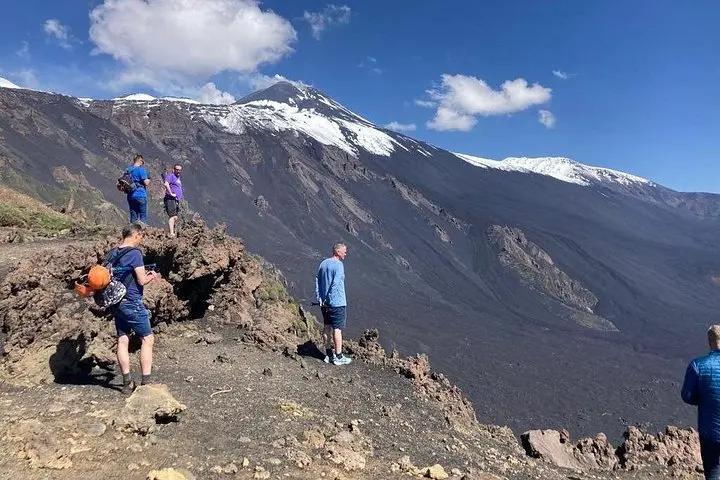
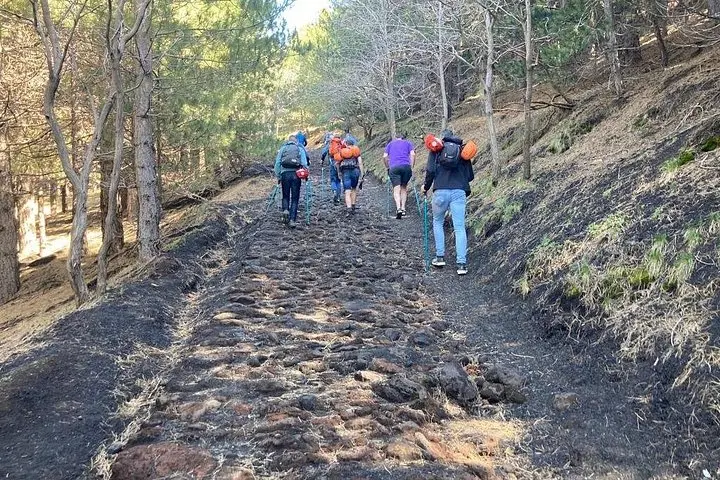
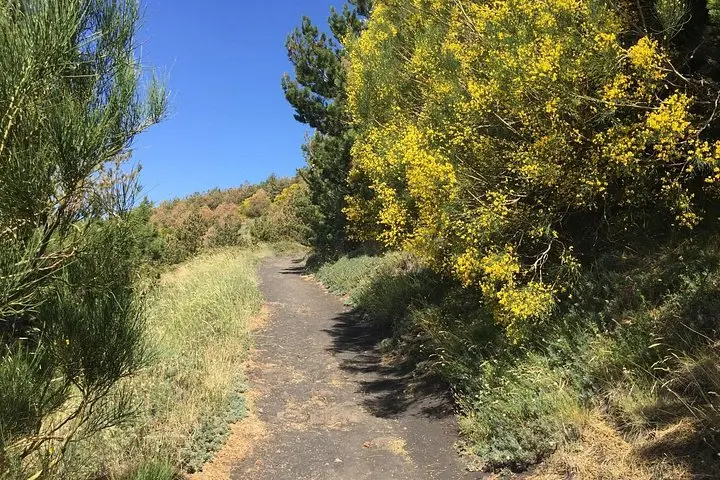
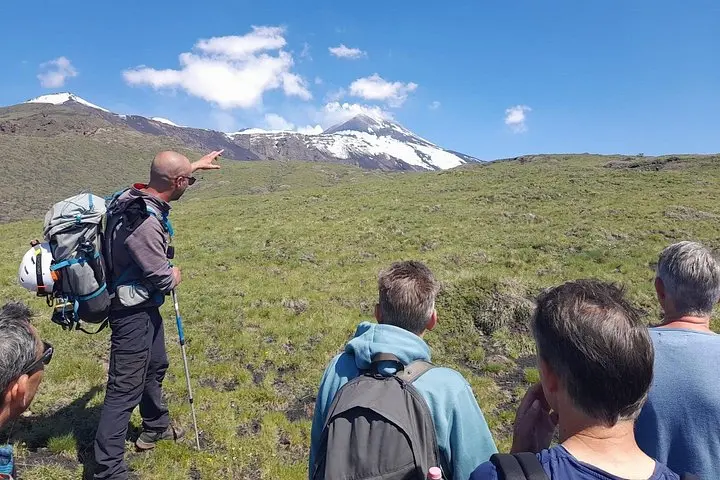
The trail begins above the tree line where pines give way to a scrubby undergrowth and the ground turns black and coarse. At 2,000 meters you step out of the forest and the landscape opens: a slow, steady climb through broom and volcanic sand leads toward a rim that overlooks the Valle del Bove. The wind here has a voice—cold, direct—and the southeast crater sits like a raw engine in the distance.
The trail begins above the tree line where pines give way to a scrubby undergrowth and the ground turns black and coarse. At 2,000 meters you step out of the forest and the landscape opens: a slow, steady climb through broom and volcanic sand leads toward a rim that overlooks the Valle del Bove. The wind here has a voice—cold, direct—and the southeast crater sits like a raw engine in the distance.
Mount Etna is one of Europe’s most active volcanoes; the Valle del Bove is a collapsed sector shaped by repeated eruptions and flank failures. The geology is instructive underfoot—ash, pahoehoe-like crusts, and sharp clinker formed in recent flows. The local culture of the Etna towns—Zafferana Etnea and the villages on the eastern slopes—reflects a long coexistence with eruption and fertile volcanic soils that produce wine, honey and citrus.
On this 6–7 hour outing expect roughly 300 meters of elevation gain to an altitude of about 2,300 m, patches of lunar lava fields, and a visit to a lava tube cave. You’ll walk on hardened craters and pause at the 1991–1993 lava front near Zafferana. Guides supply helmets and torches for cave sections and can arrange pickups from Catania or Etna villages.
Practical: layer for rapid temperature shifts, carry at least 1–1.5 liters of water, and use sturdy boots with good traction for loose volcanic scree. Start early for calmer winds and clearer views; weather can change quickly so check forecasts and heed guide advice.