THE ADVENTURE COLLECTIVE® · Independent discovery and booking for outdoor travel

A private, 5–7 hour tour that pairs a guided walk through Tulum’s coastal ruins with a swim inside Sak Aktun, a limestone cave cenote lined with white stalactites. Ideal for travelers who want history, geology and an intimate freshwater cave swim without the crowds.
A private, 5–7 hour tour that pairs a guided walk through Tulum’s coastal ruins with a swim inside Sak Aktun, a limestone cave cenote lined with white stalactites. Ideal for travelers who want history, geology and an intimate freshwater cave swim without the crowds.
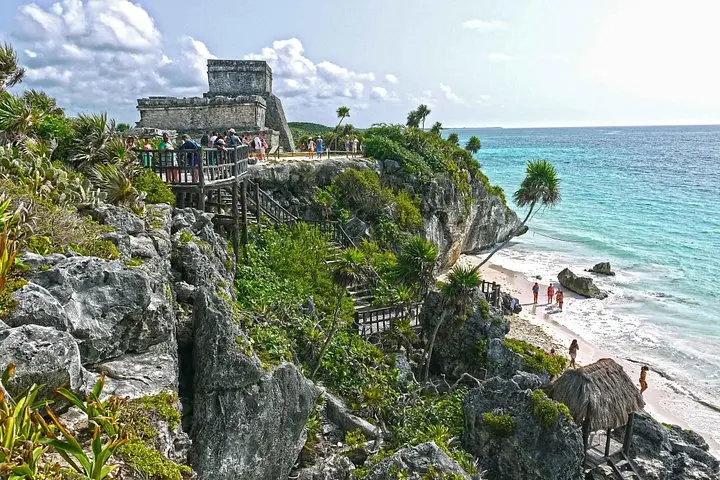
The morning begins with a washed sky and the salt-scented draft off the Caribbean as your private vehicle eases out of Cancun and the city grid collapses into low jungle and coastal highway. By the time you pull up to the stone ramparts of Tulum the light is soft and the ruins sit like a weathered lookout — wind and sea have been shaping this place for centuries. Your guide, a historian with a steady voice, gestures toward the blinding blue beyond El Castillo; the ocean seems to press toward the cliff, daring you to keep pace.
Verified experiences and guided adventures in the surrounding area.
Operated by OlMar Travel Mexico · Tulum, Quintana Roo
The morning begins with a washed sky and the salt-scented draft off the Caribbean as your private vehicle eases out of Cancun and the city grid collapses into low jungle and coastal highway. By the time you pull up to the stone ramparts of Tulum the light is soft and the ruins sit like a weathered lookout — wind and sea have been shaping this place for centuries. Your guide, a historian with a steady voice, gestures toward the blinding blue beyond El Castillo; the ocean seems to press toward the cliff, daring you to keep pace.
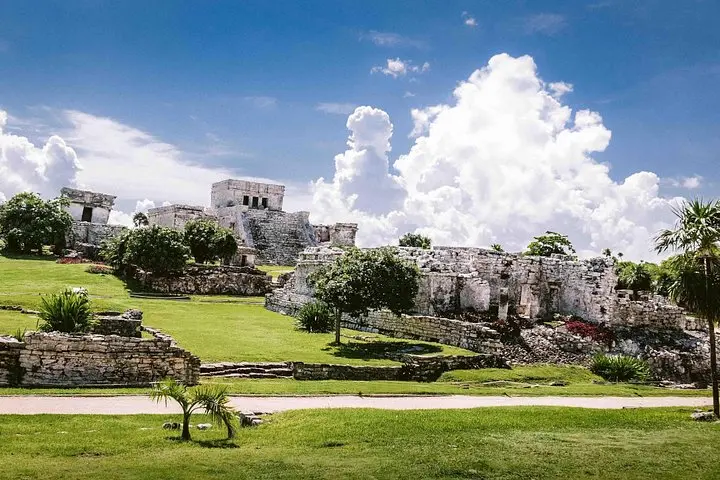
Tulum was a fortified Maya port, one of the last cities to flourish before European contact. The ruins you walk through — Temple of the God of Wind, the frescoed walls, the watchtower — are not relics in a museum but chapters of a coastline story written in coral rock and buoyed by trade winds. Geologically, the Yucatán is a limestone pancake riddled with caves and sinkholes; Sak Aktun (literally “white cave”) is one of those subterranean spaces where rainwater, time and calcium carbonate have carved caverns studded with stalactites and scalloped walls.
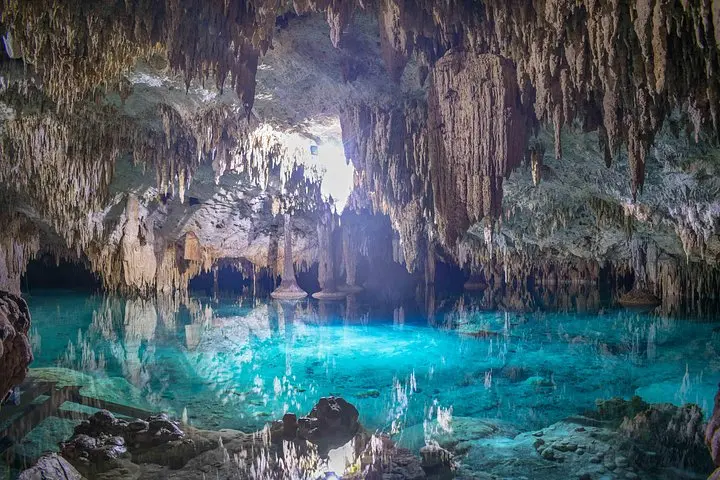
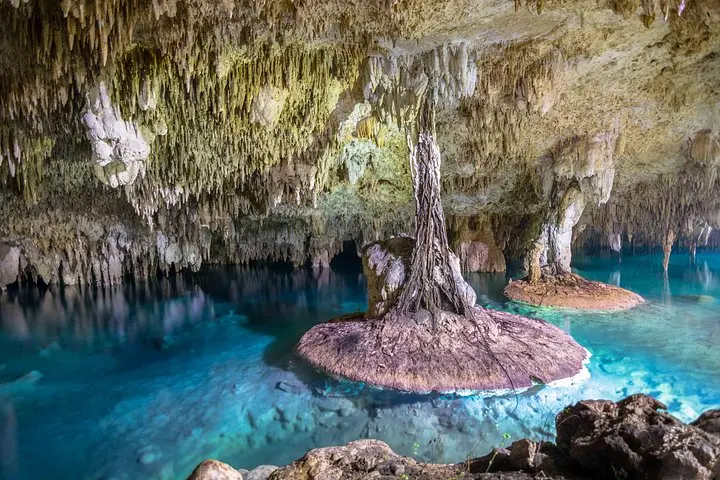
Sak Aktun’s water holds a different personality than the sea: it’s cool, quiet, and reflective, like a paused breath in the earth. Swim beneath columns of stone and watch light from the opening splay across the cave’s white formations. Bats flicker at the cave mouth at dusk and tropical fish wheel in the cenote’s shallow bays; the ecosystem is intimate and easily disturbed, which is why local guides keep the group size small and the rules firm.
Practicalities are simple but important. This private, air-conditioned transfer tour runs about 5–7 hours, includes all entrance fees, equipment and a certified guide; hotel pickup from Cancun, Riviera Maya, Playa del Carmen and Tulum is included. Wear quick-dry clothing and secure sandals or water shoes; bring reef-safe sunscreen, a towel and a change of clothes. Cameras are welcome — underwater housings or snorkel masks with mounts work best in the cenote — but follow your guide’s briefing on where to step and what to touch: stalactites are fragile and oils from human skin accelerate their degradation.
Timing can make the difference between a crowded photo and an empty frame: early departures put you ahead of tour buses at the ruins and inside the cenote while the water is clearest. Respect local customs — modest behavior at archaeological sites and modesty in cenotes — and tip guides who translate history into a memorable arc. In short: go early, bring the right gear, listen to your guide, and let the ruins and the white cave do the rest.
Yes—pickup and drop-off from accommodations in Cancun, Riviera Maya, Puerto Morelos, Playa del Carmen, Akumal or Tulum are included; some Tulum hotels use a central meeting point.
Yes—entrance fees, basic swim/snorkel equipment for the cenote, and a certified guide are included in the tour price.
The tour is suitable for non-expert swimmers, but participants should be comfortable in water; life vests are provided on request.
Children are welcome but must be accompanied by an adult; infants may sit on an adult’s lap during transit per supplier policy.
Crowds vary—early morning tours see fewer visitors at the ruins and clearer water in the cenote; mid-day is busiest during high season (Dec–Apr).
You can cancel for a full refund up to 24 hours before departure; check your booking confirmation for details.
OlMar Travel Mexico operates guided outdoor trips and adventures with an emphasis on safety, stewardship, and memorable experiences.
The morning begins with a washed sky and the salt-scented draft off the Caribbean as your private vehicle eases out of Cancun and the city grid collapses into low jungle and coastal highway. By the time you pull up to the stone ramparts of Tulum the light is soft and the ruins sit like a weathered lookout — wind and sea have been shaping this place for centuries. Your guide, a historian with a steady voice, gestures toward the blinding blue beyond El Castillo; the ocean seems to press toward the cliff, daring you to keep pace.
The morning begins with a washed sky and the salt-scented draft off the Caribbean as your private vehicle eases out of Cancun and the city grid collapses into low jungle and coastal highway. By the time you pull up to the stone ramparts of Tulum the light is soft and the ruins sit like a weathered lookout — wind and sea have been shaping this place for centuries. Your guide, a historian with a steady voice, gestures toward the blinding blue beyond El Castillo; the ocean seems to press toward the cliff, daring you to keep pace.
Tulum was a fortified Maya port, one of the last cities to flourish before European contact. The ruins you walk through — Temple of the God of Wind, the frescoed walls, the watchtower — are not relics in a museum but chapters of a coastline story written in coral rock and buoyed by trade winds. Geologically, the Yucatán is a limestone pancake riddled with caves and sinkholes; Sak Aktun (literally “white cave”) is one of those subterranean spaces where rainwater, time and calcium carbonate have carved caverns studded with stalactites and scalloped walls.
Sak Aktun’s water holds a different personality than the sea: it’s cool, quiet, and reflective, like a paused breath in the earth. Swim beneath columns of stone and watch light from the opening splay across the cave’s white formations. Bats flicker at the cave mouth at dusk and tropical fish wheel in the cenote’s shallow bays; the ecosystem is intimate and easily disturbed, which is why local guides keep the group size small and the rules firm.
Practicalities are simple but important. This private, air-conditioned transfer tour runs about 5–7 hours, includes all entrance fees, equipment and a certified guide; hotel pickup from Cancun, Riviera Maya, Playa del Carmen and Tulum is included. Wear quick-dry clothing and secure sandals or water shoes; bring reef-safe sunscreen, a towel and a change of clothes. Cameras are welcome — underwater housings or snorkel masks with mounts work best in the cenote — but follow your guide’s briefing on where to step and what to touch: stalactites are fragile and oils from human skin accelerate their degradation.
Timing can make the difference between a crowded photo and an empty frame: early departures put you ahead of tour buses at the ruins and inside the cenote while the water is clearest. Respect local customs — modest behavior at archaeological sites and modesty in cenotes — and tip guides who translate history into a memorable arc. In short: go early, bring the right gear, listen to your guide, and let the ruins and the white cave do the rest.