THE ADVENTURE COLLECTIVE® · Independent discovery and booking for outdoor travel

Board a vintage bus and cross Malta’s limestone spine: Marsaxlokk’s fishing harbor, the Blue Grotto’s iridescent caves, Dingli Cliffs’ sharp outlooks and the silent streets of Mdina — all in a relaxed half-day loop. Learn what to expect and how to plan for the trip.
Board a vintage bus and cross Malta’s limestone spine: Marsaxlokk’s fishing harbor, the Blue Grotto’s iridescent caves, Dingli Cliffs’ sharp outlooks and the silent streets of Mdina — all in a relaxed half-day loop. Learn what to expect and how to plan for the trip.
A low-slung vintage bus hums along limestone lanes as Malta’s southern coastline opens into shard-blue sea. The day begins in Marsaxlokk’s harbor, where wooden luzzu boats bob and fishermen’s voices carry over the quay; smell of salt and fried fish hangs in the air. From there the route curves past the Blue Grotto, a scalloped reef of caverns that dares you to step closer and read the water’s colors.
Verified experiences and guided adventures in the surrounding area.
Operated by Zinnu Garage Cabs · Marsaxlokk, Malta
A low-slung vintage bus hums along limestone lanes as Malta’s southern coastline opens into shard-blue sea. The day begins in Marsaxlokk’s harbor, where wooden luzzu boats bob and fishermen’s voices carry over the quay; smell of salt and fried fish hangs in the air. From there the route curves past the Blue Grotto, a scalloped reef of caverns that dares you to step closer and read the water’s colors.
This half-day loop threads together Malta’s layered history — Phoenician harbors, medieval Mdina’s fortified streets, and British-era roadways that made the island suddenly accessible. Geology is obvious: pale Globigerina limestone cliffs at Dingli, wave-sculpted ledges, and karst hollows that hold the island’s memory in fossils and flash floods.
Culturally the tour touches small-village rhythms: weekend markets at Marsaxlokk, Siġġiewi’s bakery snacks, and Mdina’s near-silent alleys where baroque facades converse with dusk. Local guides point out tiny chapels, wartime bunkers and the agricultural terraces that still shape the inland views.
Practical guidance: wear sturdy walking shoes for uneven medieval paving and cliff viewpoints, bring sun protection and water, and plan for optional extra costs (Blue Grotto boat trips, cathedral entries). The pace is relaxed but timed — photo stops are brief; Mdina gives free time to explore on foot. If you want calm sea views, request a seat on the left side of the bus en route to the Blue Grotto. Weather can change fast by the coast; layers and a light windbreaker keep the sea breeze from cutting the visit short.
No — the optional boat into the Blue Grotto is not included and is booked/payable locally; trips run only in calm weather.
Yes — there are restroom facilities at major stops such as Marsaxlokk and Mdina, but facilities can be limited at cliff viewpoints.
Yes — the supplier notes stroller accessibility, but some streets in Mdina are cobbled and narrow, so a lightweight stroller is best.
Yes — operators may cancel for poor weather or insufficient travelers; check cancellation window (full refund if canceled 24+ hours before).
Zinnu Garage Cabs operates guided outdoor trips and adventures with an emphasis on safety, stewardship, and memorable experiences.

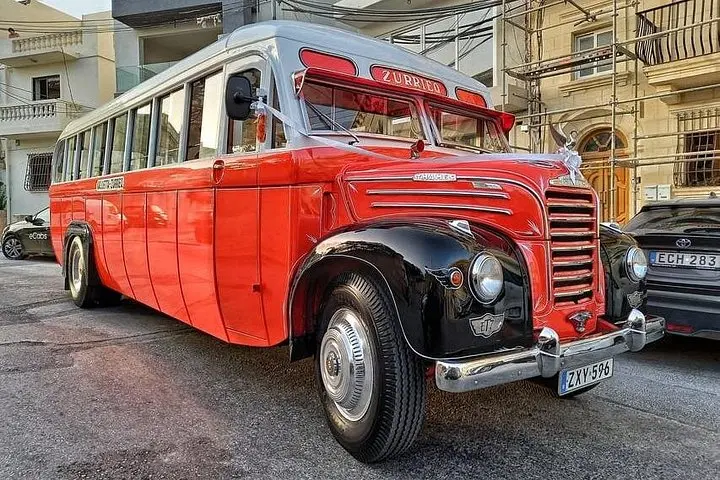


A low-slung vintage bus hums along limestone lanes as Malta’s southern coastline opens into shard-blue sea. The day begins in Marsaxlokk’s harbor, where wooden luzzu boats bob and fishermen’s voices carry over the quay; smell of salt and fried fish hangs in the air. From there the route curves past the Blue Grotto, a scalloped reef of caverns that dares you to step closer and read the water’s colors.
A low-slung vintage bus hums along limestone lanes as Malta’s southern coastline opens into shard-blue sea. The day begins in Marsaxlokk’s harbor, where wooden luzzu boats bob and fishermen’s voices carry over the quay; smell of salt and fried fish hangs in the air. From there the route curves past the Blue Grotto, a scalloped reef of caverns that dares you to step closer and read the water’s colors.
This half-day loop threads together Malta’s layered history — Phoenician harbors, medieval Mdina’s fortified streets, and British-era roadways that made the island suddenly accessible. Geology is obvious: pale Globigerina limestone cliffs at Dingli, wave-sculpted ledges, and karst hollows that hold the island’s memory in fossils and flash floods.
Culturally the tour touches small-village rhythms: weekend markets at Marsaxlokk, Siġġiewi’s bakery snacks, and Mdina’s near-silent alleys where baroque facades converse with dusk. Local guides point out tiny chapels, wartime bunkers and the agricultural terraces that still shape the inland views.
Practical guidance: wear sturdy walking shoes for uneven medieval paving and cliff viewpoints, bring sun protection and water, and plan for optional extra costs (Blue Grotto boat trips, cathedral entries). The pace is relaxed but timed — photo stops are brief; Mdina gives free time to explore on foot. If you want calm sea views, request a seat on the left side of the bus en route to the Blue Grotto. Weather can change fast by the coast; layers and a light windbreaker keep the sea breeze from cutting the visit short.