THE ADVENTURE COLLECTIVE® · Independent discovery and booking for outdoor travel
Charge across rust-red dunes, scramble sandstone ridges and sip Bedouin tea as the desert’s light shifts. This half-day Jeep safari in Wadi Rum packs geology, history and local hospitality into a compact, 3–4 hour adventure.
Charge across rust-red dunes, scramble sandstone ridges and sip Bedouin tea as the desert’s light shifts. This half-day Jeep safari in Wadi Rum packs geology, history and local hospitality into a compact, 3–4 hour adventure.
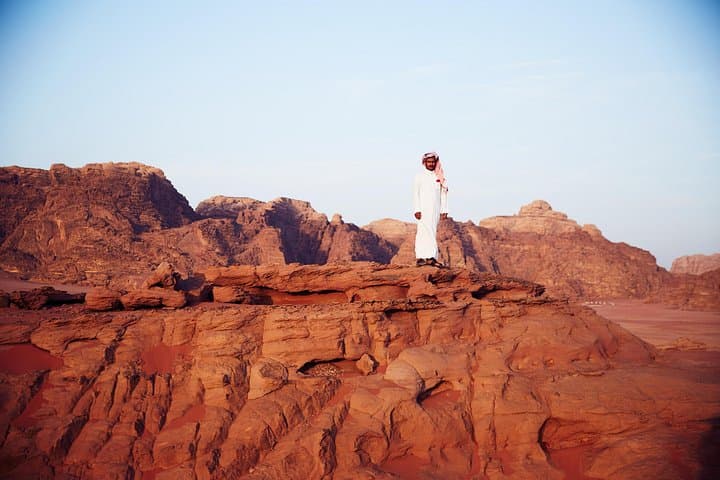
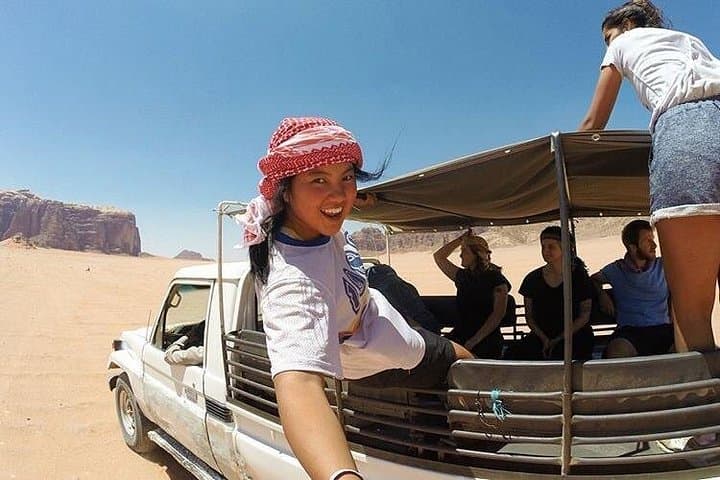
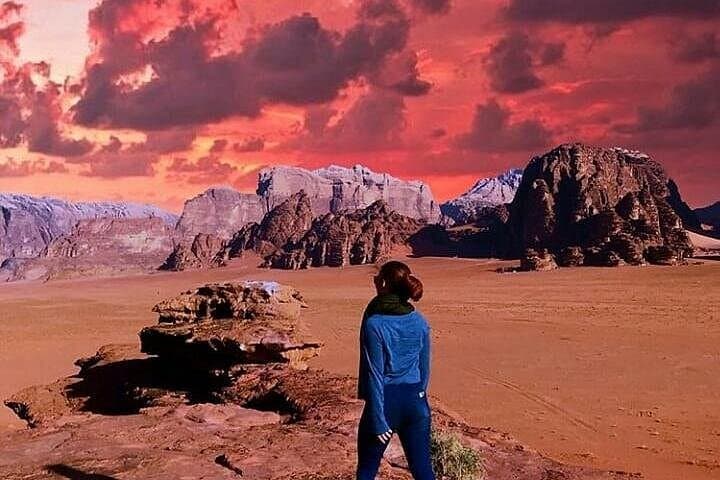
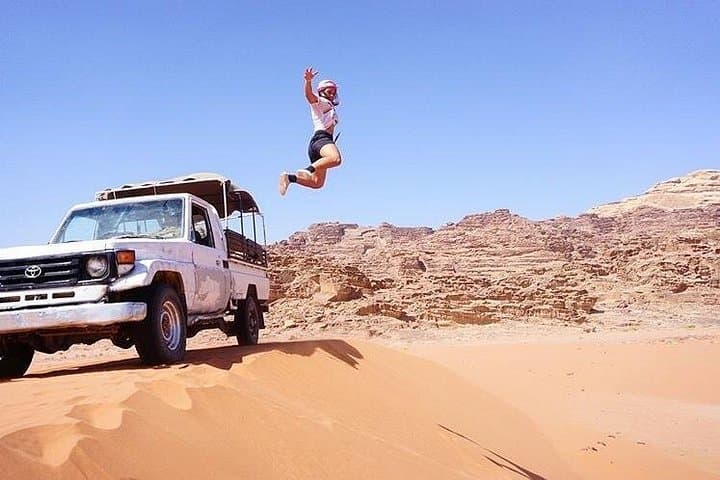
The sun is a hot coin over the red desert as the Jeep eases off the packed trail and onto soft sand. You slide sideways, laughter and grit in the air, while the vehicle climbs a dune and you get your first uncompromised view: a sea of rust-colored ripples punctuated by granite pillars and narrow canyons that cut like knives through the plain.
Verified experiences and guided adventures in the surrounding area.
Operated by Wadi Rum Camp and Tours · Wadi Rum Village, Ma'an Governorate
The sun is a hot coin over the red desert as the Jeep eases off the packed trail and onto soft sand. You slide sideways, laughter and grit in the air, while the vehicle climbs a dune and you get your first uncompromised view: a sea of rust-colored ripples punctuated by granite pillars and narrow canyons that cut like knives through the plain.
This half-day safari is a concentrated primer on Wadi Rum — four hours of off-road tracks, short hikes and photo stops led by a native Bedouin guide who reads the land as if it were a map he grew up in. You’ll visit Lawrence of Arabia’s house, scramble short sandstone ridges (expect rises of up to 100–200m on some outcrops), and ride across an estimated 30–50 km of desert tracks that change texture with every turn.
Wadi Rum’s geology is simple and ancient: Cambrian sandstones sculpted by wind into towers, arches and sloping dunes. Human history is layered here too — Nabatean inscriptions, faint caravan routes, and the modern mythology around T.E. Lawrence make the landscape feel both older and more recent at once. Bedouin culture remains central; the tour includes tea and a short stop to share stories, and you’ll get a glimpse of how local families continue traditional crafts and hospitality in a protected area managed for both conservation and livelihoods.
Practicalities are straightforward. The tour meets at Wadi Rum Village (roughly 7 km from the visitor center) and runs about 3–4 hours. Terrain alternates between hard-packed desert tracks and soft dune crossings; short, steep scrambles are optional and usually less than 20 minutes. Camel rides are available as an add-on (about 10–15 JD for 30–60 minutes). The route is flexible: your guide will route you to take advantage of light and wind, and may detour to quieter canyons if conditions allow.
For planning: bring at least 1–2 liters of water per person, sun protection and closed-toe shoes for scrambling. Mornings and late afternoons are best for light and cooler temperatures; midday can be hot and dusty. The vehicles used are purpose-built 4x4s with seating in the rear; expect bumps and occasional sand spray — secure loose items.
Safety and respect are part of the visit. Stay on designated tracks where possible, follow your guide’s instructions when climbing, and ask before photographing people in camp. Wadi Rum feels otherworldly — the rocks seem to lean in and the dunes dare you to sprint — but it is a living landscape with a modern Bedouin community keeping its future in balance.
No—guides handle driving and route-finding; passengers should be comfortable with bumpy rides and short hikes.
No; camel rides are available as a paid add-on (typically around 10 JD for 30 minutes or 15 JD for an hour).
Generally yes, but it’s not recommended for people with severe back problems or pregnant travelers due to the jostling on rough tracks.
Meet at the Wadi Rum Rest House in Wadi Rum Village (about 7 km from the visitor center); organized pickup may be available on request.
You can bring snacks; alcohol is culturally sensitive in many local contexts—respect your guide and local customs.
Tipping is customary; 5–10 JD per person for a half-day tour is typical if service is good.
Wadi Rum Camp and Tours operates guided outdoor trips and adventures with an emphasis on safety, stewardship, and memorable experiences.
The sun is a hot coin over the red desert as the Jeep eases off the packed trail and onto soft sand. You slide sideways, laughter and grit in the air, while the vehicle climbs a dune and you get your first uncompromised view: a sea of rust-colored ripples punctuated by granite pillars and narrow canyons that cut like knives through the plain.
The sun is a hot coin over the red desert as the Jeep eases off the packed trail and onto soft sand. You slide sideways, laughter and grit in the air, while the vehicle climbs a dune and you get your first uncompromised view: a sea of rust-colored ripples punctuated by granite pillars and narrow canyons that cut like knives through the plain.
This half-day safari is a concentrated primer on Wadi Rum — four hours of off-road tracks, short hikes and photo stops led by a native Bedouin guide who reads the land as if it were a map he grew up in. You’ll visit Lawrence of Arabia’s house, scramble short sandstone ridges (expect rises of up to 100–200m on some outcrops), and ride across an estimated 30–50 km of desert tracks that change texture with every turn.
Wadi Rum’s geology is simple and ancient: Cambrian sandstones sculpted by wind into towers, arches and sloping dunes. Human history is layered here too — Nabatean inscriptions, faint caravan routes, and the modern mythology around T.E. Lawrence make the landscape feel both older and more recent at once. Bedouin culture remains central; the tour includes tea and a short stop to share stories, and you’ll get a glimpse of how local families continue traditional crafts and hospitality in a protected area managed for both conservation and livelihoods.
Practicalities are straightforward. The tour meets at Wadi Rum Village (roughly 7 km from the visitor center) and runs about 3–4 hours. Terrain alternates between hard-packed desert tracks and soft dune crossings; short, steep scrambles are optional and usually less than 20 minutes. Camel rides are available as an add-on (about 10–15 JD for 30–60 minutes). The route is flexible: your guide will route you to take advantage of light and wind, and may detour to quieter canyons if conditions allow.
For planning: bring at least 1–2 liters of water per person, sun protection and closed-toe shoes for scrambling. Mornings and late afternoons are best for light and cooler temperatures; midday can be hot and dusty. The vehicles used are purpose-built 4x4s with seating in the rear; expect bumps and occasional sand spray — secure loose items.
Safety and respect are part of the visit. Stay on designated tracks where possible, follow your guide’s instructions when climbing, and ask before photographing people in camp. Wadi Rum feels otherworldly — the rocks seem to lean in and the dunes dare you to sprint — but it is a living landscape with a modern Bedouin community keeping its future in balance.
