THE ADVENTURE COLLECTIVE® · Independent discovery and booking for outdoor travel

Move from Montmartre’s steep lanes to the Louvre in a focused half‑day walk that highlights Paris’s lesser‑seen corners, history, and neighborhoods. A local guide weaves art, architecture and practical stops into a compact itinerary ideal for first‑time and return visitors alike.
Move from Montmartre’s steep lanes to the Louvre in a focused half‑day walk that highlights Paris’s lesser‑seen corners, history, and neighborhoods. A local guide weaves art, architecture and practical stops into a compact itinerary ideal for first‑time and return visitors alike.
The morning light hits Sacré‑Cœur like a call to move — cobblestones warm underfoot, street vendors packing up, and the hill of Montmartre spilling its steep stairways toward the city. An expert guide threads a small group through lanes that resist the tourist crush, stopping where perspectives open: rooftops, narrow ateliers, and a view that frames the Seine and the distant steel lace of the Eiffel Tower.
Verified experiences and guided adventures in the surrounding area.
Operated by Top Sights Tours · Paris, Île-de-France
The morning light hits Sacré‑Cœur like a call to move — cobblestones warm underfoot, street vendors packing up, and the hill of Montmartre spilling its steep stairways toward the city. An expert guide threads a small group through lanes that resist the tourist crush, stopping where perspectives open: rooftops, narrow ateliers, and a view that frames the Seine and the distant steel lace of the Eiffel Tower.
This half‑day walk stitches together Paris’s layered past: from Montmartre’s bohemian 19th‑century ateliers to the classical line of the Champs‑Élysées and the Renaissance bones of Île de la Cité where Notre‑Dame stands repaired. Geologically the city sits on Paris Basin limestone—stone that raised façades and hollowed out quarries beneath the streets, now the catacombs—so the same material that shapes the skyline also shapes how Parisians built and preserved their monuments.
Culturally the route moves through neighborhoods that birthed chanson, cabaret and revolutionary ideas; your guide will point out cafés, music houses and a few local eateries where Parisians still stop for a quick plat du jour.
Practical guidance: wear supportive shoes for roughly 5 km of mixed cobble and pavement, and plan for 5 hours including a local breakfast stop and restroom breaks. Keep a small daypack with water and a light layer—the city’s weather can flip from sun to shower. Expect moderate walking with frequent stops for photo and storytelling; bring a charged phone for maps and a compact umbrella if rain is forecast. The route is compact but packed: come curious and ready to move.
Meeting is at the kiosk opposite the metro entrance indicated on your booking confirmation—arrive 10 minutes early to check in.
Admissions are not included; the tour focuses on exterior viewpoints, history and neighborhood stops with time for photos.
The tour requires moderate walking and some stair climbs; it’s best for children used to city walking and not recommended for travelers with serious mobility issues.
Yes—there is a scheduled breakfast stop and intermittent restroom/coffee breaks at local cafés; buying a light snack is recommended.
Top Sights Tours operates guided outdoor trips and adventures with an emphasis on safety, stewardship, and memorable experiences.



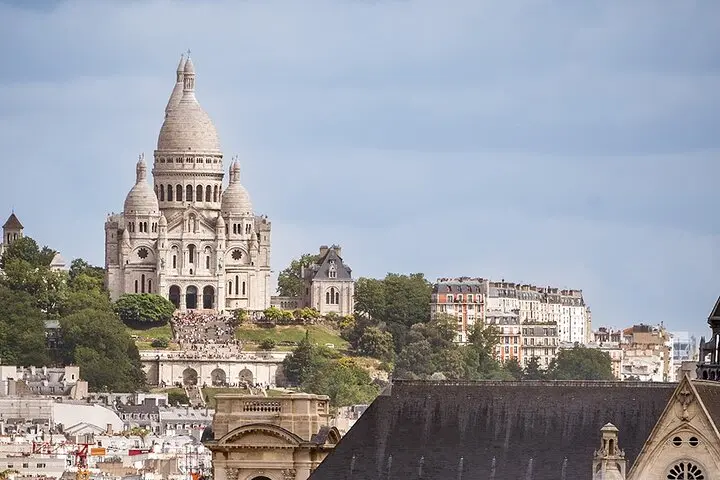
The morning light hits Sacré‑Cœur like a call to move — cobblestones warm underfoot, street vendors packing up, and the hill of Montmartre spilling its steep stairways toward the city. An expert guide threads a small group through lanes that resist the tourist crush, stopping where perspectives open: rooftops, narrow ateliers, and a view that frames the Seine and the distant steel lace of the Eiffel Tower.
The morning light hits Sacré‑Cœur like a call to move — cobblestones warm underfoot, street vendors packing up, and the hill of Montmartre spilling its steep stairways toward the city. An expert guide threads a small group through lanes that resist the tourist crush, stopping where perspectives open: rooftops, narrow ateliers, and a view that frames the Seine and the distant steel lace of the Eiffel Tower.
This half‑day walk stitches together Paris’s layered past: from Montmartre’s bohemian 19th‑century ateliers to the classical line of the Champs‑Élysées and the Renaissance bones of Île de la Cité where Notre‑Dame stands repaired. Geologically the city sits on Paris Basin limestone—stone that raised façades and hollowed out quarries beneath the streets, now the catacombs—so the same material that shapes the skyline also shapes how Parisians built and preserved their monuments.
Culturally the route moves through neighborhoods that birthed chanson, cabaret and revolutionary ideas; your guide will point out cafés, music houses and a few local eateries where Parisians still stop for a quick plat du jour.
Practical guidance: wear supportive shoes for roughly 5 km of mixed cobble and pavement, and plan for 5 hours including a local breakfast stop and restroom breaks. Keep a small daypack with water and a light layer—the city’s weather can flip from sun to shower. Expect moderate walking with frequent stops for photo and storytelling; bring a charged phone for maps and a compact umbrella if rain is forecast. The route is compact but packed: come curious and ready to move.