THE ADVENTURE COLLECTIVE® · Independent discovery and booking for outdoor travel

Spend a half day with a certified naturalist exploring waterfalls near Asheville. This moderate 3–5 mile hike combines geology, local history, and close-up encounters with the flora and fauna of Pisgah National Forest.
Spend a half day with a certified naturalist exploring waterfalls near Asheville. This moderate 3–5 mile hike combines geology, local history, and close-up encounters with the flora and fauna of Pisgah National Forest.
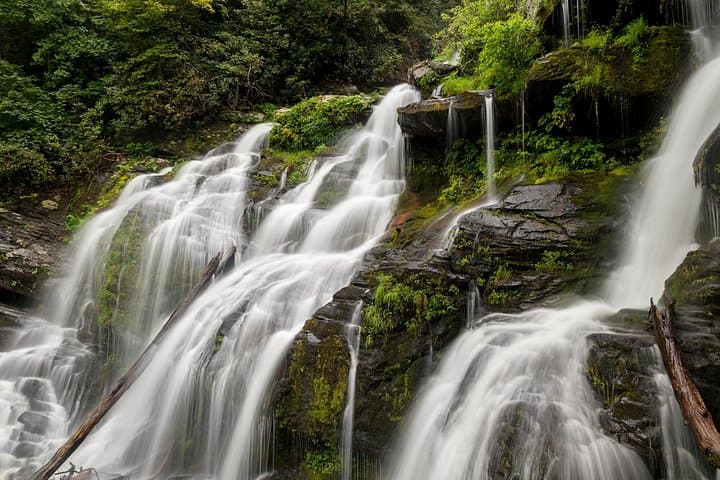
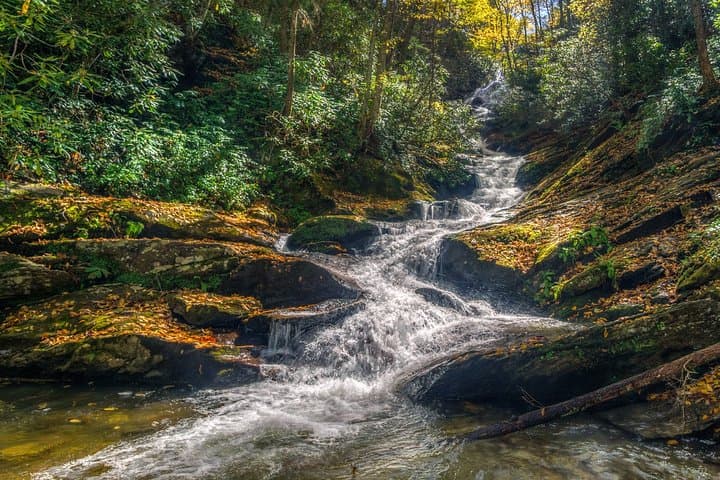
You step off the parking lot into a thin, cool mist—the forest seems to inhale and close around you. The guide checks everyone’s shoes and points to a narrow cleft where water has cut a shelf into the rock; somewhere ahead the falls are already speaking. Over four hours you move through shaded rhododendron tunnels, cross stream-slick roots and granite slabs polished by centuries of runoff, and finally arrive where water drops with casual force into a moss-lipped pool.
Verified experiences and guided adventures in the surrounding area.
Operated by Hike Bike Kayak Asheville · Asheville, North Carolina
You step off the parking lot into a thin, cool mist—the forest seems to inhale and close around you. The guide checks everyone’s shoes and points to a narrow cleft where water has cut a shelf into the rock; somewhere ahead the falls are already speaking. Over four hours you move through shaded rhododendron tunnels, cross stream-slick roots and granite slabs polished by centuries of runoff, and finally arrive where water drops with casual force into a moss-lipped pool.
This is the kind of half-day hike that packs a full mountain day into an afternoon. The routes thread through Pisgah National Forest country on Blue Ridge foothills carved from ancient metamorphic rock—schist and gneiss folded by mountain-building events hundreds of millions of years ago. Water here isn’t just an eye-catcher; it’s the sculptor. The cascades you visit are part of a network of streams that feed the French Broad River basin, a watershed that fueled local industry from early mill towns to modern conservation efforts.
Your guide is a certified naturalist: expect more than coordinates and pace. They’ll name trees by bark and bloom—white oak, hemlock, mountain laurel—flagging edible mushrooms in season and explaining why certain plants cluster on north-facing slopes. A short cultural aside: the region’s waterways sustained Cherokee communities for millennia and later powered sawmills and textile mills during the 19th century, leaving behind a patchwork of old roads and stonework that occasionally shows through the ferns.
The trail itself is a compact workout. Expect roughly 3–5 miles round-trip with about 600–900 feet of cumulative elevation gain, depending on which cascades you’re pointed toward that day. Terrain mixes packed dirt, exposed roots, and occasional loose rock; some sections may be steep or require careful footing near water. The payoff is constant—outlooks open, spray in your face, and a series of photo-friendly drop-offs rather than a single viewpoint.
Practical edge: meet in the lowest level of the visitor center parking lot where restrooms are available. The tour supplies bottled water and snacks, but bring a sturdy pair of trail shoes with decent tread and consider trekking poles if you’re wobbly on wet rock. Aim for morning or late afternoon light to avoid the midday crowds and to capture the falls without washed-out contrasts.
This is a hike for curious people who like questions as much as views—those who want to know which fern prefers the cliffs, why a creek takes that route, and how to leave no trace. It’s accessible, focused, and designed to make a few hours in the Southern Appalachians feel like a full lesson in why these mountains still draw people back year after year.
Moderate—trail sections are uneven and include some elevation gain; if you can walk briskly for 60–90 minutes with brief rests you should manage the route with the guide.
Service animals are permitted; non-service pets are not included in the policy so confirm with the operator before bringing a dog.
The tour includes a naturalist guide, bottled water and snacks, interpretive instruction, and guided access to waterfall viewpoints—transportation beyond meeting at the visitor center is not included.
Yes for older, sure-footed kids; the tour recommends moderate fitness and discretion around slippery areas, so younger children may find it challenging.
The tour may be canceled and fully refundable if weather threatens safety—rescheduling options depend on availability and the operator’s cancellation policy.
Meet in the lowest level of the visitor center parking lot; public restrooms are available at the visitor center before the hike.
Hike Bike Kayak Asheville operates guided outdoor trips and adventures with an emphasis on safety, stewardship, and memorable experiences.


You step off the parking lot into a thin, cool mist—the forest seems to inhale and close around you. The guide checks everyone’s shoes and points to a narrow cleft where water has cut a shelf into the rock; somewhere ahead the falls are already speaking. Over four hours you move through shaded rhododendron tunnels, cross stream-slick roots and granite slabs polished by centuries of runoff, and finally arrive where water drops with casual force into a moss-lipped pool.
You step off the parking lot into a thin, cool mist—the forest seems to inhale and close around you. The guide checks everyone’s shoes and points to a narrow cleft where water has cut a shelf into the rock; somewhere ahead the falls are already speaking. Over four hours you move through shaded rhododendron tunnels, cross stream-slick roots and granite slabs polished by centuries of runoff, and finally arrive where water drops with casual force into a moss-lipped pool.
This is the kind of half-day hike that packs a full mountain day into an afternoon. The routes thread through Pisgah National Forest country on Blue Ridge foothills carved from ancient metamorphic rock—schist and gneiss folded by mountain-building events hundreds of millions of years ago. Water here isn’t just an eye-catcher; it’s the sculptor. The cascades you visit are part of a network of streams that feed the French Broad River basin, a watershed that fueled local industry from early mill towns to modern conservation efforts.
Your guide is a certified naturalist: expect more than coordinates and pace. They’ll name trees by bark and bloom—white oak, hemlock, mountain laurel—flagging edible mushrooms in season and explaining why certain plants cluster on north-facing slopes. A short cultural aside: the region’s waterways sustained Cherokee communities for millennia and later powered sawmills and textile mills during the 19th century, leaving behind a patchwork of old roads and stonework that occasionally shows through the ferns.
The trail itself is a compact workout. Expect roughly 3–5 miles round-trip with about 600–900 feet of cumulative elevation gain, depending on which cascades you’re pointed toward that day. Terrain mixes packed dirt, exposed roots, and occasional loose rock; some sections may be steep or require careful footing near water. The payoff is constant—outlooks open, spray in your face, and a series of photo-friendly drop-offs rather than a single viewpoint.
Practical edge: meet in the lowest level of the visitor center parking lot where restrooms are available. The tour supplies bottled water and snacks, but bring a sturdy pair of trail shoes with decent tread and consider trekking poles if you’re wobbly on wet rock. Aim for morning or late afternoon light to avoid the midday crowds and to capture the falls without washed-out contrasts.
This is a hike for curious people who like questions as much as views—those who want to know which fern prefers the cliffs, why a creek takes that route, and how to leave no trace. It’s accessible, focused, and designed to make a few hours in the Southern Appalachians feel like a full lesson in why these mountains still draw people back year after year.