THE ADVENTURE COLLECTIVE® · Independent discovery and booking for outdoor travel

Explore Qatar’s wild west in a focused half‑day tour that combines wind-carved limestone, futuristic film sets, and Richard Serra’s monumental steel plates. Ideal for photographers, culture seekers, and anyone wanting a compact, accessible desert experience.
Explore Qatar’s wild west in a focused half‑day tour that combines wind-carved limestone, futuristic film sets, and Richard Serra’s monumental steel plates. Ideal for photographers, culture seekers, and anyone wanting a compact, accessible desert experience.
The wind in the Ras Abrouq plain pushes grains of sand like a restless audience—hot, purposeful, and uninterested in delay. On a half-day guided tour from Doha, visitors step from an air-conditioned vehicle onto a wide, low-lying desert where towering steel plates and wind-sculpted rock demand attention and slow, deliberate steps.
Verified experiences and guided adventures in the surrounding area.
Operated by Qtrips Doha · Doha, Al-Shahaniya
The wind in the Ras Abrouq plain pushes grains of sand like a restless audience—hot, purposeful, and uninterested in delay. On a half-day guided tour from Doha, visitors step from an air-conditioned vehicle onto a wide, low-lying desert where towering steel plates and wind-sculpted rock demand attention and slow, deliberate steps.
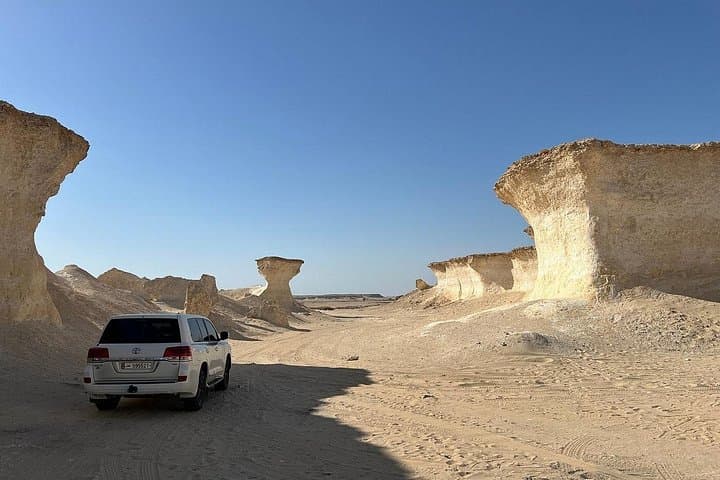
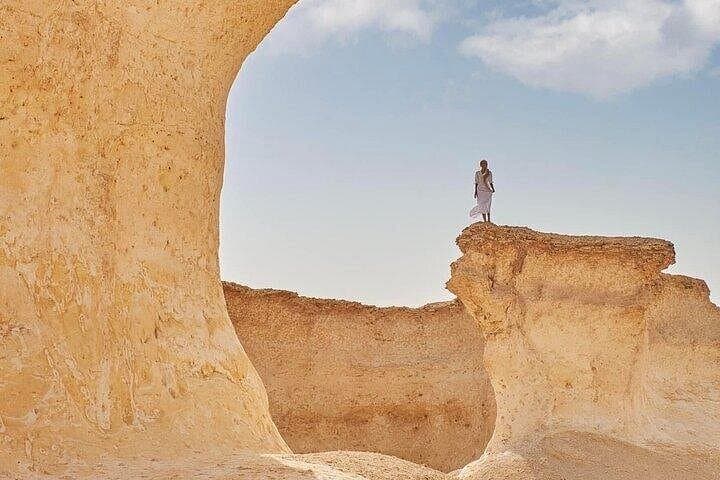
Zekreet’s jagged limestone outcrops are products of marine deposits uplifted and carved by millennia of salt-laden wind; their sharp edges and honeycombed faces give the landscape a raw, almost architectural feel. Nearby, the Zekreet Fort Ruins offer a compact window into coastal Qatar’s defensive past, while the nearby Film City reads like a frozen soundstage—concrete shells that record modern attempts to capture desert stories on camera.
Richard Serra’s EAST‑WEST / WEST‑EAST amplifies the horizon: four vertical steel plates aligned through the emptiness so the land and art argue back and forth. At Al Shahaniya racetrack, the culture shifts into motion—camel racing and robot jockeys carry a living tradition forward, loud and bright against the sand.
Practically speaking, the terrain is flat and easy to walk but exposed: plan early-morning or late-afternoon visits to avoid the peak heat, bring sun protection, and use sturdy shoes for uneven rock and soft sand. The guided tour supplies bottled water and transport; participants should respect local signage, avoid climbing fragile formations, and leave no trace. For photographers and culture seekers alike, this half‑day paints a concentrated portrait of Qatar’s western edge—geology, contemporary art, and living desert culture in compact, walkable scenes.
The tour lasts about 3–4 hours and typically includes air‑conditioned transport, bottled water, a guide, and stops at Zekreet Fort Ruins, Richard Serra’s installation, Film City, and Al Shahaniya Racetrack.
Yes, travel across rough desert tracks is required; the tour provides an air‑conditioned vehicle and driver.
The tour involves short walks on uneven ground; those with significant mobility limitations should contact the operator to discuss specific needs.
Photography is allowed for personal use; however, climbing on installations or disturbing archaeological features is prohibited.
Qtrips Doha operates guided outdoor trips and adventures with an emphasis on safety, stewardship, and memorable experiences.


The wind in the Ras Abrouq plain pushes grains of sand like a restless audience—hot, purposeful, and uninterested in delay. On a half-day guided tour from Doha, visitors step from an air-conditioned vehicle onto a wide, low-lying desert where towering steel plates and wind-sculpted rock demand attention and slow, deliberate steps.
The wind in the Ras Abrouq plain pushes grains of sand like a restless audience—hot, purposeful, and uninterested in delay. On a half-day guided tour from Doha, visitors step from an air-conditioned vehicle onto a wide, low-lying desert where towering steel plates and wind-sculpted rock demand attention and slow, deliberate steps.
Zekreet’s jagged limestone outcrops are products of marine deposits uplifted and carved by millennia of salt-laden wind; their sharp edges and honeycombed faces give the landscape a raw, almost architectural feel. Nearby, the Zekreet Fort Ruins offer a compact window into coastal Qatar’s defensive past, while the nearby Film City reads like a frozen soundstage—concrete shells that record modern attempts to capture desert stories on camera.
Richard Serra’s EAST‑WEST / WEST‑EAST amplifies the horizon: four vertical steel plates aligned through the emptiness so the land and art argue back and forth. At Al Shahaniya racetrack, the culture shifts into motion—camel racing and robot jockeys carry a living tradition forward, loud and bright against the sand.
Practically speaking, the terrain is flat and easy to walk but exposed: plan early-morning or late-afternoon visits to avoid the peak heat, bring sun protection, and use sturdy shoes for uneven rock and soft sand. The guided tour supplies bottled water and transport; participants should respect local signage, avoid climbing fragile formations, and leave no trace. For photographers and culture seekers alike, this half‑day paints a concentrated portrait of Qatar’s western edge—geology, contemporary art, and living desert culture in compact, walkable scenes.