THE ADVENTURE COLLECTIVE® · Independent discovery and booking for outdoor travel

Board a research-led boat from Madalena and spend 2.5 hours searching the deep channels around Pico for dolphins and whales. Expect expert guides, concise safety briefings, and strong chances to see sperm whales and common dolphins in a volcanic seascape.
Board a research-led boat from Madalena and spend 2.5 hours searching the deep channels around Pico for dolphins and whales. Expect expert guides, concise safety briefings, and strong chances to see sperm whales and common dolphins in a volcanic seascape.
A low-angled morning light slides across the Atlantic as the boat slips out of Madalena harbour. Waves push and pull like a living map; the crew scans the horizon with practiced calm. Within minutes the engine hum becomes a background rhythm to sharp exhalations and blows — dorsal fins and spouts announce the presence of animals that have shaped Pico’s coastline for centuries.
Verified experiences and guided adventures in the surrounding area.
Operated by Aqua Acores · Madalena, Azores
A low-angled morning light slides across the Atlantic as the boat slips out of Madalena harbour. Waves push and pull like a living map; the crew scans the horizon with practiced calm. Within minutes the engine hum becomes a background rhythm to sharp exhalations and blows — dorsal fins and spouts announce the presence of animals that have shaped Pico’s coastline for centuries.
This short expedition places you on the water that surrounds Pico, a volcanic island crowned by Portugal’s highest peak, Mount Pico (2,351 m). The channel between Pico and neighboring islands is a deep, nutrient-rich trench that attracts at least two dozen cetacean species; historically the island’s people hunted whales, but today local skippers and biologists run research-led tours that monitor and protect them. Geology here is recent and raw — black basalt cliffs and terraced vineyards carved from lava — and culture still carries the rhythm of the sea in its museums and festivals.
Practical guidance: tours run about 2.5 hours with a briefing before boarding; wear layered waterproofs and non-slip shoes, and take seasickness medicine if you’re prone. Respect the guides: they follow regulations that keep distance and minimize disturbance. Best light for photos is early morning or late afternoon; summer increases sightings but spring and fall can bring productive feeding activity. Bring a water bottle, sun protection, and a camera with a zoom lens. Expect close approaches by curious dolphins and the long, rolling silhouette of sperm whales; the sea here is alive, watching back as much as you watch it.
The activity lasts about 2.5 hours; operators typically run morning and sometimes afternoon departures—check your booking for the exact time.
Common sightings include common dolphins and sperm whales; the Azores host around 27 cetacean species so sightings vary by season and location.
The tour is suitable for most ages and fitness levels, but it's not recommended for pregnant travelers or those with serious spinal injuries.
Operators may cancel for unsafe sea conditions—full refunds are usually offered if canceled at least 24 hours in advance or for weather-related cancellations.
Aqua Acores operates guided outdoor trips and adventures with an emphasis on safety, stewardship, and memorable experiences.
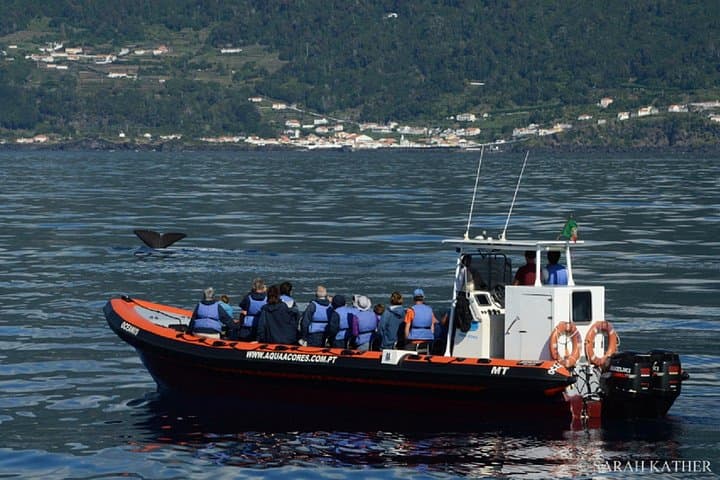
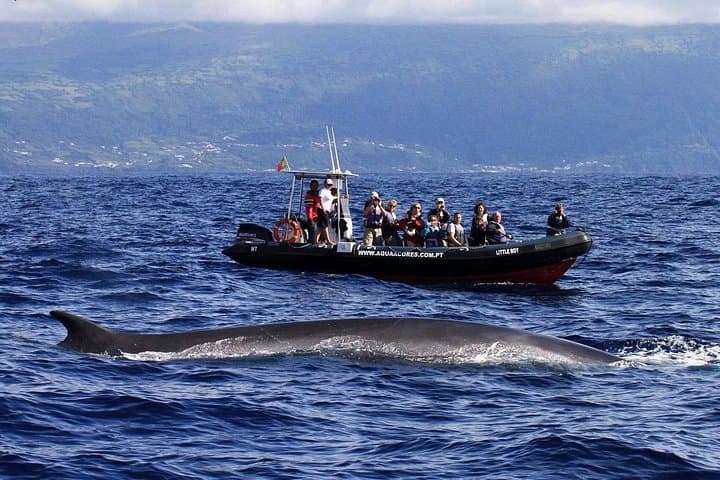
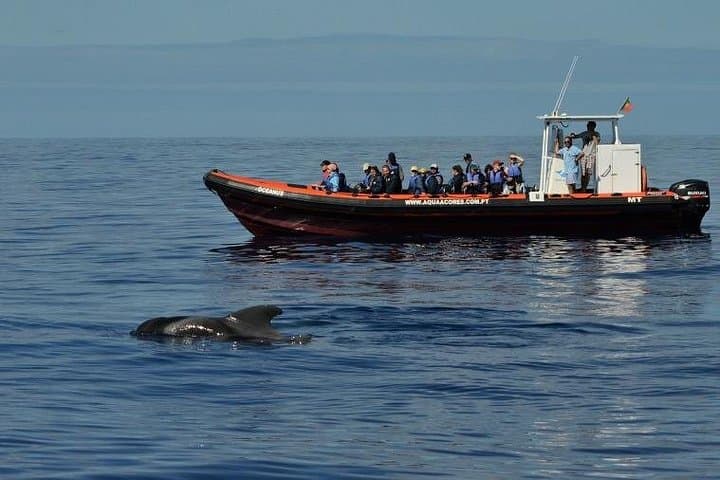
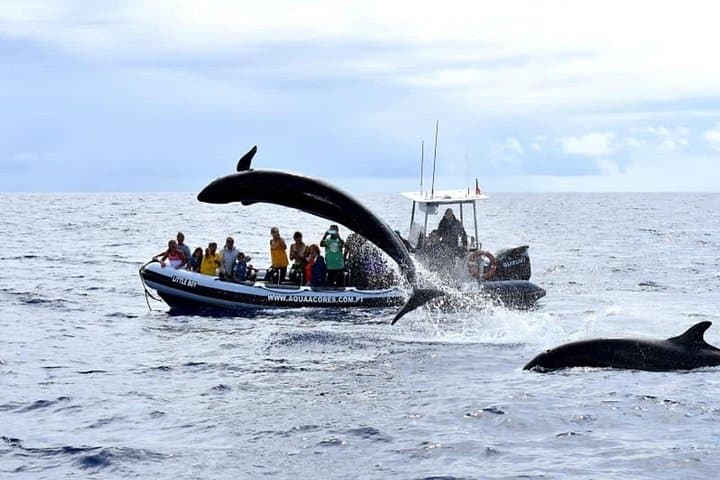
A low-angled morning light slides across the Atlantic as the boat slips out of Madalena harbour. Waves push and pull like a living map; the crew scans the horizon with practiced calm. Within minutes the engine hum becomes a background rhythm to sharp exhalations and blows — dorsal fins and spouts announce the presence of animals that have shaped Pico’s coastline for centuries.
A low-angled morning light slides across the Atlantic as the boat slips out of Madalena harbour. Waves push and pull like a living map; the crew scans the horizon with practiced calm. Within minutes the engine hum becomes a background rhythm to sharp exhalations and blows — dorsal fins and spouts announce the presence of animals that have shaped Pico’s coastline for centuries.
This short expedition places you on the water that surrounds Pico, a volcanic island crowned by Portugal’s highest peak, Mount Pico (2,351 m). The channel between Pico and neighboring islands is a deep, nutrient-rich trench that attracts at least two dozen cetacean species; historically the island’s people hunted whales, but today local skippers and biologists run research-led tours that monitor and protect them. Geology here is recent and raw — black basalt cliffs and terraced vineyards carved from lava — and culture still carries the rhythm of the sea in its museums and festivals.
Practical guidance: tours run about 2.5 hours with a briefing before boarding; wear layered waterproofs and non-slip shoes, and take seasickness medicine if you’re prone. Respect the guides: they follow regulations that keep distance and minimize disturbance. Best light for photos is early morning or late afternoon; summer increases sightings but spring and fall can bring productive feeding activity. Bring a water bottle, sun protection, and a camera with a zoom lens. Expect close approaches by curious dolphins and the long, rolling silhouette of sperm whales; the sea here is alive, watching back as much as you watch it.