THE ADVENTURE COLLECTIVE® · Independent discovery and booking for outdoor travel

Glide through Hamburg’s working port on a 90-minute hop-on hop-off circuit that links Speicherstadt, HafenCity, the Elbphilharmonie and several maritime museums. This practical guide explains what you’ll see, why the port matters and how to plan shore visits without missing the next boat.
Glide through Hamburg’s working port on a 90-minute hop-on hop-off circuit that links Speicherstadt, HafenCity, the Elbphilharmonie and several maritime museums. This practical guide explains what you’ll see, why the port matters and how to plan shore visits without missing the next boat.
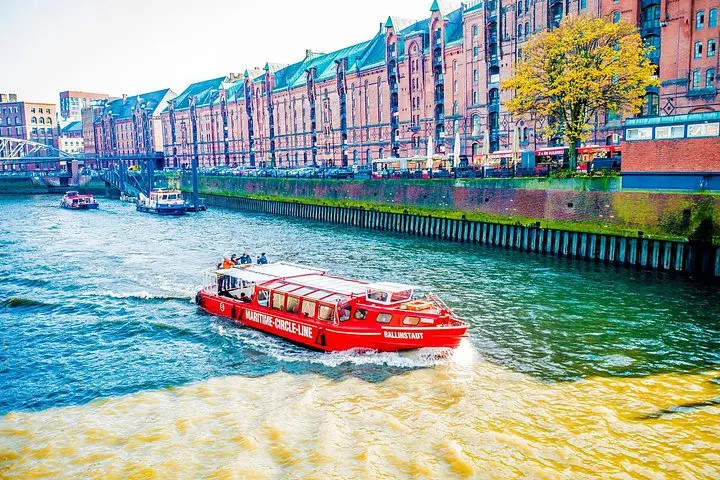
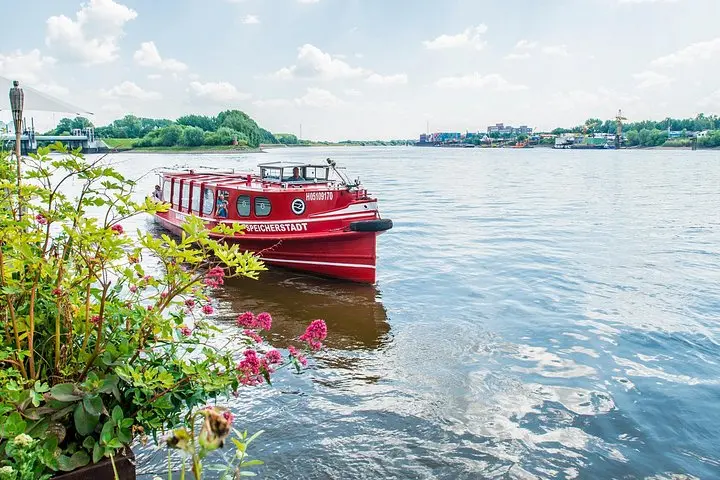
You push off from the Landungsbrücken and the Elbe takes the lead, tugging the boat through a working harbor that still smells faintly of engine oil and sea salt. Steel cranes cut the skyline, while brick warehouses glide past like chapters in the city’s maritime story. The Maritime Circle Line is a 90-minute circuit that lets you step on and off at nine stops—Speicherstadt, HafenCity, the Elbphilharmonie and several maritime museums—so you can trade waves for cobbled streets at will.
Verified experiences and guided adventures in the surrounding area.
Operated by Maritime Circle Line · Hamburg, Hamburg
You push off from the Landungsbrücken and the Elbe takes the lead, tugging the boat through a working harbor that still smells faintly of engine oil and sea salt. Steel cranes cut the skyline, while brick warehouses glide past like chapters in the city’s maritime story. The Maritime Circle Line is a 90-minute circuit that lets you step on and off at nine stops—Speicherstadt, HafenCity, the Elbphilharmonie and several maritime museums—so you can trade waves for cobbled streets at will.
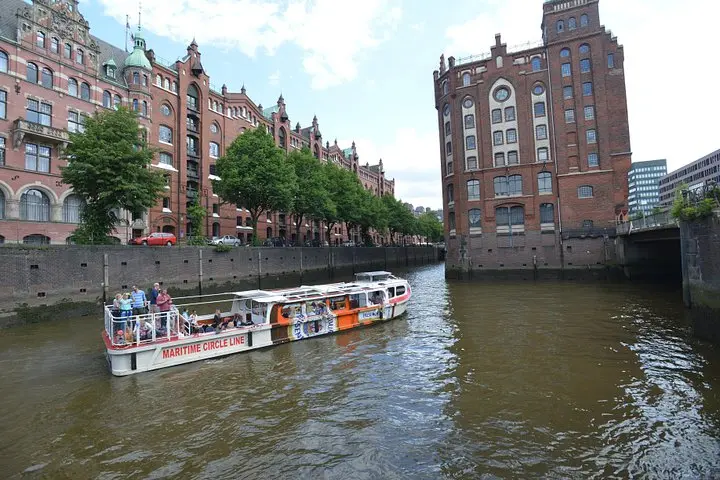
Hamburg’s port grew in the 19th and early 20th centuries into one of Europe’s busiest transshipment hubs. Speicherstadt’s red-brick warehouses, built on timber piles, and the modern glass of HafenCity make the harbor a visible timeline of trade, immigration and industrial change. Geologically, the Elbe’s broad estuary has shaped the city’s layout; culture here is equal parts dockworker grit and cosmopolitan renewal.
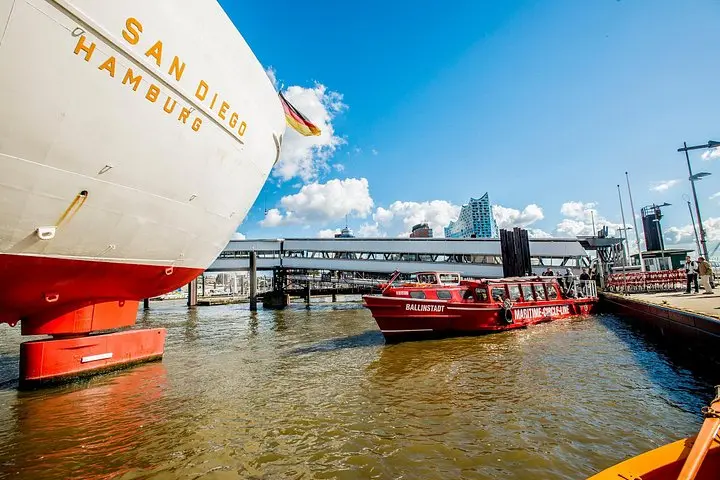
Expect city views framed by container ships, historic freighters like the CAP SAN DIEGO and the Elbphilharmonie’s glass wave. Guides point out immigration stations, former shipyards and the Harbor Museum’s cranes. Photography windows are wide; wind is constant—the river will push at your jacket like a companion insisting you pay attention.
Practical tips: boats run on a fixed timetable and accept one-ticket unlimited hop-ons for the circuit; plan shore visits around museum opening hours. The route works in light rain but can be canceled in severe weather. Bring layered clothing, a windproof shell and a compact plan for which stops to explore. The cruise is accessible and family-friendly, with short walking options between piers and museums.
Yes—tickets are valid for the full circuit and you can start or re-board at any of the nine scheduled stops.
The Maritime Circle Line lists stroller and general accessibility; check with the operator for specific boarding assistance and ramp availability at each pier.
Light rain usually doesn’t cancel the service, but severe weather can lead to cancellations; the operator may refund if canceled within the stated policy window.
Some departures offer live or recorded commentary pointing out landmarks; confirm language availability when booking.
Maritime Circle Line operates guided outdoor trips and adventures with an emphasis on safety, stewardship, and memorable experiences.
You push off from the Landungsbrücken and the Elbe takes the lead, tugging the boat through a working harbor that still smells faintly of engine oil and sea salt. Steel cranes cut the skyline, while brick warehouses glide past like chapters in the city’s maritime story. The Maritime Circle Line is a 90-minute circuit that lets you step on and off at nine stops—Speicherstadt, HafenCity, the Elbphilharmonie and several maritime museums—so you can trade waves for cobbled streets at will.
You push off from the Landungsbrücken and the Elbe takes the lead, tugging the boat through a working harbor that still smells faintly of engine oil and sea salt. Steel cranes cut the skyline, while brick warehouses glide past like chapters in the city’s maritime story. The Maritime Circle Line is a 90-minute circuit that lets you step on and off at nine stops—Speicherstadt, HafenCity, the Elbphilharmonie and several maritime museums—so you can trade waves for cobbled streets at will.
Hamburg’s port grew in the 19th and early 20th centuries into one of Europe’s busiest transshipment hubs. Speicherstadt’s red-brick warehouses, built on timber piles, and the modern glass of HafenCity make the harbor a visible timeline of trade, immigration and industrial change. Geologically, the Elbe’s broad estuary has shaped the city’s layout; culture here is equal parts dockworker grit and cosmopolitan renewal.
Expect city views framed by container ships, historic freighters like the CAP SAN DIEGO and the Elbphilharmonie’s glass wave. Guides point out immigration stations, former shipyards and the Harbor Museum’s cranes. Photography windows are wide; wind is constant—the river will push at your jacket like a companion insisting you pay attention.
Practical tips: boats run on a fixed timetable and accept one-ticket unlimited hop-ons for the circuit; plan shore visits around museum opening hours. The route works in light rain but can be canceled in severe weather. Bring layered clothing, a windproof shell and a compact plan for which stops to explore. The cruise is accessible and family-friendly, with short walking options between piers and museums.