THE ADVENTURE COLLECTIVE® · Independent discovery and booking for outdoor travel

Trace Hamilton’s policies and Washington’s footsteps through Lower Manhattan on a three-hour walking tour led by an experienced historian. Expect close-up stops at key Revolutionary sites and compact storytelling that connects place to politics.
Trace Hamilton’s policies and Washington’s footsteps through Lower Manhattan on a three-hour walking tour led by an experienced historian. Expect close-up stops at key Revolutionary sites and compact storytelling that connects place to politics.
The tour begins where the city still remembers itself — outside the Alexander Hamilton U.S. Custom House, sunlight skimming the stone, footsteps tapping over old cobbles as the guide unfolds scenes from the 18th century.
Verified experiences and guided adventures in the surrounding area.
Operated by Revolutionary Tours NYC · New York, New York
The tour begins where the city still remembers itself — outside the Alexander Hamilton U.S. Custom House, sunlight skimming the stone, footsteps tapping over old cobbles as the guide unfolds scenes from the 18th century.
Walkers move through narrow lanes and broad plazas, where printed proclamations once stirred crowds and the river’s edge shaped commerce and strategy. The Hudson and East Rivers frame the story, their currents having carried troops, goods and rumors that altered a nation.
Lower Manhattan’s geology is an urban palimpsest: filled land and bedrock outcrops beneath 18th-century foundations speak to the city’s growth. Culturally, the route threads taverns, banks and churches — places where politics and daily life collided — highlighting Hamilton’s role in finance and Washington’s inaugural steps into civilian life.
Stops include sites tied to the first reading of the Declaration, the ruined lead statue of King George III, and the Hamilton family vault at Trinity Churchyard. Local color comes from small museums and surviving colonial façades that give texture to the stories.
Practical guidance: the three-hour walk covers roughly 1.5–2 miles on mostly flat, paved streets with occasional stairs into historic buildings. Expect standing and walking; bring a water bottle, comfortable shoes and a light rain layer. Tours run rain, snow or shine, so check the forecast and arrive 10 minutes early to meet at 1 Bowling Green. Small-group sizes mean questions are welcome — this is for curious walkers who want context as much as anecdotes.
Meet in front of the Alexander Hamilton U.S. Custom House at 1 Bowling Green; arrive 10 minutes early for check-in.
Much of the route is on paved streets, but some historic sites have stairs or limited access; contact the operator ahead of time to confirm accommodations.
Children are welcome but must be accompanied by an adult; the pace is suitable for school-age kids who can walk for three hours.
Cancel at least 24 hours before the scheduled departure for a full refund; tours may be canceled for severe weather or insufficient travelers.
Revolutionary Tours NYC operates guided outdoor trips and adventures with an emphasis on safety, stewardship, and memorable experiences.
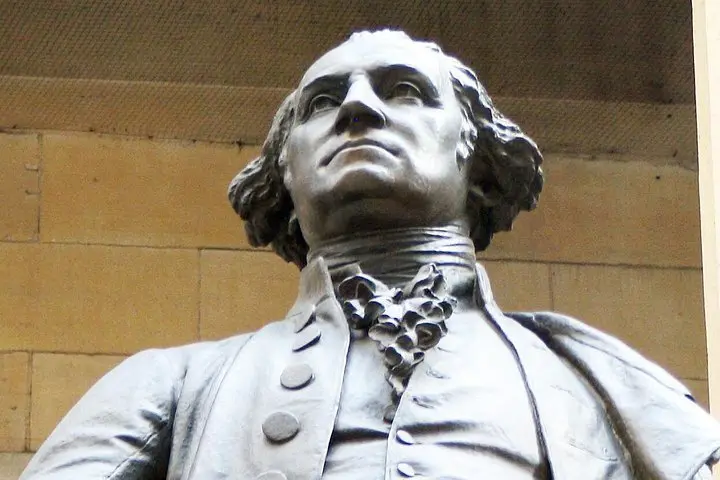


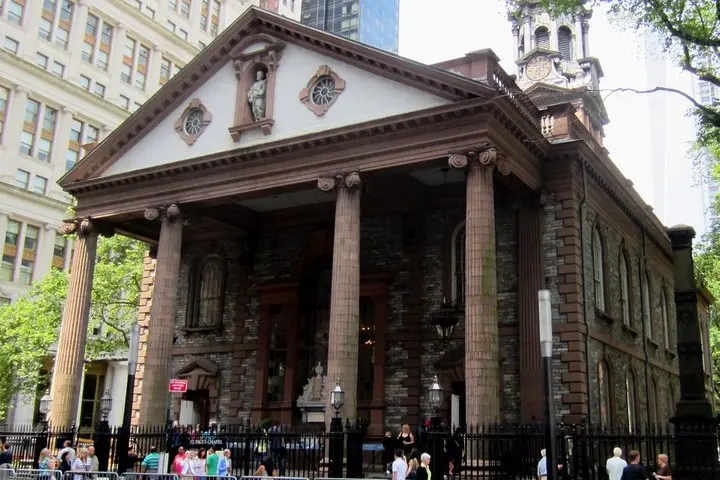
The tour begins where the city still remembers itself — outside the Alexander Hamilton U.S. Custom House, sunlight skimming the stone, footsteps tapping over old cobbles as the guide unfolds scenes from the 18th century.
The tour begins where the city still remembers itself — outside the Alexander Hamilton U.S. Custom House, sunlight skimming the stone, footsteps tapping over old cobbles as the guide unfolds scenes from the 18th century.
Walkers move through narrow lanes and broad plazas, where printed proclamations once stirred crowds and the river’s edge shaped commerce and strategy. The Hudson and East Rivers frame the story, their currents having carried troops, goods and rumors that altered a nation.
Lower Manhattan’s geology is an urban palimpsest: filled land and bedrock outcrops beneath 18th-century foundations speak to the city’s growth. Culturally, the route threads taverns, banks and churches — places where politics and daily life collided — highlighting Hamilton’s role in finance and Washington’s inaugural steps into civilian life.
Stops include sites tied to the first reading of the Declaration, the ruined lead statue of King George III, and the Hamilton family vault at Trinity Churchyard. Local color comes from small museums and surviving colonial façades that give texture to the stories.
Practical guidance: the three-hour walk covers roughly 1.5–2 miles on mostly flat, paved streets with occasional stairs into historic buildings. Expect standing and walking; bring a water bottle, comfortable shoes and a light rain layer. Tours run rain, snow or shine, so check the forecast and arrive 10 minutes early to meet at 1 Bowling Green. Small-group sizes mean questions are welcome — this is for curious walkers who want context as much as anecdotes.