THE ADVENTURE COLLECTIVE® · Independent discovery and booking for outdoor travel

Cross the Pir Panjal on a four-day private trek from Manali to Lahaul. Expect river braids, a 4,270 m pass with glacier views, tented camps, and a jeep return over Rothang.
Cross the Pir Panjal on a four-day private trek from Manali to Lahaul. Expect river braids, a 4,270 m pass with glacier views, tented camps, and a jeep return over Rothang.
A cold breath of Himalayan air meets the first step out of Manali as the van drops you in Prini and the village roofs shrink behind you.
Verified experiences and guided adventures in the surrounding area.
Operated by Chalo! Travels · Manali, Himachal Pradesh
A cold breath of Himalayan air meets the first step out of Manali as the van drops you in Prini and the village roofs shrink behind you.
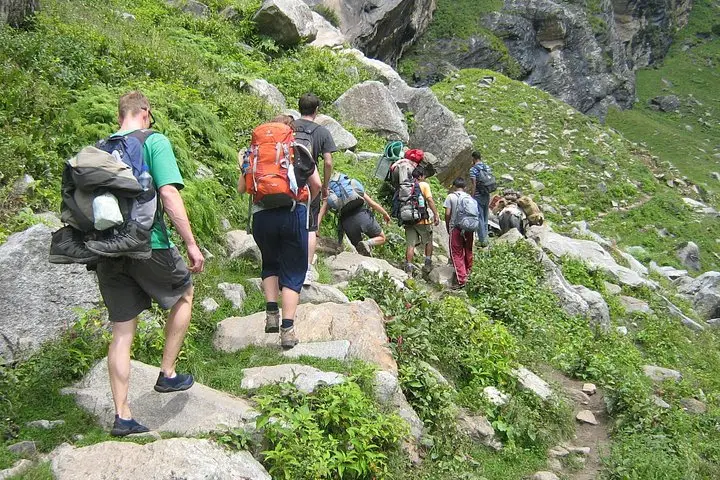
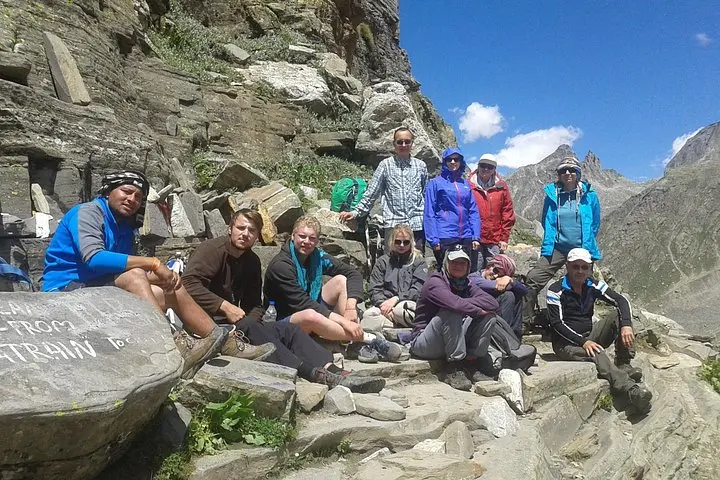
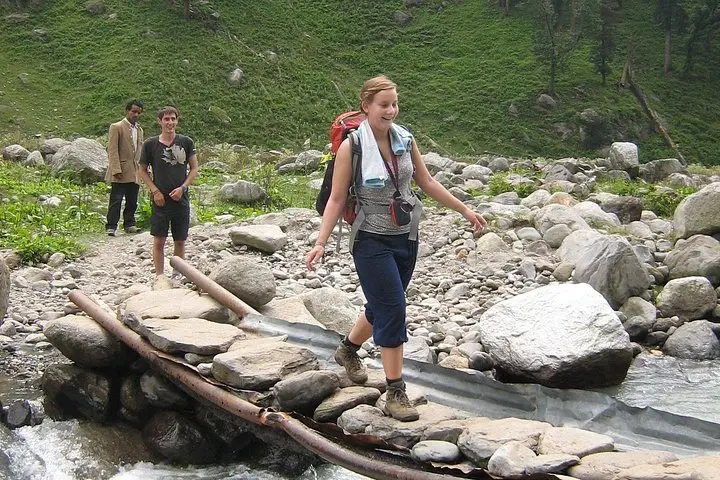
The trail climbs through apple orchards and fir forest, then opens into high meadows where the Beas river murmurs below. Over four days you follow river braidlines, cross shaky wooden bridges, ford a glacier-fed stream, and push for the saddle at roughly 4,270 m. At the pass the Pir Panjal range frames Deo Tibba and Indrasan like silent, glaciated guardians; on the descent the landscape hardens into the rainshadow of Lahaul and Spiti.
This route has long been a corridor between valleys — historic trade lines connecting the Beas and Chandra rivers before motor roads reoriented traffic across Rothang. Geologically the pass sits where Pir Panjal’s folded metamorphic rocks give way to high-altitude moraine and scree, producing sudden shifts from grassy campsites to angular boulderfields. Local culture is Kashmiri-Pahari and Lahauli; dhabas at Chatru offer simple meals and conversation after long days.
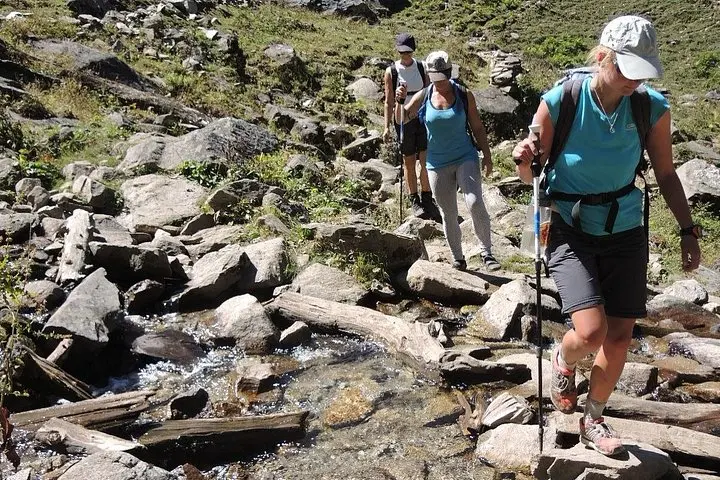
Practical guidance: acclimatize in Manali, carry layered insulation and a reliable pair of boots, and be ready for river crossings that demand stable footwear and poles. Expect cold nights in tents, limited mobile signal, and a jeep return over Rothang. Guides, cooks and mules are typical for comfort and safety; plan for variable weather, high-altitude pacing, and leave no trace camping practices.
The pass is moderate but steep and rocky; altitude and loose scree make the ascent demanding—allow time and steady pacing.
Not strictly, but previous multi-day trekking and basic acclimatization experience greatly reduce risk of altitude sickness.
Yes—this private package typically includes tents, three nights of camping, and meals prepared by a cook as listed in the itinerary.
Late spring to early autumn avoids heavy winter snow; monsoon months are possible and floral but can increase trail slipperiness and stream flow.
Chalo! Travels operates guided outdoor trips and adventures with an emphasis on safety, stewardship, and memorable experiences.
A cold breath of Himalayan air meets the first step out of Manali as the van drops you in Prini and the village roofs shrink behind you.
A cold breath of Himalayan air meets the first step out of Manali as the van drops you in Prini and the village roofs shrink behind you.
The trail climbs through apple orchards and fir forest, then opens into high meadows where the Beas river murmurs below. Over four days you follow river braidlines, cross shaky wooden bridges, ford a glacier-fed stream, and push for the saddle at roughly 4,270 m. At the pass the Pir Panjal range frames Deo Tibba and Indrasan like silent, glaciated guardians; on the descent the landscape hardens into the rainshadow of Lahaul and Spiti.
This route has long been a corridor between valleys — historic trade lines connecting the Beas and Chandra rivers before motor roads reoriented traffic across Rothang. Geologically the pass sits where Pir Panjal’s folded metamorphic rocks give way to high-altitude moraine and scree, producing sudden shifts from grassy campsites to angular boulderfields. Local culture is Kashmiri-Pahari and Lahauli; dhabas at Chatru offer simple meals and conversation after long days.
Practical guidance: acclimatize in Manali, carry layered insulation and a reliable pair of boots, and be ready for river crossings that demand stable footwear and poles. Expect cold nights in tents, limited mobile signal, and a jeep return over Rothang. Guides, cooks and mules are typical for comfort and safety; plan for variable weather, high-altitude pacing, and leave no trace camping practices.