THE ADVENTURE COLLECTIVE® · Independent discovery and booking for outdoor travel

Hand-feed Jamaica’s hummingbirds on a short, guided visit to Rocklands Bird Sanctuary near Montego Bay. This two-hour experience combines up-close bird interactions, coastal views, and guided natural history on a compact, easily walkable property.
Hand-feed Jamaica’s hummingbirds on a short, guided visit to Rocklands Bird Sanctuary near Montego Bay. This two-hour experience combines up-close bird interactions, coastal views, and guided natural history on a compact, easily walkable property.
A low stone patio looks out over palms and a pocket of blue Caribbean; tiny wings glitter as hummingbirds dart to the feeder and, if you’re patient, land on a fingertip. Rocklands Bird Sanctuary sits just inland from the coast near Anchovy, a short drive from Montego Bay, and its main draw is intimate, slow-motion encounters with Jamaica’s iconic streamertail (the doctor bird) and a clutch of other small songbirds.
Verified experiences and guided adventures in the surrounding area.
Operated by OceanShootJamaica Tours · Anchovy, St. James
A low stone patio looks out over palms and a pocket of blue Caribbean; tiny wings glitter as hummingbirds dart to the feeder and, if you’re patient, land on a fingertip. Rocklands Bird Sanctuary sits just inland from the coast near Anchovy, a short drive from Montego Bay, and its main draw is intimate, slow-motion encounters with Jamaica’s iconic streamertail (the doctor bird) and a clutch of other small songbirds.
The property was bought in 1954 by Lisa Salmon, the “bird lady,” who began feeding and documenting the growing bird population and opened the sanctuary to visitors in 1962. Geologically the site perches on the island’s limestone shelf with shallow, well‑drained soils that support flowering shrubs and native trees—ideal habitat for nectar feeders. Culturally the sanctuary is a local touchstone: bird feeding here is both a tourist ritual and a small practice of community stewardship.
Expect a guided, relaxed two-hour visit that combines patio feeding with a short walk through plantings where a guide will point out species and propagation efforts. The access road is narrow and rough—vehicles with decent clearance are common—and the best light for photos and the most active birds is early morning.
Practical notes: bring binoculars and a camera, wear closed-toe shoes and insect repellent, and plan for humid conditions and sudden showers in the wet season. The sanctuary operates as a small private site focused on education and conservation, so follow the guide’s instructions when hand-feeding birds and avoid flash photography close-up.
The scheduled visit is about two hours, typically including time on the patio feeding birds and a guided walk around the grounds.
Yes—children can hand-feed under supervision; the sanctuary is family-friendly but follow the guide’s instructions for safety.
The patio area is generally stroller accessible, but the approach road is narrow and rough; contact your tour provider ahead to confirm specific accessibility needs.
No—nectar is provided by the sanctuary and guides; visitors should not introduce outside food or drinks that could harm the birds.
OceanShootJamaica Tours operates guided outdoor trips and adventures with an emphasis on safety, stewardship, and memorable experiences.
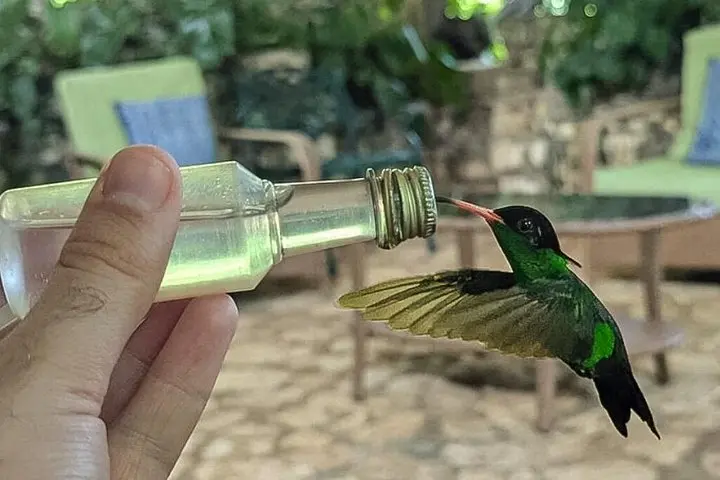
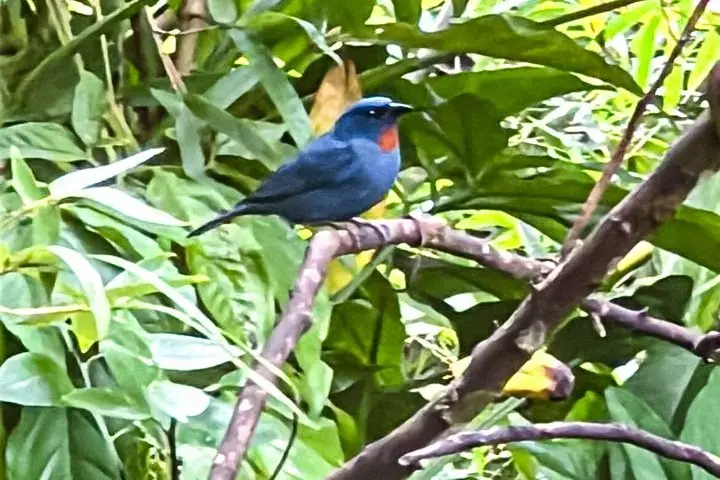
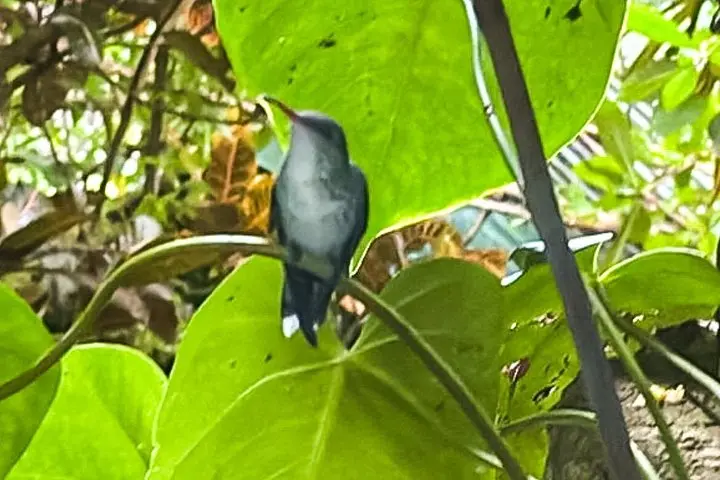
A low stone patio looks out over palms and a pocket of blue Caribbean; tiny wings glitter as hummingbirds dart to the feeder and, if you’re patient, land on a fingertip. Rocklands Bird Sanctuary sits just inland from the coast near Anchovy, a short drive from Montego Bay, and its main draw is intimate, slow-motion encounters with Jamaica’s iconic streamertail (the doctor bird) and a clutch of other small songbirds.
A low stone patio looks out over palms and a pocket of blue Caribbean; tiny wings glitter as hummingbirds dart to the feeder and, if you’re patient, land on a fingertip. Rocklands Bird Sanctuary sits just inland from the coast near Anchovy, a short drive from Montego Bay, and its main draw is intimate, slow-motion encounters with Jamaica’s iconic streamertail (the doctor bird) and a clutch of other small songbirds.
The property was bought in 1954 by Lisa Salmon, the “bird lady,” who began feeding and documenting the growing bird population and opened the sanctuary to visitors in 1962. Geologically the site perches on the island’s limestone shelf with shallow, well‑drained soils that support flowering shrubs and native trees—ideal habitat for nectar feeders. Culturally the sanctuary is a local touchstone: bird feeding here is both a tourist ritual and a small practice of community stewardship.
Expect a guided, relaxed two-hour visit that combines patio feeding with a short walk through plantings where a guide will point out species and propagation efforts. The access road is narrow and rough—vehicles with decent clearance are common—and the best light for photos and the most active birds is early morning.
Practical notes: bring binoculars and a camera, wear closed-toe shoes and insect repellent, and plan for humid conditions and sudden showers in the wet season. The sanctuary operates as a small private site focused on education and conservation, so follow the guide’s instructions when hand-feeding birds and avoid flash photography close-up.