THE ADVENTURE COLLECTIVE® · Independent discovery and booking for outdoor travel

Feed hummingbirds from your palm at Rocklands Bird Sanctuary, then tour Montego Bay’s highlights and Hip Strip on a half-day outing from Grand Palladium. Expect close wildlife encounters, a short woodland walk, and time for local shopping and history.
Feed hummingbirds from your palm at Rocklands Bird Sanctuary, then tour Montego Bay’s highlights and Hip Strip on a half-day outing from Grand Palladium. Expect close wildlife encounters, a short woodland walk, and time for local shopping and history.
You step from an air-conditioned van into a partial canopy of gum and ironwood, the coast close enough to taste salt on the breeze. Tiny, jewel-bright birds wheel and pause, daring you to hold still as they land on your finger to sip nectar from a hand-held feeder; behind them Montego Bay’s low hills and coral flats stretch toward the Caribbean.
Verified experiences and guided adventures in the surrounding area.
Operated by SNL Jamaican Tours · Montego Bay, St. James Parish
You step from an air-conditioned van into a partial canopy of gum and ironwood, the coast close enough to taste salt on the breeze. Tiny, jewel-bright birds wheel and pause, daring you to hold still as they land on your finger to sip nectar from a hand-held feeder; behind them Montego Bay’s low hills and coral flats stretch toward the Caribbean.
The sanctuary began in the 1950s under Lisa Salmon, the “Bird Lady,” who encouraged wild hummingbirds and orioles to visit feeders she set out; it opened to the public in 1958. Geologically, western Jamaica folds from coastal limestone and mangrove flats into low, weathered hills—habitat that supports nectar-rich plants and the insects that mirror the island’s human history of plantation agriculture and trade.
Culture here moves at a conversational pace: in Montego Bay you’ll pass Sam Sharpe Square and the Hip Strip—places where reggae and market bargaining sit side-by-side with colonial-era parish churches and great house ruins.
Practical guidance: the bird encounter usually lasts about an hour, followed by a short interpretive walk through native flora. Wear closed-toe shoes for uneven woodland trails, bring sun protection and cash for small purchases, and follow the keeper’s directions when feeding birds—these are wild visitors, not pets. The combined tour runs roughly seven hours with hotel pickup, so plan hydration and a light lunch. This half-day loop is approachable, sensory, and rooted in hands-on wildlife connection—ideal for travelers who want a short, memorable nature experience with city-side culture and shopping afterwards.
The birds are wild and free; they visit feeders by choice. Keep movements slow and use the provided nectar feeders—do not chase or try to handle the birds.
The operator lists wheelchair-accessible vehicles and some accessibility, but terrain on the sanctuary walk can be uneven—notify the tour provider of special requirements when booking.
Yes—hotel pickup and drop-off from selected hotels are included; confirm your pickup point at reservation time.
Guides typically speak English; tipping is customary for good service—carry small local currency for guides and drivers.
SNL Jamaican Tours operates guided outdoor trips and adventures with an emphasis on safety, stewardship, and memorable experiences.
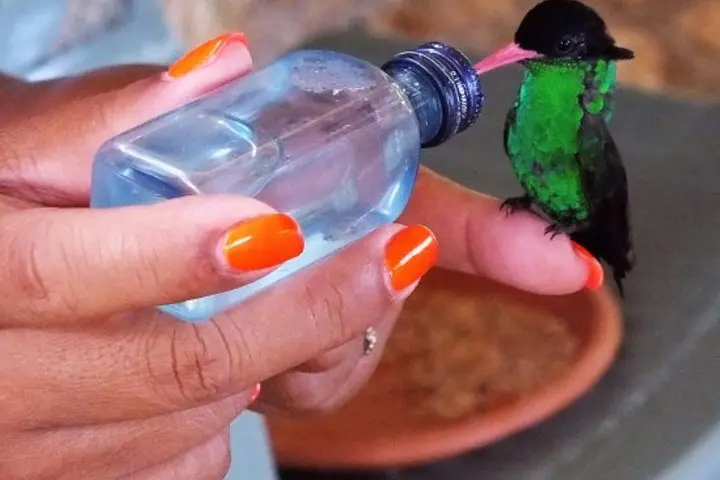
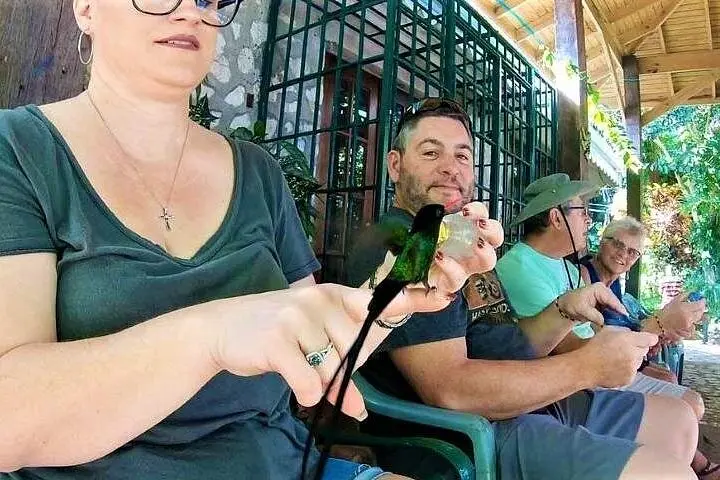
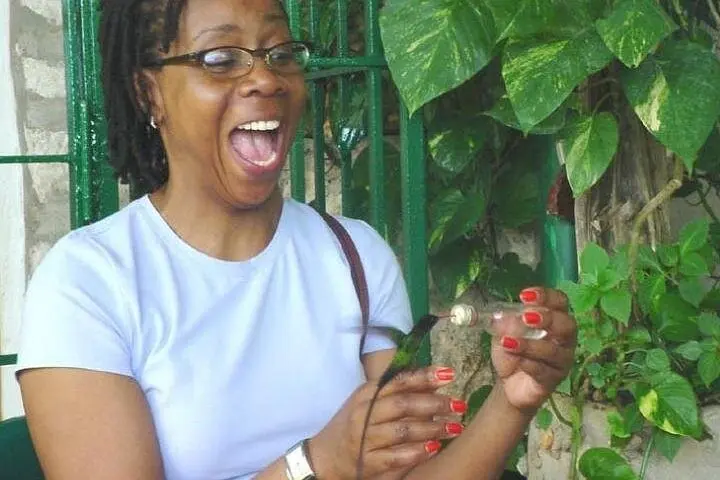
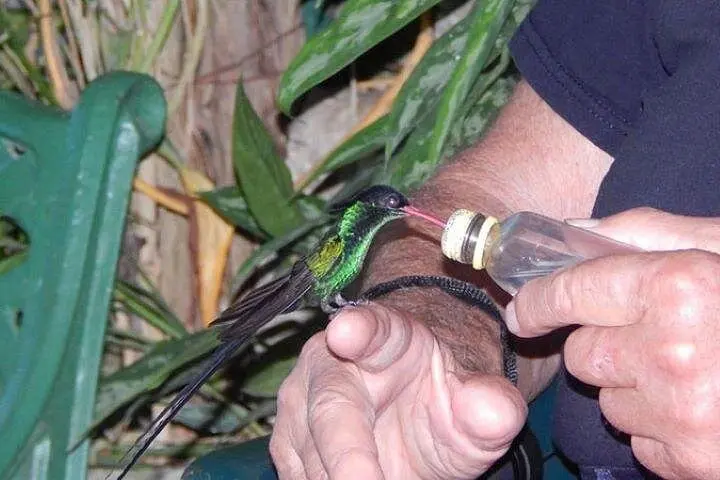
You step from an air-conditioned van into a partial canopy of gum and ironwood, the coast close enough to taste salt on the breeze. Tiny, jewel-bright birds wheel and pause, daring you to hold still as they land on your finger to sip nectar from a hand-held feeder; behind them Montego Bay’s low hills and coral flats stretch toward the Caribbean.
You step from an air-conditioned van into a partial canopy of gum and ironwood, the coast close enough to taste salt on the breeze. Tiny, jewel-bright birds wheel and pause, daring you to hold still as they land on your finger to sip nectar from a hand-held feeder; behind them Montego Bay’s low hills and coral flats stretch toward the Caribbean.
The sanctuary began in the 1950s under Lisa Salmon, the “Bird Lady,” who encouraged wild hummingbirds and orioles to visit feeders she set out; it opened to the public in 1958. Geologically, western Jamaica folds from coastal limestone and mangrove flats into low, weathered hills—habitat that supports nectar-rich plants and the insects that mirror the island’s human history of plantation agriculture and trade.
Culture here moves at a conversational pace: in Montego Bay you’ll pass Sam Sharpe Square and the Hip Strip—places where reggae and market bargaining sit side-by-side with colonial-era parish churches and great house ruins.
Practical guidance: the bird encounter usually lasts about an hour, followed by a short interpretive walk through native flora. Wear closed-toe shoes for uneven woodland trails, bring sun protection and cash for small purchases, and follow the keeper’s directions when feeding birds—these are wild visitors, not pets. The combined tour runs roughly seven hours with hotel pickup, so plan hydration and a light lunch. This half-day loop is approachable, sensory, and rooted in hands-on wildlife connection—ideal for travelers who want a short, memorable nature experience with city-side culture and shopping afterwards.