THE ADVENTURE COLLECTIVE® · Independent discovery and booking for outdoor travel

Spend two hours on a Kisoro coffee farm learning every step from cherry to cup. This hands-on tour explains local farming, processing methods, and how ecotourism supports communities in Uganda’s gorilla highlands.
Spend two hours on a Kisoro coffee farm learning every step from cherry to cup. This hands-on tour explains local farming, processing methods, and how ecotourism supports communities in Uganda’s gorilla highlands.
Morning mist lifts from steep coffee terraces, and the volcanic slopes of the Virunga range watch as pickers move between shade trees and ripening cherries. On a two-hour coffee-making tour in Kisoro, visitors trade the city’s rush for a hands-on look at how highland microclimates and local labor shape a cup of coffee.
Verified experiences and guided adventures in the surrounding area.
Morning mist lifts from steep coffee terraces, and the volcanic slopes of the Virunga range watch as pickers move between shade trees and ripening cherries. On a two-hour coffee-making tour in Kisoro, visitors trade the city’s rush for a hands-on look at how highland microclimates and local labor shape a cup of coffee.
The region’s soils are products of long-ago eruptions; the mineral-rich ground and steady equatorial rainfall make this corner of southwestern Uganda ideal for Arabica varieties. Coffee cultivation here is woven into community life — smallholder plots, cooperative processing, and generations of techniques passed down alongside cultural practices influenced by neighboring Rwanda and the Democratic Republic of Congo.
On the farm you’ll follow each step: cherry selection, pulping, fermentation, drying on raised beds, and traditional roasting and grinding. Guides explain taste profiles tied to altitude and processing choices; you’ll grind beans by hand and brew a simple stovetop cup to taste the result.
Practical notes: expect uneven farm tracks and short uphill sections—sturdy shoes and a light rain layer are useful. Bring small cash for purchasing freshly roasted beans and to support cooperative projects. Photography is welcome but ask before photographing workers.
This experience is as much cultural exchange as it is education: the farm’s routines reflect conservation pressures and community-led responses, including agroforestry and reduced pesticide use. The tour offers a compact, grounded way to understand farm-to-cup coffee while supporting local livelihoods in Uganda’s gorilla highlands.
The experience runs about two hours and covers cherry selection, processing, drying, roasting, and brewing a sample cup.
Yes; older children who can walk short distances and follow safety instructions will enjoy the hands-on elements, though it may be tiring for very young children.
Most farms offer small bags of freshly roasted beans for purchase; bring small cash as card payments may not be available.
There are no special permits for the farm tour itself, but standard travel vaccinations for Uganda and travel insurance are recommended; check current health advisories before travel.
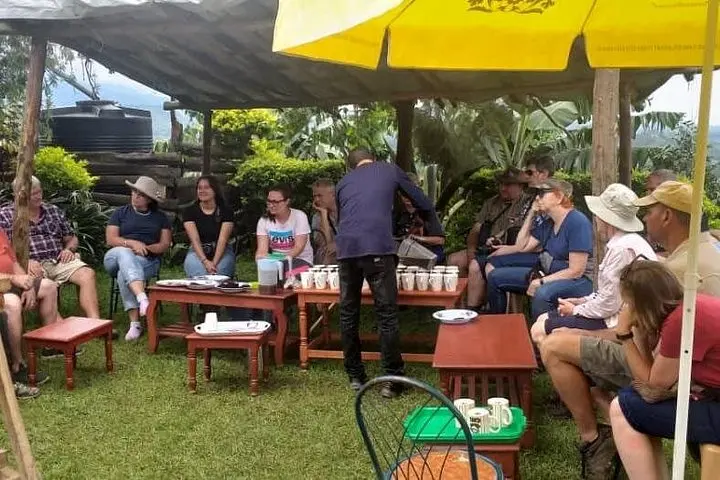
Morning mist lifts from steep coffee terraces, and the volcanic slopes of the Virunga range watch as pickers move between shade trees and ripening cherries. On a two-hour coffee-making tour in Kisoro, visitors trade the city’s rush for a hands-on look at how highland microclimates and local labor shape a cup of coffee.
Morning mist lifts from steep coffee terraces, and the volcanic slopes of the Virunga range watch as pickers move between shade trees and ripening cherries. On a two-hour coffee-making tour in Kisoro, visitors trade the city’s rush for a hands-on look at how highland microclimates and local labor shape a cup of coffee.
The region’s soils are products of long-ago eruptions; the mineral-rich ground and steady equatorial rainfall make this corner of southwestern Uganda ideal for Arabica varieties. Coffee cultivation here is woven into community life — smallholder plots, cooperative processing, and generations of techniques passed down alongside cultural practices influenced by neighboring Rwanda and the Democratic Republic of Congo.
On the farm you’ll follow each step: cherry selection, pulping, fermentation, drying on raised beds, and traditional roasting and grinding. Guides explain taste profiles tied to altitude and processing choices; you’ll grind beans by hand and brew a simple stovetop cup to taste the result.
Practical notes: expect uneven farm tracks and short uphill sections—sturdy shoes and a light rain layer are useful. Bring small cash for purchasing freshly roasted beans and to support cooperative projects. Photography is welcome but ask before photographing workers.
This experience is as much cultural exchange as it is education: the farm’s routines reflect conservation pressures and community-led responses, including agroforestry and reduced pesticide use. The tour offers a compact, grounded way to understand farm-to-cup coffee while supporting local livelihoods in Uganda’s gorilla highlands.