THE ADVENTURE COLLECTIVE® · Independent discovery and booking for outdoor travel

Learn Khmer classics from market to plate in a three‑hour, hands‑on class in Siem Reap. Start with a market tour, then cook amok, curry and loc lac under an experienced chef and take home recipes.
Learn Khmer classics from market to plate in a three‑hour, hands‑on class in Siem Reap. Start with a market tour, then cook amok, curry and loc lac under an experienced chef and take home recipes.
You step off a tuk‑tuk into a swirl of spice-scented air: chili, kaffir lime, crushed lemongrass and the wet wood smell of fish sauce. Before the burners and bowls, the class begins at a local market where vendors sort river fish, bright herbs and sticky rice—this is where Khmer food starts, loud and unapologetic.
Verified experiences and guided adventures in the surrounding area.
Operated by Paper Tiger Cooking Class · Siem Reap, Siem Reap Province
You step off a tuk‑tuk into a swirl of spice-scented air: chili, kaffir lime, crushed lemongrass and the wet wood smell of fish sauce. Before the burners and bowls, the class begins at a local market where vendors sort river fish, bright herbs and sticky rice—this is where Khmer food starts, loud and unapologetic.
Siem Reap sits on the edge of the Tonlé Sap floodplain; its seasonal rise and fall shaped Khmer diets for centuries. Recipes use kroeung (pounded spice paste), coconut milk and freshwater fish—ingredients that tell a story of riverine ecology and Khmer ingenuity, with a dash of French-era techniques in char and sauce.
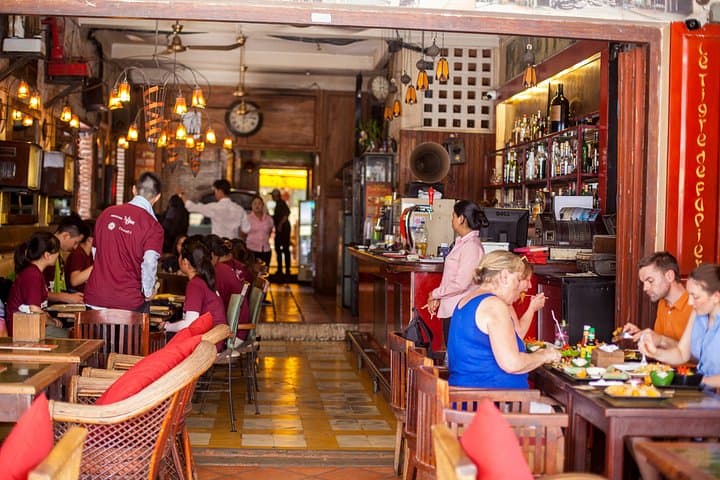
At Paper Tiger Eatery, a professional teacher guides a small group through amok, chicken curry and beef loc lac. You’ll prep kroeung, fold banana-leaf parcels, temper spices and learn timing for coconut-based sauces. The kitchen is practical—wok heat, mortar and pestle, and plenty of tasting. Conversation drifts between technique, market etiquette and how to translate Khmer measurements at home.
Practical takeaway: expect three hours of standing, hands‑on work, and a market walk before class. Bring a reusable bottle, close‑toe shoes and a camera for colorful stalls. Vegetarian and fish options are standard; recipes and a digital booklet come with the class so you can recreate dishes later. The experience is as much cultural exchange as it is a lesson—an efficient, sensory way to take a piece of Cambodia home with you.
Yes — the class begins with a guided market visit to learn about staple ingredients used in Khmer cooking.
Yes — vegetarian and fish options are standard; indicate allergies or special needs when booking.
A digital recipe booklet is provided after the class so you can recreate dishes at home.
Shared classes are small, typically up to 20 participants, allowing hands‑on guidance from the chef.
Paper Tiger Cooking Class operates guided outdoor trips and adventures with an emphasis on safety, stewardship, and memorable experiences.



You step off a tuk‑tuk into a swirl of spice-scented air: chili, kaffir lime, crushed lemongrass and the wet wood smell of fish sauce. Before the burners and bowls, the class begins at a local market where vendors sort river fish, bright herbs and sticky rice—this is where Khmer food starts, loud and unapologetic.
You step off a tuk‑tuk into a swirl of spice-scented air: chili, kaffir lime, crushed lemongrass and the wet wood smell of fish sauce. Before the burners and bowls, the class begins at a local market where vendors sort river fish, bright herbs and sticky rice—this is where Khmer food starts, loud and unapologetic.
Siem Reap sits on the edge of the Tonlé Sap floodplain; its seasonal rise and fall shaped Khmer diets for centuries. Recipes use kroeung (pounded spice paste), coconut milk and freshwater fish—ingredients that tell a story of riverine ecology and Khmer ingenuity, with a dash of French-era techniques in char and sauce.
At Paper Tiger Eatery, a professional teacher guides a small group through amok, chicken curry and beef loc lac. You’ll prep kroeung, fold banana-leaf parcels, temper spices and learn timing for coconut-based sauces. The kitchen is practical—wok heat, mortar and pestle, and plenty of tasting. Conversation drifts between technique, market etiquette and how to translate Khmer measurements at home.
Practical takeaway: expect three hours of standing, hands‑on work, and a market walk before class. Bring a reusable bottle, close‑toe shoes and a camera for colorful stalls. Vegetarian and fish options are standard; recipes and a digital booklet come with the class so you can recreate dishes later. The experience is as much cultural exchange as it is a lesson—an efficient, sensory way to take a piece of Cambodia home with you.