THE ADVENTURE COLLECTIVE® · Independent discovery and booking for outdoor travel

Learn age-old Sri Lankan mask carving from a local artisan in Galle Fort, then create your own Kaduru-wood mask in a calm, hands-on workshop. This four-hour cultural experience blends technique, folklore and a tangible souvenir you’ll take home.
Learn age-old Sri Lankan mask carving from a local artisan in Galle Fort, then create your own Kaduru-wood mask in a calm, hands-on workshop. This four-hour cultural experience blends technique, folklore and a tangible souvenir you’ll take home.
You step through a narrow doorway off a sun-warmed lane in Galle Fort and the smell of wood shavings and lacquer meets you like an old friend. Masks hang from beams and lean against whitewashed walls—bright eyes, fierce teeth, and exaggerated brows that once performed in village drama and exorcism rituals. The workshop’s host gestures toward a block of Kaduru wood and the day’s project: your own traditional mask.
Verified experiences and guided adventures in the surrounding area.
Operated by Lakpura LLC · Ambalangoda, Southern Province
You step through a narrow doorway off a sun-warmed lane in Galle Fort and the smell of wood shavings and lacquer meets you like an old friend. Masks hang from beams and lean against whitewashed walls—bright eyes, fierce teeth, and exaggerated brows that once performed in village drama and exorcism rituals. The workshop’s host gestures toward a block of Kaduru wood and the day’s project: your own traditional mask.
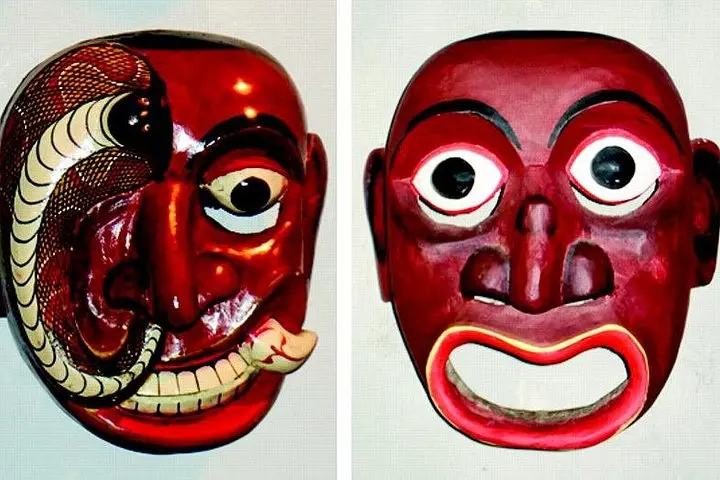
Mask making in southwestern Sri Lanka is both craft and cultural language. These carved faces belong to Kolam dance dramas and devil-dancer ceremonies that trace back centuries; the designs blend Buddhist, Hindu and indigenous folk influences. Geologically, the coast you’ll travel between Ambalangoda and Galle Fort is built of ancient beach sands and rocky promontories; the port at Galle shaped cultural exchange, helping spread mask styles and materials.
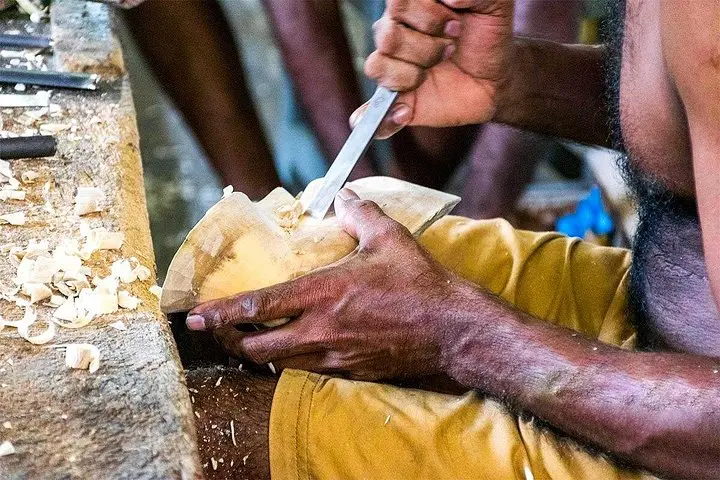
Expect a two-hour hands-on session where you learn basic carving, smoothing and painting techniques under a local artisan’s guidance. The wood (Kaduru) is light and forgiving; tools are simple but sharp, and the process rewards patience and steady hands. You’ll leave with a personal mask, a better sense of Sri Lanka’s living performance traditions, and the practicalities of supporting small workshops.
Practical notes: workshops are family-friendly but involve sharp tools, wear closed-toe shoes and clothing you don’t mind getting paint on. Bring sunscreen and a small towel for humidity. Many hosts provide water; public transport connects Ambalangoda and Galle, and most bookings allow 24‑hour cancellation. Respect the craft—ask before photographing and consider purchasing another finished piece to support the studio.
Yes—hosts typically supply Kaduru wood blocks, carving tools, paints and a protective space; you’ll finish a mask to take home.
Generally yes for school-age children under supervision, but minors should be monitored around sharp tools and paints.
Public buses and tuk-tuks connect Galle, Ambalangoda and the Fort area; many bookings list pickup options—confirm during booking.
Most hosts speak conversational English; some technical terms may be in Sinhala—ask for clarification if needed.
Lakpura LLC operates guided outdoor trips and adventures with an emphasis on safety, stewardship, and memorable experiences.
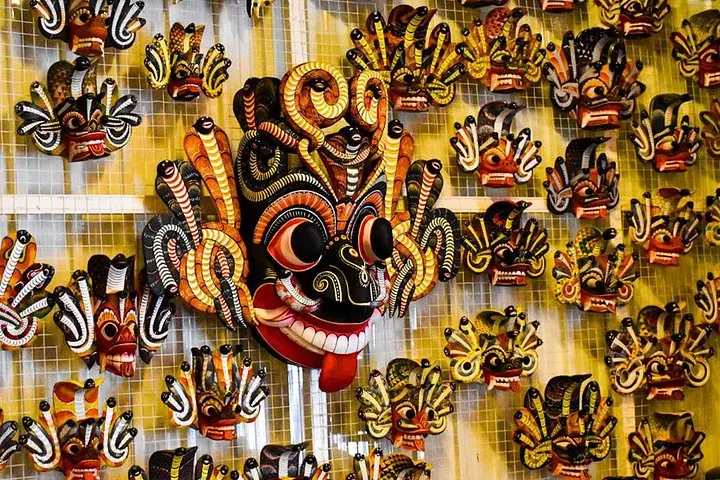
You step through a narrow doorway off a sun-warmed lane in Galle Fort and the smell of wood shavings and lacquer meets you like an old friend. Masks hang from beams and lean against whitewashed walls—bright eyes, fierce teeth, and exaggerated brows that once performed in village drama and exorcism rituals. The workshop’s host gestures toward a block of Kaduru wood and the day’s project: your own traditional mask.
You step through a narrow doorway off a sun-warmed lane in Galle Fort and the smell of wood shavings and lacquer meets you like an old friend. Masks hang from beams and lean against whitewashed walls—bright eyes, fierce teeth, and exaggerated brows that once performed in village drama and exorcism rituals. The workshop’s host gestures toward a block of Kaduru wood and the day’s project: your own traditional mask.
Mask making in southwestern Sri Lanka is both craft and cultural language. These carved faces belong to Kolam dance dramas and devil-dancer ceremonies that trace back centuries; the designs blend Buddhist, Hindu and indigenous folk influences. Geologically, the coast you’ll travel between Ambalangoda and Galle Fort is built of ancient beach sands and rocky promontories; the port at Galle shaped cultural exchange, helping spread mask styles and materials.
Expect a two-hour hands-on session where you learn basic carving, smoothing and painting techniques under a local artisan’s guidance. The wood (Kaduru) is light and forgiving; tools are simple but sharp, and the process rewards patience and steady hands. You’ll leave with a personal mask, a better sense of Sri Lanka’s living performance traditions, and the practicalities of supporting small workshops.
Practical notes: workshops are family-friendly but involve sharp tools, wear closed-toe shoes and clothing you don’t mind getting paint on. Bring sunscreen and a small towel for humidity. Many hosts provide water; public transport connects Ambalangoda and Galle, and most bookings allow 24‑hour cancellation. Respect the craft—ask before photographing and consider purchasing another finished piece to support the studio.