THE ADVENTURE COLLECTIVE® · Independent discovery and booking for outdoor travel

Spend two focused hours crafting a mosaic in a working SoWa artist studio. This hands-on session supplies materials and instruction so beginners leave with a finished tile piece and a better sense of mosaic design.
Spend two focused hours crafting a mosaic in a working SoWa artist studio. This hands-on session supplies materials and instruction so beginners leave with a finished tile piece and a better sense of mosaic design.
The studio door opens onto a corridor of concrete and light; tiles glint like tiny street signs and the hum of conversation follows the rhythm of hands cutting and placing pieces. In SoWa’s artist district, the workshop places you at a work table under industrial windows where polymer clay tiles—bright, matte, and perfectly tuned—wait like a painter’s palette.
Verified experiences and guided adventures in the surrounding area.
Operated by Audrey Markoff Dunn · Boston, Massachusetts
The studio door opens onto a corridor of concrete and light; tiles glint like tiny street signs and the hum of conversation follows the rhythm of hands cutting and placing pieces. In SoWa’s artist district, the workshop places you at a work table under industrial windows where polymer clay tiles—bright, matte, and perfectly tuned—wait like a painter’s palette.
SoWa (short for South of Washington) grew from 19th-century brick warehouses into a creative district after artists began converting industrial spaces in the late 20th century. The neighborhood’s working-studio culture and the weekly open market bring food trucks, craft stalls, and gallery nights, anchoring the class in a living arts community rather than a sterile classroom.
The process taught here is straightforward: design, tile selection, adhesive placement, and finishing. Expect hands-on guidance from a professional mosaic artist and the chance to learn basic design principles—line, color balance, grout choices—that make small pieces read as a cohesive image. The studio emphasizes clean, reproducible techniques so beginners leave with a finished panel or wall-hung piece.
Practicalities are simple: classes run about two hours, materials are supplied, and the space is wheelchair accessible. Wear clothes you don’t mind getting speckled with grout, bring a tote for your finished piece, and allow extra time on Sundays to explore the open market. For travelers staying in Back Bay or the South End, public transit and short walks make the studio an easy half-day creative detour.
No—this class is designed for beginners and covers basic mosaic design and technique with step-by-step instruction.
Yes—tiles, adhesives, and basic finishing materials are supplied as part of the workshop.
Yes—the listing specifies wheelchair accessibility for studio spaces and surfaces.
The experience typically allows one participant per booking; check with the operator in advance about observers or additional attendees.
Audrey Markoff Dunn operates guided outdoor trips and adventures with an emphasis on safety, stewardship, and memorable experiences.
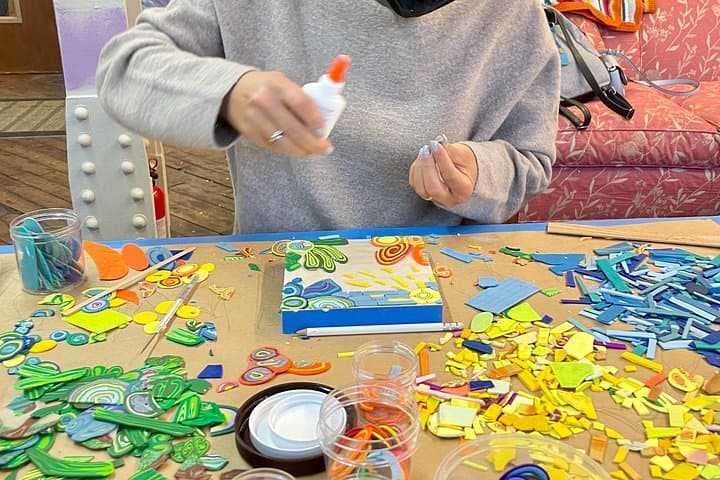


The studio door opens onto a corridor of concrete and light; tiles glint like tiny street signs and the hum of conversation follows the rhythm of hands cutting and placing pieces. In SoWa’s artist district, the workshop places you at a work table under industrial windows where polymer clay tiles—bright, matte, and perfectly tuned—wait like a painter’s palette.
The studio door opens onto a corridor of concrete and light; tiles glint like tiny street signs and the hum of conversation follows the rhythm of hands cutting and placing pieces. In SoWa’s artist district, the workshop places you at a work table under industrial windows where polymer clay tiles—bright, matte, and perfectly tuned—wait like a painter’s palette.
SoWa (short for South of Washington) grew from 19th-century brick warehouses into a creative district after artists began converting industrial spaces in the late 20th century. The neighborhood’s working-studio culture and the weekly open market bring food trucks, craft stalls, and gallery nights, anchoring the class in a living arts community rather than a sterile classroom.
The process taught here is straightforward: design, tile selection, adhesive placement, and finishing. Expect hands-on guidance from a professional mosaic artist and the chance to learn basic design principles—line, color balance, grout choices—that make small pieces read as a cohesive image. The studio emphasizes clean, reproducible techniques so beginners leave with a finished panel or wall-hung piece.
Practicalities are simple: classes run about two hours, materials are supplied, and the space is wheelchair accessible. Wear clothes you don’t mind getting speckled with grout, bring a tote for your finished piece, and allow extra time on Sundays to explore the open market. For travelers staying in Back Bay or the South End, public transit and short walks make the studio an easy half-day creative detour.