THE ADVENTURE COLLECTIVE® · Independent discovery and booking for outdoor travel

Skip tourist bottlenecks and walk Hangzhou like a local: alleyway artisans, a classical TCM museum with herbal tea, a gentle Wu Shan climb with skyline views, and the raw energy of Da Ma Long market. Practical route details and what to expect on this 4–6 hour private mini-hike.
Skip tourist bottlenecks and walk Hangzhou like a local: alleyway artisans, a classical TCM museum with herbal tea, a gentle Wu Shan climb with skyline views, and the raw energy of Da Ma Long market. Practical route details and what to expect on this 4–6 hour private mini-hike.
Morning light slices between narrow alley eaves as you step into Da Jing Xiang, the restored artisan lanes at the foot of Wu Shan. The city smells of frying dough and herbal tea; craft shops hum, and the humbler rhythm of local life threads through the route. From courtyard doorways you climb old stone steps, move past incense-laced temple thresholds, and crest a small, wooded ridge that throws open a wide view of West Lake and the glass edges of downtown.
Verified experiences and guided adventures in the surrounding area.
Operated by Curated tours of sensibility · Hangzhou, Zhejiang
Morning light slices between narrow alley eaves as you step into Da Jing Xiang, the restored artisan lanes at the foot of Wu Shan. The city smells of frying dough and herbal tea; craft shops hum, and the humbler rhythm of local life threads through the route. From courtyard doorways you climb old stone steps, move past incense-laced temple thresholds, and crest a small, wooded ridge that throws open a wide view of West Lake and the glass edges of downtown.
This walk combines cultural history and short mountain terrain. Wu Shan’s trails were used for centuries by pilgrims and officials; the area accumulates Song- and Ming-era stories, while the Hu Qing Yu Tang apothecary — housed in a classical mansion — traces commercial medicine traditions that shaped Hangzhou’s urban identity. Geologically the hill is a low-rise outcrop of weathered sandstone and limestone, with zodiac-shaped rocks and a few carved niches revealed on rainy days.
Expect about 4 km of walking during the hike portion, roughly 150 m of cumulative ascent on paved and packed-stone steps, and intermittent steep stair pitches. The itinerary finishes at Da Ma Long open-air market, a compact, lively wet market that offers direct contact with daily life: fresh produce, street snacks, and bargaining locals.
Practical edge: plan for 4–6 hours total, wear grippy walking shoes for wet stone steps, carry water and small bills for market purchases, and allow time for the museum’s herbal-tea tasting. Visit in morning or late afternoon to avoid midday heat and to catch the best light from the hilltop pavilion.
The hike is gentle to moderate: expect 90–120 minutes with paved or stone stair sections and about 150 m of cumulative elevation—suitable for most active walkers.
Yes; the tour includes entry to the Traditional Chinese Medicine museum and a complimentary herbal tea tasting.
This is an English-speaking private tour with a local guide who provides cultural context and translation during site visits.
Children who can manage stairs will generally be fine; the route has uneven steps and short climbs, so it’s not recommended for travelers with serious mobility limitations.
Curated tours of sensibility operates guided outdoor trips and adventures with an emphasis on safety, stewardship, and memorable experiences.

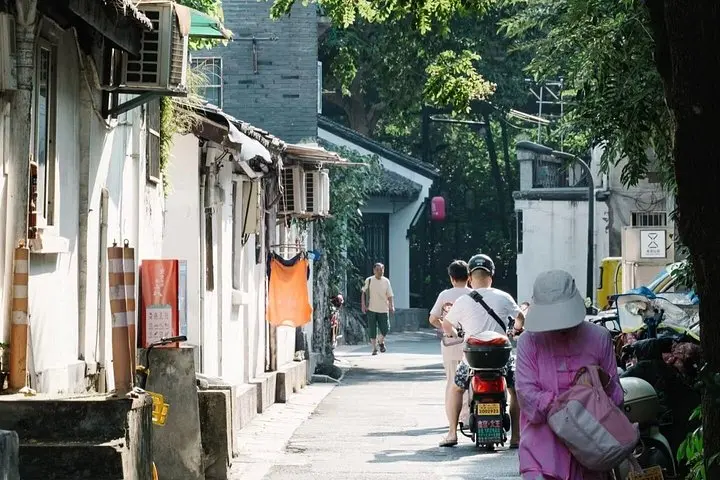
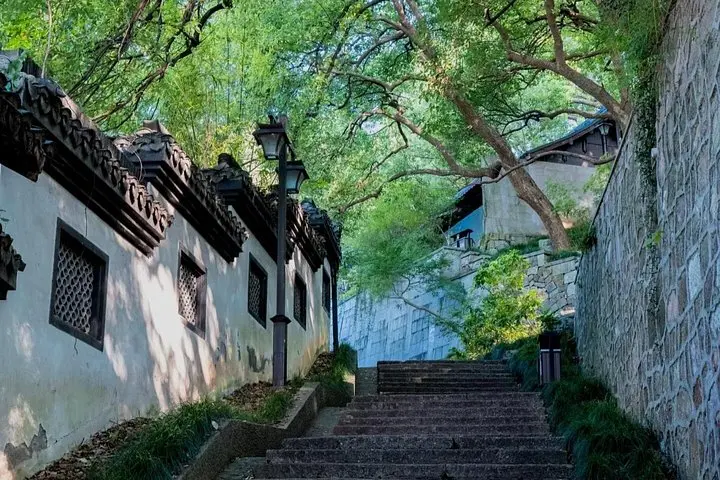

Morning light slices between narrow alley eaves as you step into Da Jing Xiang, the restored artisan lanes at the foot of Wu Shan. The city smells of frying dough and herbal tea; craft shops hum, and the humbler rhythm of local life threads through the route. From courtyard doorways you climb old stone steps, move past incense-laced temple thresholds, and crest a small, wooded ridge that throws open a wide view of West Lake and the glass edges of downtown.
Morning light slices between narrow alley eaves as you step into Da Jing Xiang, the restored artisan lanes at the foot of Wu Shan. The city smells of frying dough and herbal tea; craft shops hum, and the humbler rhythm of local life threads through the route. From courtyard doorways you climb old stone steps, move past incense-laced temple thresholds, and crest a small, wooded ridge that throws open a wide view of West Lake and the glass edges of downtown.
This walk combines cultural history and short mountain terrain. Wu Shan’s trails were used for centuries by pilgrims and officials; the area accumulates Song- and Ming-era stories, while the Hu Qing Yu Tang apothecary — housed in a classical mansion — traces commercial medicine traditions that shaped Hangzhou’s urban identity. Geologically the hill is a low-rise outcrop of weathered sandstone and limestone, with zodiac-shaped rocks and a few carved niches revealed on rainy days.
Expect about 4 km of walking during the hike portion, roughly 150 m of cumulative ascent on paved and packed-stone steps, and intermittent steep stair pitches. The itinerary finishes at Da Ma Long open-air market, a compact, lively wet market that offers direct contact with daily life: fresh produce, street snacks, and bargaining locals.
Practical edge: plan for 4–6 hours total, wear grippy walking shoes for wet stone steps, carry water and small bills for market purchases, and allow time for the museum’s herbal-tea tasting. Visit in morning or late afternoon to avoid midday heat and to catch the best light from the hilltop pavilion.