THE ADVENTURE COLLECTIVE® · Independent discovery and booking for outdoor travel

Leave Hanoi’s traffic behind for a day among artisans: ride quiet lanes past incense yards, watch conical hats take shape, and cycle the centuries-old alleys of Duong Lam Ancient Village. This private tour blends hands-on craft demonstrations with easy cycling and a local lunch.
Leave Hanoi’s traffic behind for a day among artisans: ride quiet lanes past incense yards, watch conical hats take shape, and cycle the centuries-old alleys of Duong Lam Ancient Village. This private tour blends hands-on craft demonstrations with easy cycling and a local lunch.
The minivan slips out of Hanoi before sunrise and the city’s noise thins into long ribboned fields. Rice paddies mirror a pale sky while the guide sketches the day ahead: a loop through Chuong’s hat workshops, Quang Phu Cau’s incense yards, and the weathered lanes of Duong Lam Ancient Village. By the time the first village gate appears, you are already away from the blink-and-you-miss-it frenzy of the capital and into a quieter rhythm governed by craft and tradition.
Verified experiences and guided adventures in the surrounding area.
Operated by Authentic SAPA · Duong Lam (Son Tay), Hanoi
The minivan slips out of Hanoi before sunrise and the city’s noise thins into long ribboned fields. Rice paddies mirror a pale sky while the guide sketches the day ahead: a loop through Chuong’s hat workshops, Quang Phu Cau’s incense yards, and the weathered lanes of Duong Lam Ancient Village. By the time the first village gate appears, you are already away from the blink-and-you-miss-it frenzy of the capital and into a quieter rhythm governed by craft and tradition.
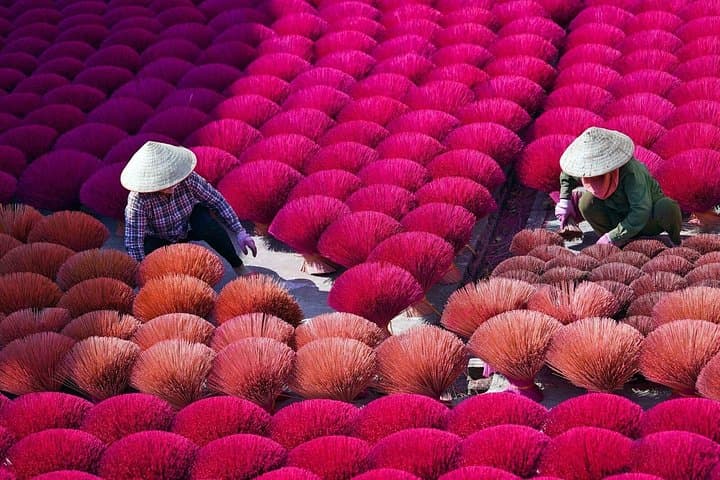
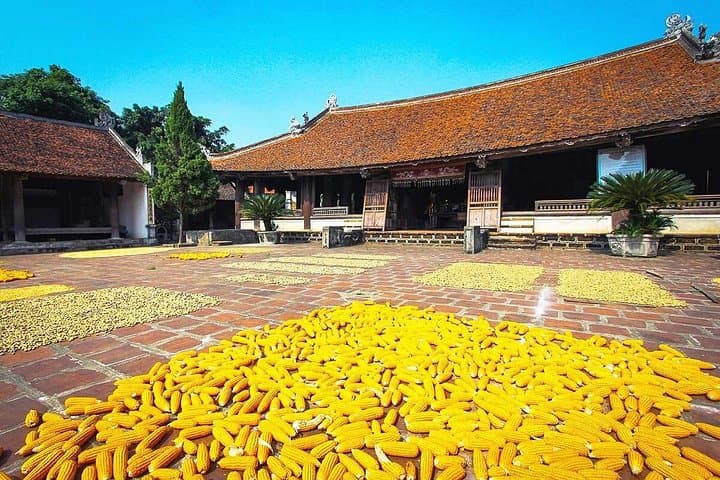
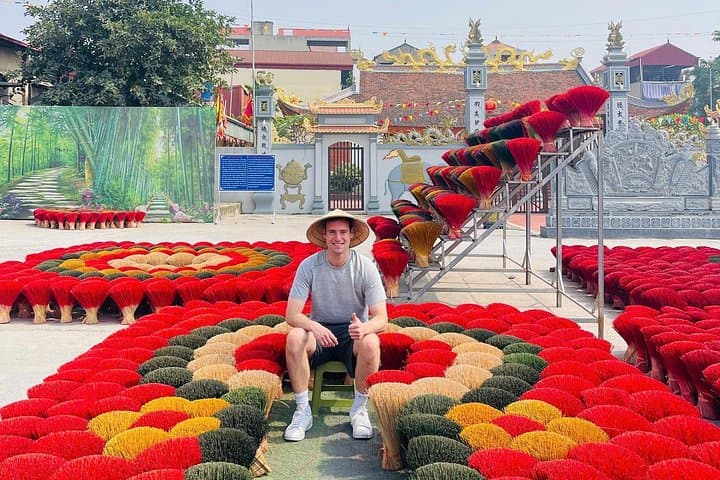
Duong Lam reads like a living archive. Houses with heavy wooden doors and moss-dark bricks date back centuries; local genealogies claim the settlement’s origins extend more than a millennium. The landscape here is part of the Red River Delta — flat, alluvial, and extraordinarily fertile — which explains why communities could establish permanent craft traditions and continuous habitation. Quang Phu Cau, by contrast, tells the story of a specialized economy: incense-making that intensified during the French colonial era and remains family-led, with long drying yards and aromatic plumes that seem to dare you to get closer.
Chuong Village’s conical-cap makers practice a deceptively precise craft. Watching the Non La being formed — thinned bamboo ribs, layers of palm leaves, a final lacquered stitch — is watching a cultural economy in motion. Your guide explains symbolism and social context: the hat is not merely shade but a carrier of identity and provincial pride.
Practicalities shape a good day here. The tour is about ten hours door‑to‑door from Hanoi and includes hotel pickup, a local lunch in Duong Lam, entrance fees, and two bottles of water. Expect light cycling on quiet country roads (the operator supplies bikes) and plenty of stops for demonstrations and short village walks. Distances are short — village circuits of a few kilometers each — but surfaces vary: paved lanes, packed-earth alleys and occasional raised footpaths.
Timing and preparation matter: start early to avoid midday heat in summer, bring modest clothing for temple visits, and carry small change for purchases at workshops. Photography rewards patience — candid portraits of artisans, incense bouquets drying in the sun, and the silhouette of a Non La against a blue field.
For travelers seeking an immersive half-day beyond Hanoi’s tourist loop, this private tour balances cultural depth with manageable pace. You leave with more than photos: a felt sense of how durable crafts survive by adapting to modern visitors, and an afternoon of quiet roads that reframe how Hanoi’s hinterland holds on to its past.
The tour is approximately 10 hours door-to-door from Hanoi and includes hotel pickup/drop-off, entrance fees, biking, lunch, two bottles of water and an English-speaking guide.
Cycling is easy and on flat rural roads; bikes are included and guides can suggest alternatives if you prefer to walk or take the transfer vehicle between sites.
Yes — vegetarian, vegan and gluten-free options can be arranged if you note requirements at booking.
Bring small bills in local currency (VND) for souvenirs; some workshops accept cards but cash is standard in villages.
Yes — the villages and craft demonstrations operate year-round, though schedules may vary with local festivals or holidays.
Yes — the pace is relaxed, sites are accessible and vehicles handle longer transfers; let the operator know if mobility assistance is needed.
Authentic SAPA operates guided outdoor trips and adventures with an emphasis on safety, stewardship, and memorable experiences.
The minivan slips out of Hanoi before sunrise and the city’s noise thins into long ribboned fields. Rice paddies mirror a pale sky while the guide sketches the day ahead: a loop through Chuong’s hat workshops, Quang Phu Cau’s incense yards, and the weathered lanes of Duong Lam Ancient Village. By the time the first village gate appears, you are already away from the blink-and-you-miss-it frenzy of the capital and into a quieter rhythm governed by craft and tradition.
The minivan slips out of Hanoi before sunrise and the city’s noise thins into long ribboned fields. Rice paddies mirror a pale sky while the guide sketches the day ahead: a loop through Chuong’s hat workshops, Quang Phu Cau’s incense yards, and the weathered lanes of Duong Lam Ancient Village. By the time the first village gate appears, you are already away from the blink-and-you-miss-it frenzy of the capital and into a quieter rhythm governed by craft and tradition.
Duong Lam reads like a living archive. Houses with heavy wooden doors and moss-dark bricks date back centuries; local genealogies claim the settlement’s origins extend more than a millennium. The landscape here is part of the Red River Delta — flat, alluvial, and extraordinarily fertile — which explains why communities could establish permanent craft traditions and continuous habitation. Quang Phu Cau, by contrast, tells the story of a specialized economy: incense-making that intensified during the French colonial era and remains family-led, with long drying yards and aromatic plumes that seem to dare you to get closer.
Chuong Village’s conical-cap makers practice a deceptively precise craft. Watching the Non La being formed — thinned bamboo ribs, layers of palm leaves, a final lacquered stitch — is watching a cultural economy in motion. Your guide explains symbolism and social context: the hat is not merely shade but a carrier of identity and provincial pride.
Practicalities shape a good day here. The tour is about ten hours door‑to‑door from Hanoi and includes hotel pickup, a local lunch in Duong Lam, entrance fees, and two bottles of water. Expect light cycling on quiet country roads (the operator supplies bikes) and plenty of stops for demonstrations and short village walks. Distances are short — village circuits of a few kilometers each — but surfaces vary: paved lanes, packed-earth alleys and occasional raised footpaths.
Timing and preparation matter: start early to avoid midday heat in summer, bring modest clothing for temple visits, and carry small change for purchases at workshops. Photography rewards patience — candid portraits of artisans, incense bouquets drying in the sun, and the silhouette of a Non La against a blue field.
For travelers seeking an immersive half-day beyond Hanoi’s tourist loop, this private tour balances cultural depth with manageable pace. You leave with more than photos: a felt sense of how durable crafts survive by adapting to modern visitors, and an afternoon of quiet roads that reframe how Hanoi’s hinterland holds on to its past.