THE ADVENTURE COLLECTIVE® · Independent discovery and booking for outdoor travel

A six-day private cycling loop from Hanoi to Ha Giang winds through the Dong Van Karst Plateau—steep climbs, remote hill-tribe markets and the dramatic Ma Pi Leng Pass. Expect long days in the saddle, changing mountain weather and unforgettable viewpoints.
A six-day private cycling loop from Hanoi to Ha Giang winds through the Dong Van Karst Plateau—steep climbs, remote hill-tribe markets and the dramatic Ma Pi Leng Pass. Expect long days in the saddle, changing mountain weather and unforgettable viewpoints.
You roll out of Hanoi before dawn, the city noise shrinking behind the shuttle as rice paddies and low hills take over.
Verified experiences and guided adventures in the surrounding area.
Operated by Indochina Holiday Travel · Ha Giang, Ha Giang Province
You roll out of Hanoi before dawn, the city noise shrinking behind the shuttle as rice paddies and low hills take over.
By day two the road climbs into limestone teeth and granite shoulders; the air thins, clouds hang on ridgelines and local villages appear like stacked wooden toys. The Dong Van Karst Plateau—a UNESCO geopark—dominates the route: sheer karst walls, terraced fields clinging to slopes, and the dramatic sweep of the Ma Pi Leng ridge above the Nho Que River daring you to look down.
This region has long been a borderland of ethnic minority groups—Hmong, Tay, Lo Lo—whose markets, palaces (notably the Vuong Hmong King Palace) and flag towers at Lung Cu reveal local culture and remote history. Geologically, the karst landscape is ancient limestone sculpted by millennia of erosion, producing deep valleys, pinnacles and panoramic passes.
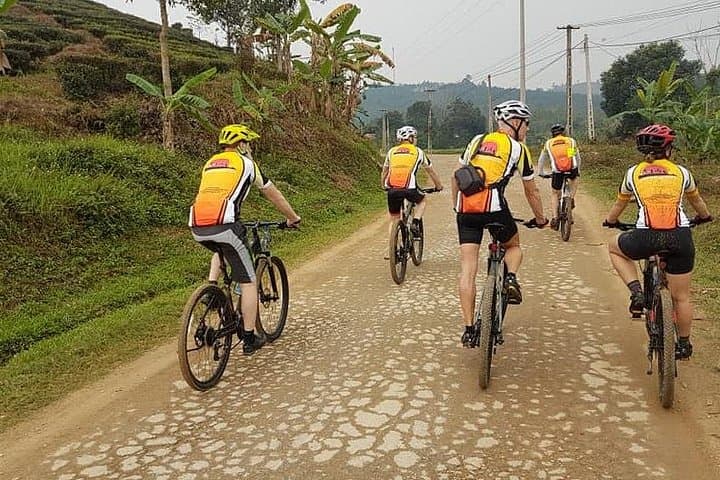
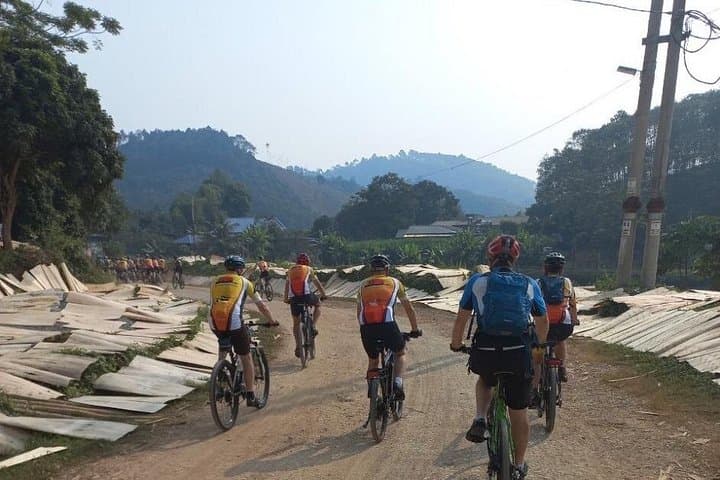
Practically: the itinerary covers roughly 470–490 km of cycling over six days with daily rides from about 42 to 95 km and multiple climbs—some ascents reach ~800 m—on a mix of tarmac and quieter back roads. Support transport and a truck for bikes are included, as are meals and basic hotel or homestay lodging.
Expect variable mountain weather: hot lowlands, cold mornings, and afternoon showers in summer. Bring layered clothing, reliable gloves, and a basic toolkit for on-road repairs despite supplied spare parts. Ride conservatively on steep descents and allow extra time for village stops and photography: the route rewards patience as much as power.
Daily distances range from about 42 to 95 km with multiple sustained climbs; the route suits fit cyclists comfortable with long days and regular elevation gain.
Yes—an A/C minivan and truck for bikes provide support and transfers between some sections; guides also carry tools and spare parts.
Nights alternate between local hotels and homestays or bungalows—expect basic but comfortable lodging with shared facilities in rural areas.
The trip includes permission for a border tour and entrance fees where required; bring passport details as requested at booking.
Indochina Holiday Travel operates guided outdoor trips and adventures with an emphasis on safety, stewardship, and memorable experiences.


You roll out of Hanoi before dawn, the city noise shrinking behind the shuttle as rice paddies and low hills take over.
You roll out of Hanoi before dawn, the city noise shrinking behind the shuttle as rice paddies and low hills take over.
By day two the road climbs into limestone teeth and granite shoulders; the air thins, clouds hang on ridgelines and local villages appear like stacked wooden toys. The Dong Van Karst Plateau—a UNESCO geopark—dominates the route: sheer karst walls, terraced fields clinging to slopes, and the dramatic sweep of the Ma Pi Leng ridge above the Nho Que River daring you to look down.
This region has long been a borderland of ethnic minority groups—Hmong, Tay, Lo Lo—whose markets, palaces (notably the Vuong Hmong King Palace) and flag towers at Lung Cu reveal local culture and remote history. Geologically, the karst landscape is ancient limestone sculpted by millennia of erosion, producing deep valleys, pinnacles and panoramic passes.
Practically: the itinerary covers roughly 470–490 km of cycling over six days with daily rides from about 42 to 95 km and multiple climbs—some ascents reach ~800 m—on a mix of tarmac and quieter back roads. Support transport and a truck for bikes are included, as are meals and basic hotel or homestay lodging.
Expect variable mountain weather: hot lowlands, cold mornings, and afternoon showers in summer. Bring layered clothing, reliable gloves, and a basic toolkit for on-road repairs despite supplied spare parts. Ride conservatively on steep descents and allow extra time for village stops and photography: the route rewards patience as much as power.