THE ADVENTURE COLLECTIVE® · Independent discovery and booking for outdoor travel

Swap Hanoi’s bustle for slow valley life on a 2-day escape to Mai Chau. Cycle quiet lanes, sleep in a traditional stilt house and learn local crafts—this short trip pairs active exploration with authentic homestay hospitality.
Swap Hanoi’s bustle for slow valley life on a 2-day escape to Mai Chau. Cycle quiet lanes, sleep in a traditional stilt house and learn local crafts—this short trip pairs active exploration with authentic homestay hospitality.
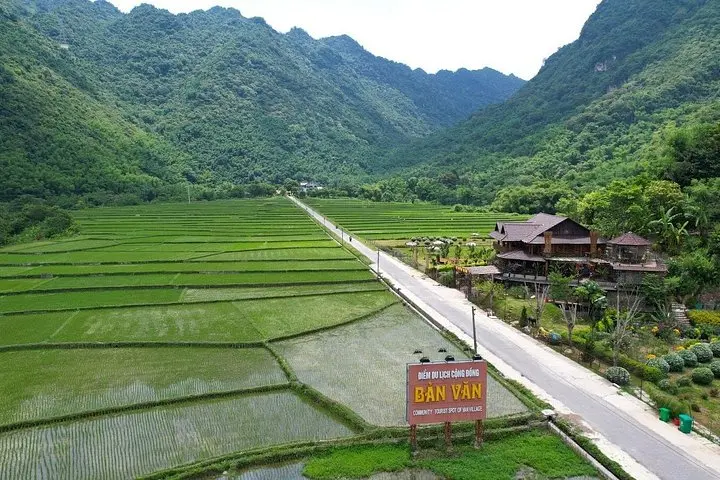
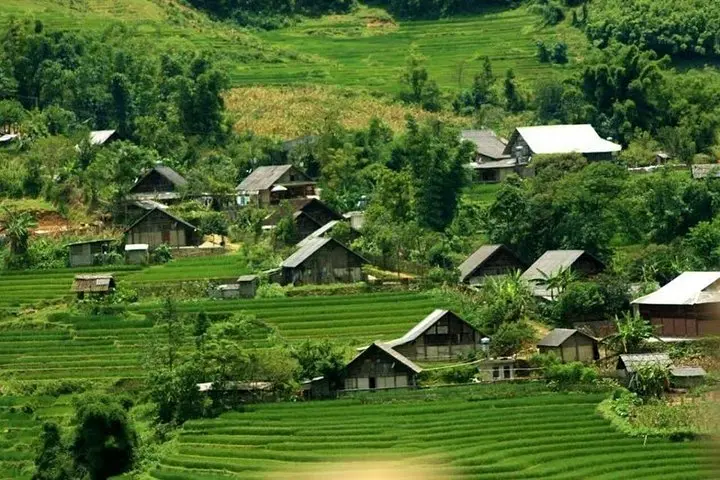
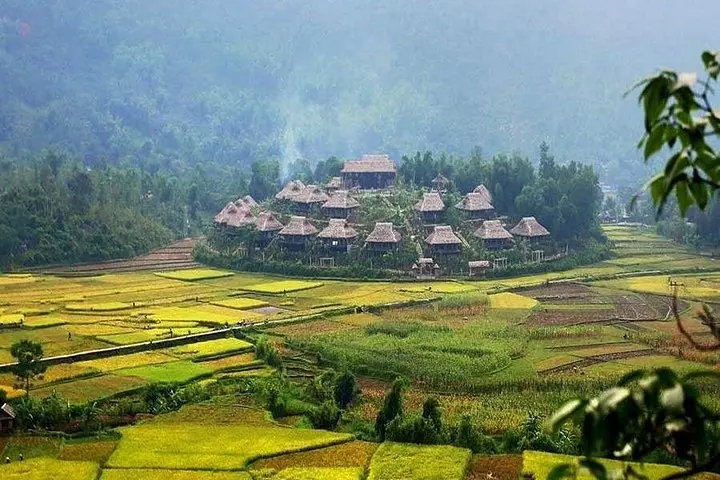
You leave Hanoi before dawn and the city peels away: scooters, shopfronts and the Old Quarter’s limestone facades giving way to ribbon highways, green paddies and a sky that suddenly feels wide. By mid-morning the van crests Thung Khe Pass — a high, wind-pressed curve in the Hoang Lien Son range where limestone cliffs lean over the road — and the valley opens beneath you like a map folding itself out. Mai Chau breathes slowly: stilt houses cluster by rivers, women weave at doorways, and terraces run down the hillsides in neat, graded steps.
Verified experiences and guided adventures in the surrounding area.
Operated by Charm Tourist · Mai Chau, Hoa Binh Province
You leave Hanoi before dawn and the city peels away: scooters, shopfronts and the Old Quarter’s limestone facades giving way to ribbon highways, green paddies and a sky that suddenly feels wide. By mid-morning the van crests Thung Khe Pass — a high, wind-pressed curve in the Hoang Lien Son range where limestone cliffs lean over the road — and the valley opens beneath you like a map folding itself out. Mai Chau breathes slowly: stilt houses cluster by rivers, women weave at doorways, and terraces run down the hillsides in neat, graded steps.
Mai Chau’s western valleys sit where uplifted limestone meets alluvial plain. The karst ridges you glimpse from Thung Khe are millions of years old; their fluted slopes direct rain into a complex of streams that the Thai ethnic communities have shaped into rice paddies for generations. The area’s history is lived rather than parked in museums — songs, weaving techniques and stilt-house architecture are active continuities.
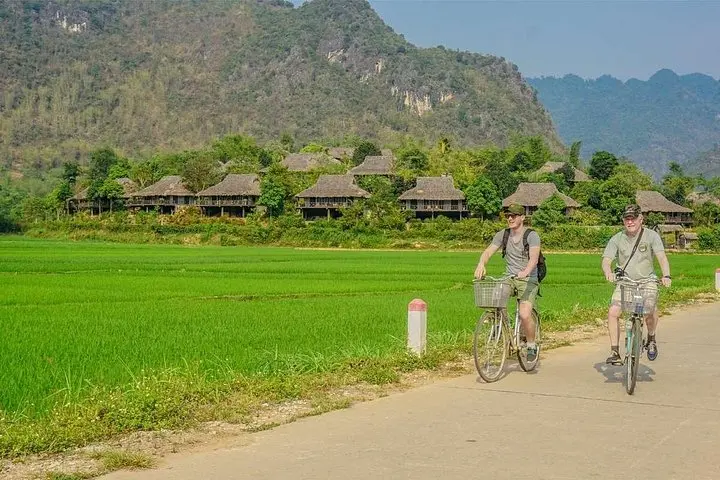
Over two days you get both a cultural primer and a gentle workout. Afternoon cycling routes follow low-traffic lanes between villages, crossing shallow streams and fields where farmers work with buffalo and hand tools. On the first night you sleep in a private bungalow or a family stilt house: meals are home-cooked, seasonal and anchored by sticky rice and mountain herbs. Expect an evening of Thai traditional dance and the local ruou can (rice wine) when groups are large enough — a straightforward, convivial exchange rather than a staged show.
Practicalities: the journey from Hanoi is about 3.5–4 hours (roughly 160 km each way), depending on traffic. Guided cycling loops on day one are mellow — plan on roughly 8–12 km of easy rolling terrain with minimal elevation gain; day two includes a short 2 km warm-up pedal and a 4–6 km hike past rice terraces and remote hamlets. Trails are mostly dirt lanes and compacted paths; slick sections appear after heavy rain.
Pack for comfort and respect: sturdy shoes for terrace walks, a light rain layer during monsoon months, and enough cash for small souvenirs. Hydrate on the road and keep sunscreen handy; the valley sits lower than the surrounding passes and the sun can feel strong mid-day.
Who this is for: travelers wanting a digestible cultural immersion with active time in nature, not a technical trek. The itinerary is friendly to mixed fitness levels but rewards basic cycling confidence and curiosity. Leave the city noise behind — Mai Chau’s fields will insist you slow down.
Expect about 3.5–4 hours each way (approximately 160 km), depending on Old Quarter traffic and road conditions.
Yes—routes are gentle village lanes with minimal technical sections; basic cycling confidence is recommended.
Overnight options include private bungalows or traditional stilt-house homestays with shared facilities—meals are typically family-style and included.
All meals on the itinerary are included and vegetarian options are available; communicate allergies or strict dietary needs when booking.
Yes—guided village visits, weaving demonstrations and evening cultural performances offer respectful, small-group interactions with Thai ethnic communities.
Pack layered clothing, sturdy shoes, a rain jacket in wet season, sunscreen, insect repellent, and cash in small denominations.
Charm Tourist operates guided outdoor trips and adventures with an emphasis on safety, stewardship, and memorable experiences.
You leave Hanoi before dawn and the city peels away: scooters, shopfronts and the Old Quarter’s limestone facades giving way to ribbon highways, green paddies and a sky that suddenly feels wide. By mid-morning the van crests Thung Khe Pass — a high, wind-pressed curve in the Hoang Lien Son range where limestone cliffs lean over the road — and the valley opens beneath you like a map folding itself out. Mai Chau breathes slowly: stilt houses cluster by rivers, women weave at doorways, and terraces run down the hillsides in neat, graded steps.
You leave Hanoi before dawn and the city peels away: scooters, shopfronts and the Old Quarter’s limestone facades giving way to ribbon highways, green paddies and a sky that suddenly feels wide. By mid-morning the van crests Thung Khe Pass — a high, wind-pressed curve in the Hoang Lien Son range where limestone cliffs lean over the road — and the valley opens beneath you like a map folding itself out. Mai Chau breathes slowly: stilt houses cluster by rivers, women weave at doorways, and terraces run down the hillsides in neat, graded steps.
Mai Chau’s western valleys sit where uplifted limestone meets alluvial plain. The karst ridges you glimpse from Thung Khe are millions of years old; their fluted slopes direct rain into a complex of streams that the Thai ethnic communities have shaped into rice paddies for generations. The area’s history is lived rather than parked in museums — songs, weaving techniques and stilt-house architecture are active continuities.
Over two days you get both a cultural primer and a gentle workout. Afternoon cycling routes follow low-traffic lanes between villages, crossing shallow streams and fields where farmers work with buffalo and hand tools. On the first night you sleep in a private bungalow or a family stilt house: meals are home-cooked, seasonal and anchored by sticky rice and mountain herbs. Expect an evening of Thai traditional dance and the local ruou can (rice wine) when groups are large enough — a straightforward, convivial exchange rather than a staged show.
Practicalities: the journey from Hanoi is about 3.5–4 hours (roughly 160 km each way), depending on traffic. Guided cycling loops on day one are mellow — plan on roughly 8–12 km of easy rolling terrain with minimal elevation gain; day two includes a short 2 km warm-up pedal and a 4–6 km hike past rice terraces and remote hamlets. Trails are mostly dirt lanes and compacted paths; slick sections appear after heavy rain.
Pack for comfort and respect: sturdy shoes for terrace walks, a light rain layer during monsoon months, and enough cash for small souvenirs. Hydrate on the road and keep sunscreen handy; the valley sits lower than the surrounding passes and the sun can feel strong mid-day.
Who this is for: travelers wanting a digestible cultural immersion with active time in nature, not a technical trek. The itinerary is friendly to mixed fitness levels but rewards basic cycling confidence and curiosity. Leave the city noise behind — Mai Chau’s fields will insist you slow down.