THE ADVENTURE COLLECTIVE® · Independent discovery and booking for outdoor travel

Experience Harbin’s luminous ice palaces after dark — book mobile QR tickets in advance, dress for Arctic temperatures, and plan 2–6 hours to soak up sculptural detail and the nightly light show.
Experience Harbin’s luminous ice palaces after dark — book mobile QR tickets in advance, dress for Arctic temperatures, and plan 2–6 hours to soak up sculptural detail and the nightly light show.
A low winter sun slides behind the skyline and the ice wakes up — multicolored LEDs pick out carved turrets, arched bridges and cathedral-like facades hewn from river ice. At Harbin Ice and Snow World the cold is part of the architecture: breath fogs, boots crunch on compacted snow, and the sculptures glow as night deepens.
Verified experiences and guided adventures in the surrounding area.
Operated by Travel China Guide · Harbin, Heilongjiang
A low winter sun slides behind the skyline and the ice wakes up — multicolored LEDs pick out carved turrets, arched bridges and cathedral-like facades hewn from river ice. At Harbin Ice and Snow World the cold is part of the architecture: breath fogs, boots crunch on compacted snow, and the sculptures glow as night deepens.
The city’s winter spectacle grew from Harbin’s long history as a northeastern hub where Russian architectural influence and cold-climate craft met local festivity. The festival leverages Songhua River’s reliable freeze and regional winter temperatures to produce structures that can stand for weeks; each year’s designs riff on world landmarks, folk motifs and modern art. Culturally, the event is both a showpiece and a communal winter ritual — locals and visitors queue for ice slides, skating rinks and horse-drawn sleighs through lit corridors.
Practically, plan for 2–6 hours on site: daytime lets you study detail and try the slides; nighttime delivers the full light show. Tickets are mobile QR-code based — ensure you have the issued QR ready on arrival. Expect flat walking surfaces with some icy patches; complimentary cotton-padded clothes and shoes are sometimes provided in specific halls, but bring your own insulated layers and waterproof boots for comfort. Public transit reaches the venue, and last entry is typically around 20:30, with closing near 21:00.
Respect barriers around sculptures, avoid touching delicate carvings, and charge batteries for your camera: the best frames come after dark when the ice seems to be lit from inside.
You will receive a mobile QR code after booking — present that QR at the entrance; screenshots are recommended in case of limited cell service.
Yes — the attraction is family-friendly with gentle paths and activities, though watch children around sculptures and icy areas.
Some indoor exhibit halls may offer complimentary cotton-padded clothes/shoes, but it’s best to bring your own warm layers and waterproof boots.
Typical hours run 10:00–21:00 with last entry around 20:30; seasonal schedules can change so check confirmation details before arrival.
Travel China Guide operates guided outdoor trips and adventures with an emphasis on safety, stewardship, and memorable experiences.
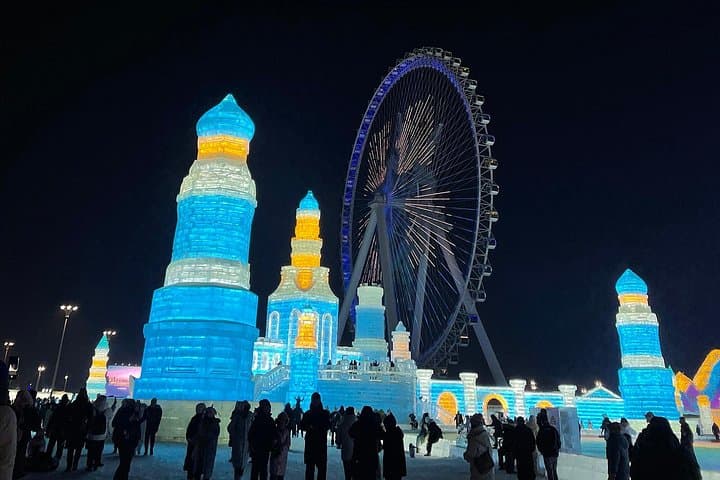
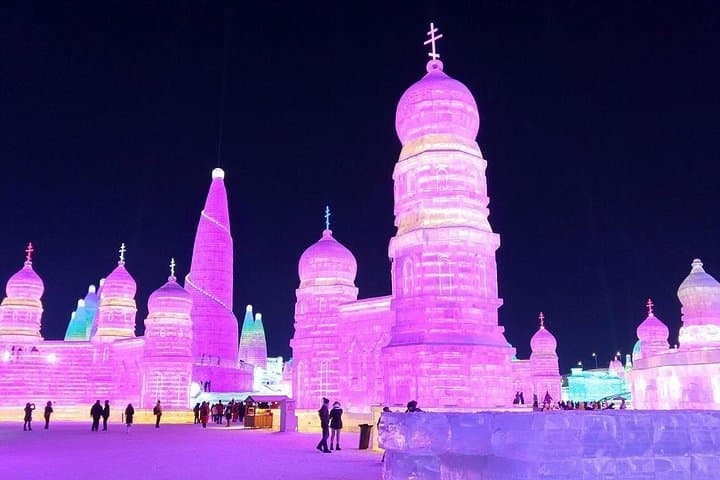
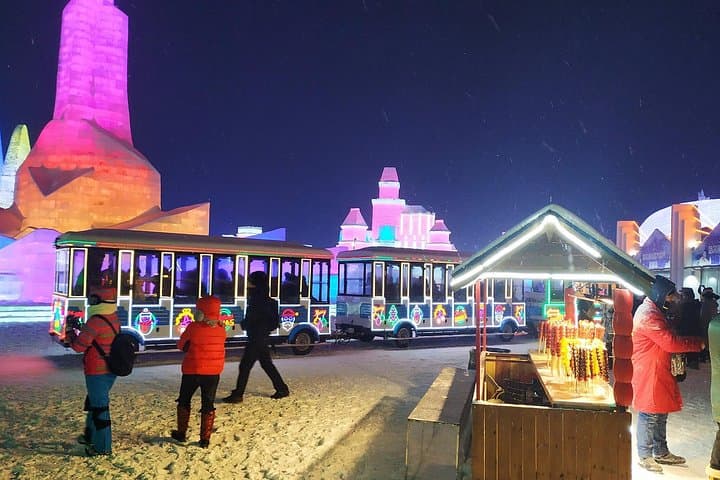
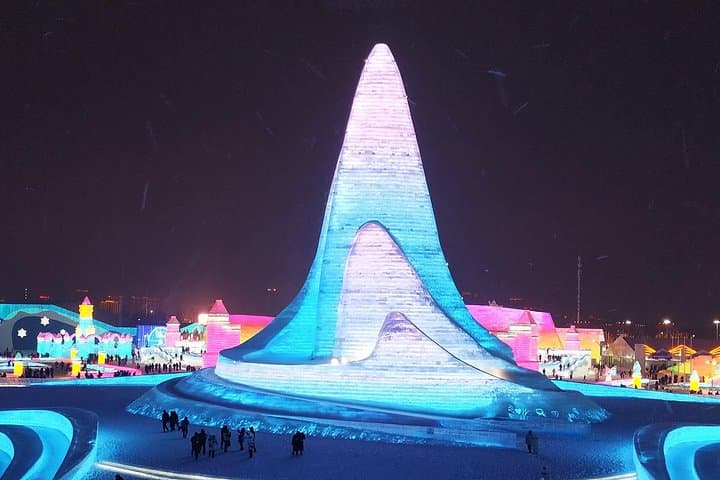
A low winter sun slides behind the skyline and the ice wakes up — multicolored LEDs pick out carved turrets, arched bridges and cathedral-like facades hewn from river ice. At Harbin Ice and Snow World the cold is part of the architecture: breath fogs, boots crunch on compacted snow, and the sculptures glow as night deepens.
A low winter sun slides behind the skyline and the ice wakes up — multicolored LEDs pick out carved turrets, arched bridges and cathedral-like facades hewn from river ice. At Harbin Ice and Snow World the cold is part of the architecture: breath fogs, boots crunch on compacted snow, and the sculptures glow as night deepens.
The city’s winter spectacle grew from Harbin’s long history as a northeastern hub where Russian architectural influence and cold-climate craft met local festivity. The festival leverages Songhua River’s reliable freeze and regional winter temperatures to produce structures that can stand for weeks; each year’s designs riff on world landmarks, folk motifs and modern art. Culturally, the event is both a showpiece and a communal winter ritual — locals and visitors queue for ice slides, skating rinks and horse-drawn sleighs through lit corridors.
Practically, plan for 2–6 hours on site: daytime lets you study detail and try the slides; nighttime delivers the full light show. Tickets are mobile QR-code based — ensure you have the issued QR ready on arrival. Expect flat walking surfaces with some icy patches; complimentary cotton-padded clothes and shoes are sometimes provided in specific halls, but bring your own insulated layers and waterproof boots for comfort. Public transit reaches the venue, and last entry is typically around 20:30, with closing near 21:00.
Respect barriers around sculptures, avoid touching delicate carvings, and charge batteries for your camera: the best frames come after dark when the ice seems to be lit from inside.