THE ADVENTURE COLLECTIVE® · Independent discovery and booking for outdoor travel

Board a reinforced sightseeing bus for a close, controlled encounter with Amur (Siberian) tigers near Harbin. This guided, roughly 4-hour experience blends habitat viewing with conservation context—ideal for photographers and wildlife enthusiasts.
Board a reinforced sightseeing bus for a close, controlled encounter with Amur (Siberian) tigers near Harbin. This guided, roughly 4-hour experience blends habitat viewing with conservation context—ideal for photographers and wildlife enthusiasts.
You climb into a reinforced sightseeing bus as a strip of winter-bent forest slides past; the engine hums and a local guide points ahead where a massive orange shape pads along the treeline. Up close, the tigers move with deliberate force—their tails flicking like metronomes—sometimes stopping to stare back as the vehicle’s windows frame the moment.
Verified experiences and guided adventures in the surrounding area.
Operated by zowoyoo · Harbin, Heilongjiang
You climb into a reinforced sightseeing bus as a strip of winter-bent forest slides past; the engine hums and a local guide points ahead where a massive orange shape pads along the treeline. Up close, the tigers move with deliberate force—their tails flicking like metronomes—sometimes stopping to stare back as the vehicle’s windows frame the moment.
The park outside Harbin was established to protect and breed Amur (Siberian) tigers and presents them in large enclosures designed to mimic boreal mixed-forest terrain. The landscape here is flat to gently rolling, with planted stands of larch and birch and muddy river channels that can become silent mirrors in winter. The site’s story is part conservation program, part visitor-facing wildlife park: you’ll see keepers at work, feeding rotations, and informational displays about the subspecies’ decline across northeast Asia.
Expect a guided, 4-hour visit that combines walking areas and a guided bus loop through habitat enclosures. The ride lets you observe behaviors—resting, pacing, play-fighting—and offers photo opportunities at safe distance. Cultural context matters: Harbin’s winters shape the animals’ calendars and the visitor experience; local guides often include notes on regional rewilding efforts and the park’s role in research.
Practicalities: bring layered clothing (Harbin weather swings), a telephoto lens or long zoom, and arrive early to avoid midday crowds. Respect barrier rules, follow guide instructions, and limit flash photography. The adventure is part education, part adrenaline—an accessible way to see Imposing predators behave like living history.
The typical experience lasts about four hours and includes access to walking areas plus the guided sightseeing bus loop through the enclosures.
Yes; infants must sit on laps and all children should remain under adult supervision—follow staff guidance for safety.
Photography is allowed but flash or attempts to feed/attract animals are prohibited; use long lenses to keep distance and respect rules.
The activity is low-physical-demand but not recommended for those with serious heart conditions or pregnant travelers, per operator guidance.
zowoyoo operates guided outdoor trips and adventures with an emphasis on safety, stewardship, and memorable experiences.
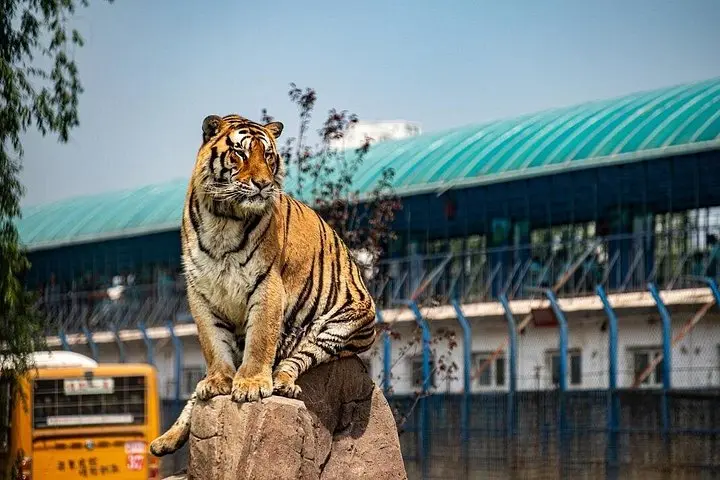
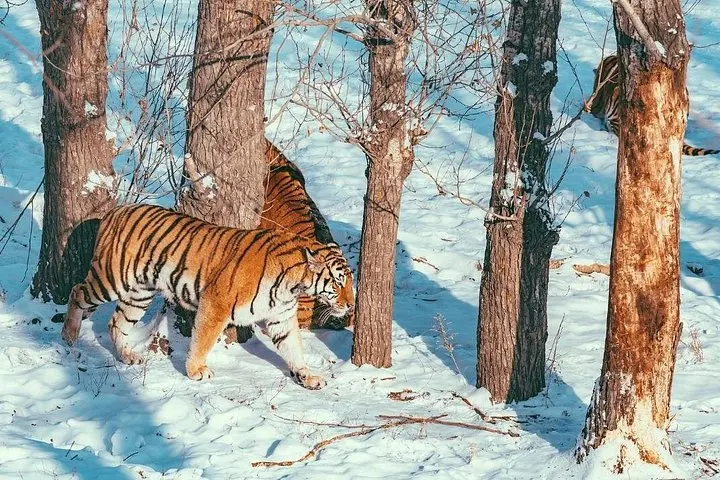
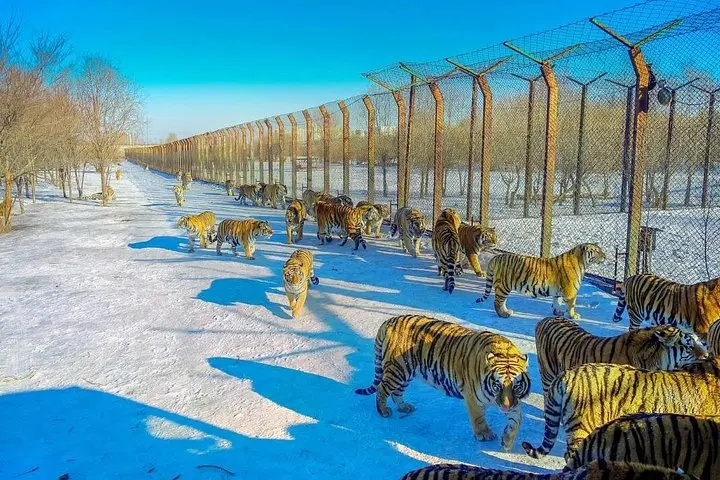
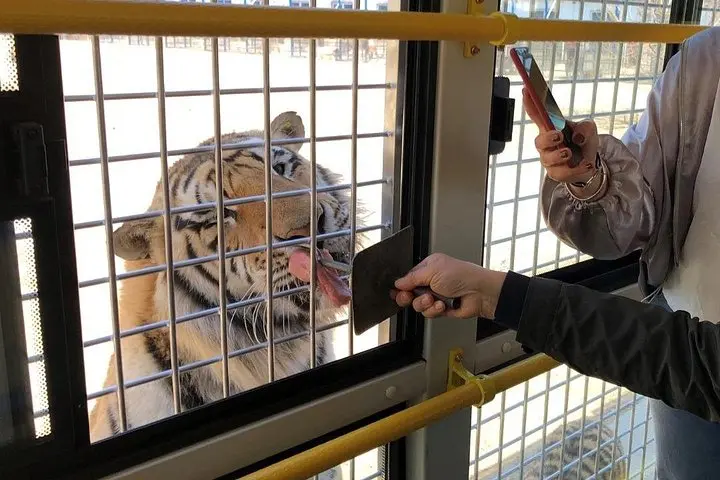
You climb into a reinforced sightseeing bus as a strip of winter-bent forest slides past; the engine hums and a local guide points ahead where a massive orange shape pads along the treeline. Up close, the tigers move with deliberate force—their tails flicking like metronomes—sometimes stopping to stare back as the vehicle’s windows frame the moment.
You climb into a reinforced sightseeing bus as a strip of winter-bent forest slides past; the engine hums and a local guide points ahead where a massive orange shape pads along the treeline. Up close, the tigers move with deliberate force—their tails flicking like metronomes—sometimes stopping to stare back as the vehicle’s windows frame the moment.
The park outside Harbin was established to protect and breed Amur (Siberian) tigers and presents them in large enclosures designed to mimic boreal mixed-forest terrain. The landscape here is flat to gently rolling, with planted stands of larch and birch and muddy river channels that can become silent mirrors in winter. The site’s story is part conservation program, part visitor-facing wildlife park: you’ll see keepers at work, feeding rotations, and informational displays about the subspecies’ decline across northeast Asia.
Expect a guided, 4-hour visit that combines walking areas and a guided bus loop through habitat enclosures. The ride lets you observe behaviors—resting, pacing, play-fighting—and offers photo opportunities at safe distance. Cultural context matters: Harbin’s winters shape the animals’ calendars and the visitor experience; local guides often include notes on regional rewilding efforts and the park’s role in research.
Practicalities: bring layered clothing (Harbin weather swings), a telephoto lens or long zoom, and arrive early to avoid midday crowds. Respect barrier rules, follow guide instructions, and limit flash photography. The adventure is part education, part adrenaline—an accessible way to see Imposing predators behave like living history.