THE ADVENTURE COLLECTIVE® · Independent discovery and booking for outdoor travel

Spend a day with a private guide exploring Harbin’s Russian-flavored architecture, Zhongyang Pedestrian Street, and the surprisingly cool Sun Island indoor ice exhibition. This practical one-day route covers the city’s history, culture, and summer contrasts.
Spend a day with a private guide exploring Harbin’s Russian-flavored architecture, Zhongyang Pedestrian Street, and the surprisingly cool Sun Island indoor ice exhibition. This practical one-day route covers the city’s history, culture, and summer contrasts.
You meet your guide in the hotel lobby at 9:00 a.m. and step into Harbin’s wide avenues where early summer light paints the pale facades of European-style buildings. The first stop, Saint Sophia Cathedral, lifts brick and onion dome like a storybook from the Russian-built era; the guide points out carved details while the Songhua River murmurs nearby, urging you to keep walking.
Verified experiences and guided adventures in the surrounding area.
Operated by Private China Tours · Harbin, Heilongjiang
You meet your guide in the hotel lobby at 9:00 a.m. and step into Harbin’s wide avenues where early summer light paints the pale facades of European-style buildings. The first stop, Saint Sophia Cathedral, lifts brick and onion dome like a storybook from the Russian-built era; the guide points out carved details while the Songhua River murmurs nearby, urging you to keep walking.
Harbin’s identity was forged by the Chinese Eastern Railway and waves of Russian migrants in the late 19th and early 20th centuries, which left an architectural imprint along Zhongyang Pedestrian Street—71 restored buildings in renaissance and baroque facades that now house cafes, bakeries and boutiques. Geologically the city sits on the Northeast China Plain, with the meandering Songhua shaping local industry and leisure. Culture here blends northeastern Chinese customs with visible Russian influence in food, language traces and Orthodox landmarks.
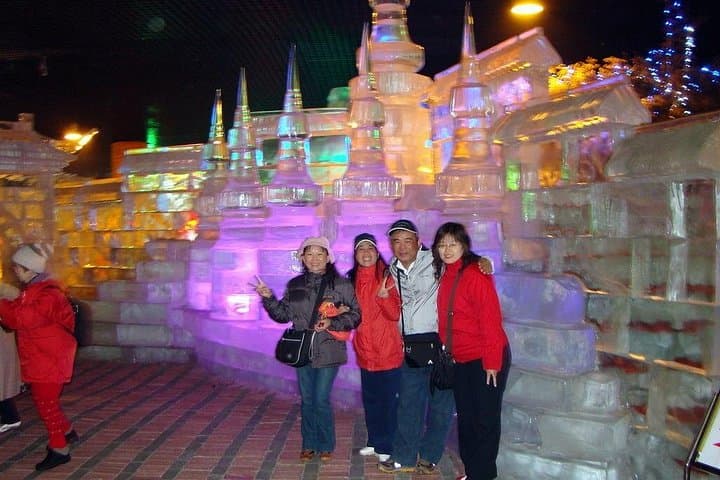
After a riverside stroll and a local lunch, you’ll visit Sun Island’s indoor ice exhibition—an odd, cool counterpoint to summer heat where carved ice glows under controlled light. The private vehicle shuttles you between sites so the day feels compact but spacious.
Practicalities: bring a valid passport and recent visa if required, wear comfortable walking shoes and light layers for temperature swings between sunlit streets and chilled exhibition halls. Carry a power bank and a refillable bottle; cash for small vendors helps. Expect an 8–9 hour private tour with accessible pacing suitable for most fitness levels and easy walking—an efficient way to sample Harbin’s layered history in a single day.
Yes—lunch at a local restaurant is included and typically features regional Northeastern Chinese dishes.
Entrance fees for the listed attractions are included when you provide passport details at booking for ticket purchases.
The guide meets you at your Harbin hotel lobby around 9:00 a.m. and returns you to your hotel at the end of the day.
Visa requirements depend on your nationality; confirm and obtain any visa before travel—this is the traveler’s responsibility.
Private China Tours operates guided outdoor trips and adventures with an emphasis on safety, stewardship, and memorable experiences.
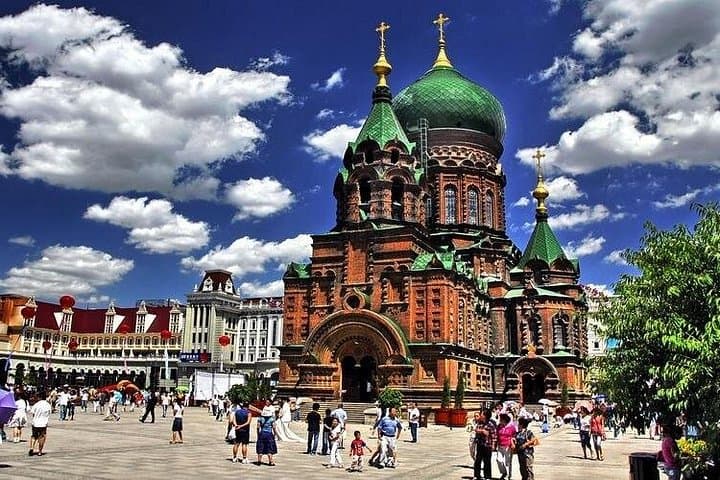


You meet your guide in the hotel lobby at 9:00 a.m. and step into Harbin’s wide avenues where early summer light paints the pale facades of European-style buildings. The first stop, Saint Sophia Cathedral, lifts brick and onion dome like a storybook from the Russian-built era; the guide points out carved details while the Songhua River murmurs nearby, urging you to keep walking.
You meet your guide in the hotel lobby at 9:00 a.m. and step into Harbin’s wide avenues where early summer light paints the pale facades of European-style buildings. The first stop, Saint Sophia Cathedral, lifts brick and onion dome like a storybook from the Russian-built era; the guide points out carved details while the Songhua River murmurs nearby, urging you to keep walking.
Harbin’s identity was forged by the Chinese Eastern Railway and waves of Russian migrants in the late 19th and early 20th centuries, which left an architectural imprint along Zhongyang Pedestrian Street—71 restored buildings in renaissance and baroque facades that now house cafes, bakeries and boutiques. Geologically the city sits on the Northeast China Plain, with the meandering Songhua shaping local industry and leisure. Culture here blends northeastern Chinese customs with visible Russian influence in food, language traces and Orthodox landmarks.
After a riverside stroll and a local lunch, you’ll visit Sun Island’s indoor ice exhibition—an odd, cool counterpoint to summer heat where carved ice glows under controlled light. The private vehicle shuttles you between sites so the day feels compact but spacious.
Practicalities: bring a valid passport and recent visa if required, wear comfortable walking shoes and light layers for temperature swings between sunlit streets and chilled exhibition halls. Carry a power bank and a refillable bottle; cash for small vendors helps. Expect an 8–9 hour private tour with accessible pacing suitable for most fitness levels and easy walking—an efficient way to sample Harbin’s layered history in a single day.