THE ADVENTURE COLLECTIVE® · Independent discovery and booking for outdoor travel

Step behind the ropes and into the abandoned wards of Ellis Island’s hospital complex on this 90-minute hard-hat tour. Experience unrestored rooms, poignant installations, and a direct connection to early 20th-century immigration medicine.
Step behind the ropes and into the abandoned wards of Ellis Island’s hospital complex on this 90-minute hard-hat tour. Experience unrestored rooms, poignant installations, and a direct connection to early 20th-century immigration medicine.
You step off the ferry into a harbor wind that pushes the city’s skyline into sharp relief, then turn south to a quieter edge of Ellis Island where brick and iron stand like a paused history. A hard hat is fitted; guides lead you across cracked tile and down corridors where light angles through broken windows and airborne dust gives the rooms a slow-motion hush.
Verified experiences and guided adventures in the surrounding area.
Operated by Save Ellis Island · New York, New York
You step off the ferry into a harbor wind that pushes the city’s skyline into sharp relief, then turn south to a quieter edge of Ellis Island where brick and iron stand like a paused history. A hard hat is fitted; guides lead you across cracked tile and down corridors where light angles through broken windows and airborne dust gives the rooms a slow-motion hush.
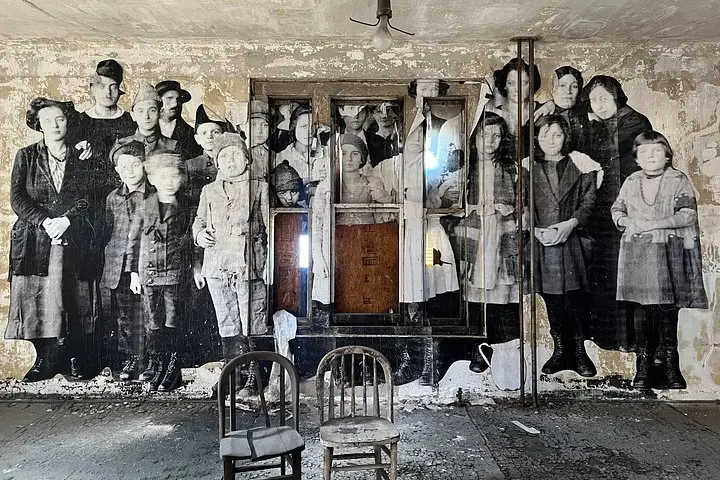
The complex, expanded by landfill in the late 19th and early 20th centuries, served as America’s medical frontier for incoming immigrants—treating infectious disease wards, operating rooms, laundries and staff quarters that processed more than a million lives. The buildings wear their past openly: peeling paint, tiled wards, and an autopsy amphitheater that still holds the imprint of clinical urgency. French artist JR’s Unframed installation places giant historic portraits within these decaying spaces, adding a visual conversation between memory and ruin.
Culturally, the tour connects to Save Ellis Island’s ongoing preservation effort; access supports conservation of fragile fabric and archival research. Geologically the site sits in New York Harbor on an expanded footprint of original island rock and later fill, exposed to salt spray and freeze-thaw cycles that accelerate decay—hence restricted access and conservation priorities.
Practically: the 90-minute tour meets at the Ellis Island National Museum information desk; hard hats are provided. Ferries run from Battery Park (Manhattan) and Liberty State Park (New Jersey). Wear closed-toe shoes and layers—interiors are cool and uneven underfoot. Photography is encouraged but follow guide instructions; some spaces are fragile and off-limits. The tour is suitable for most fitness levels but involves walking over uneven surfaces and non-accessible areas; check mobility restrictions before booking.
Meet at the information desk next to the bookstore inside the Ellis Island National Museum of Immigration; guides will check you in there.
Yes—hard hats are provided on-site and must be worn for the duration of the tour to access unrestored areas.
Ferries run from Battery Park in Manhattan and Liberty State Park in New Jersey; plan for ferry boarding 30–45 minutes before the tour start time.
Parts of the hospital complex are unrestored and include stairs and uneven floors; contact the operator about specific accessibility needs before booking.
Save Ellis Island operates guided outdoor trips and adventures with an emphasis on safety, stewardship, and memorable experiences.
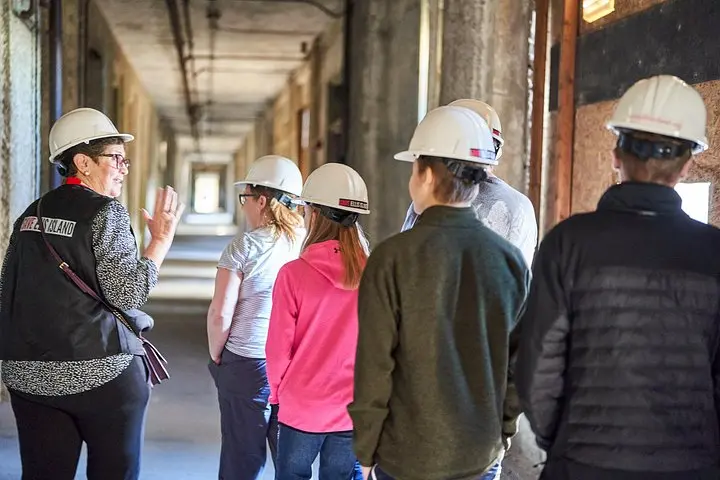
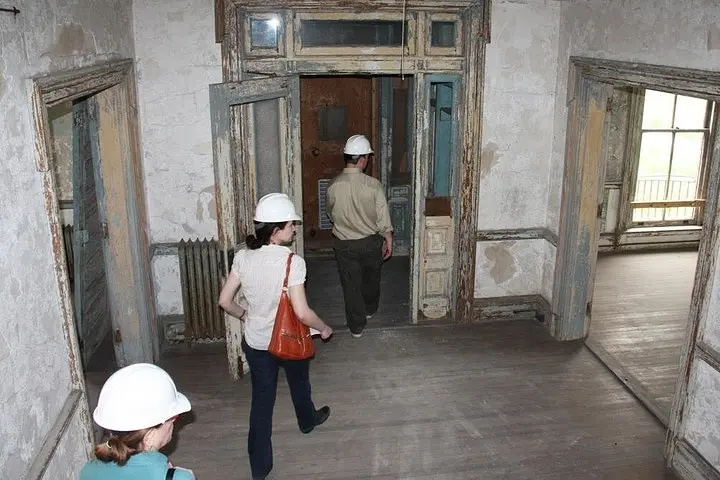
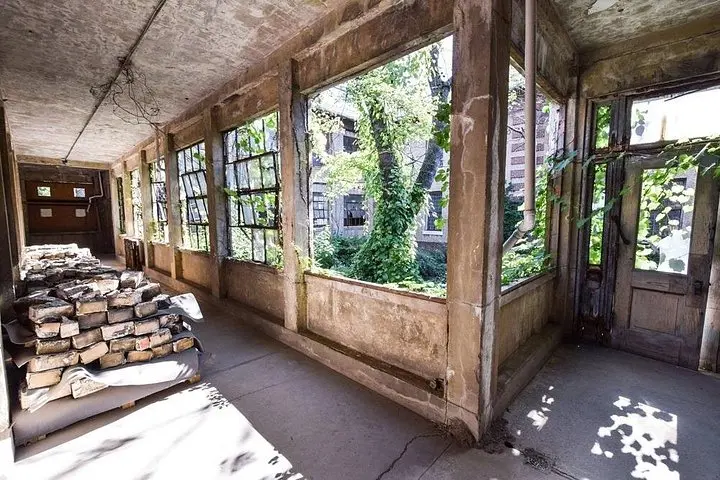
You step off the ferry into a harbor wind that pushes the city’s skyline into sharp relief, then turn south to a quieter edge of Ellis Island where brick and iron stand like a paused history. A hard hat is fitted; guides lead you across cracked tile and down corridors where light angles through broken windows and airborne dust gives the rooms a slow-motion hush.
You step off the ferry into a harbor wind that pushes the city’s skyline into sharp relief, then turn south to a quieter edge of Ellis Island where brick and iron stand like a paused history. A hard hat is fitted; guides lead you across cracked tile and down corridors where light angles through broken windows and airborne dust gives the rooms a slow-motion hush.
The complex, expanded by landfill in the late 19th and early 20th centuries, served as America’s medical frontier for incoming immigrants—treating infectious disease wards, operating rooms, laundries and staff quarters that processed more than a million lives. The buildings wear their past openly: peeling paint, tiled wards, and an autopsy amphitheater that still holds the imprint of clinical urgency. French artist JR’s Unframed installation places giant historic portraits within these decaying spaces, adding a visual conversation between memory and ruin.
Culturally, the tour connects to Save Ellis Island’s ongoing preservation effort; access supports conservation of fragile fabric and archival research. Geologically the site sits in New York Harbor on an expanded footprint of original island rock and later fill, exposed to salt spray and freeze-thaw cycles that accelerate decay—hence restricted access and conservation priorities.
Practically: the 90-minute tour meets at the Ellis Island National Museum information desk; hard hats are provided. Ferries run from Battery Park (Manhattan) and Liberty State Park (New Jersey). Wear closed-toe shoes and layers—interiors are cool and uneven underfoot. Photography is encouraged but follow guide instructions; some spaces are fragile and off-limits. The tour is suitable for most fitness levels but involves walking over uneven surfaces and non-accessible areas; check mobility restrictions before booking.